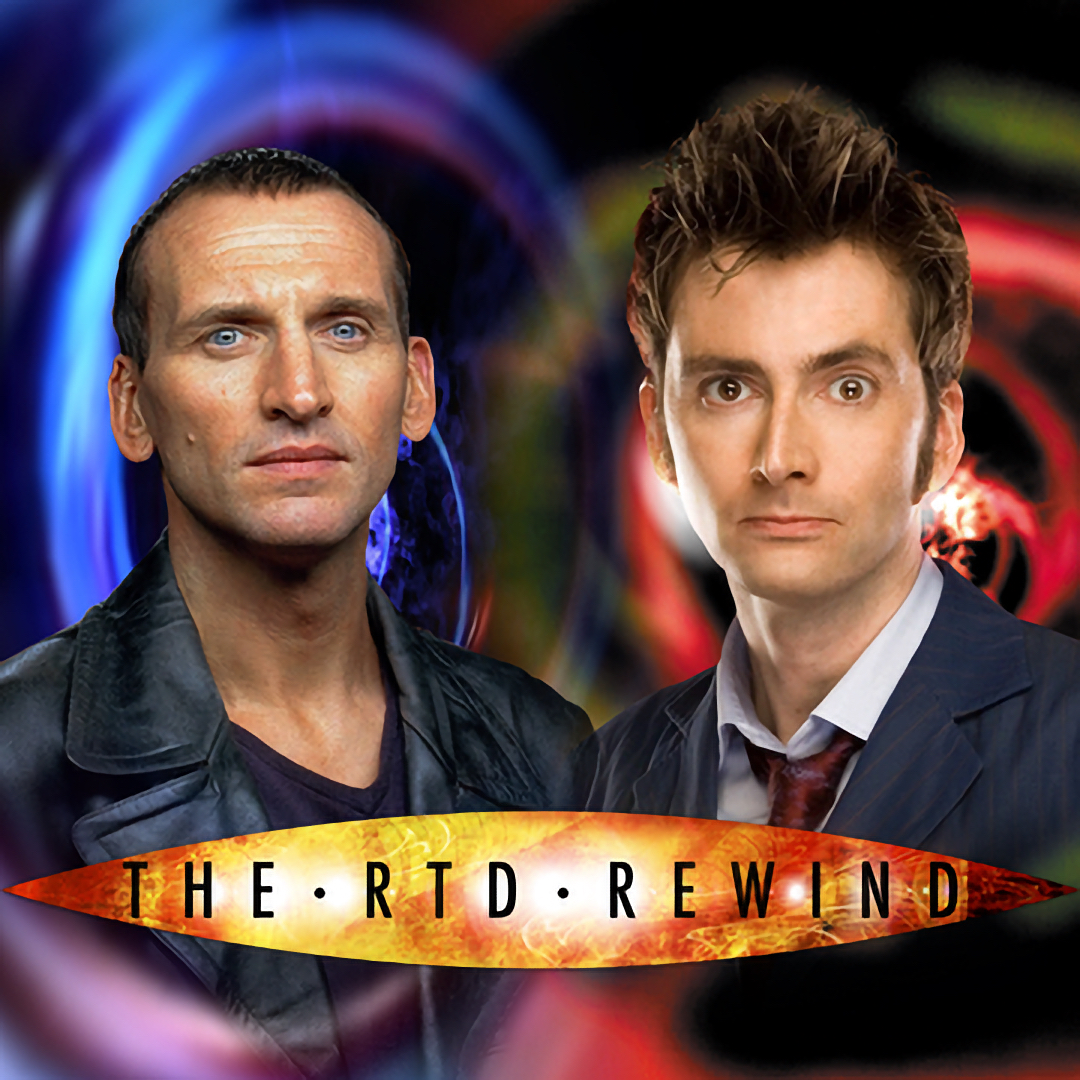
Let’s talk about titles. Specifically, the titles for season premieres. In the Davies era, the way he titles his premieres indicates a few things: Rose is the name of that episode’s primary protagonist, with the Doctor shoved into a secondary role for once. Partners in Crime is exactly what it sounds like: the Doctor and Donna are not named directly, but it’s pretty abundantly clear they’re on an equal level with one another.
Smith and Jones is a little different. They’re both bearing narrative weight, but the Doctor is still listed first, and Martha second. They are co-leads, but not necessarily equal. Rose was an episode about Ms. Tyler falling into the Doctor’s world, and the entire episode is constructed around that gradual experience. Smith and Jones doesn’t do that, because it’s very much a different story. Part of this is just because of the circumstances under which the episode aired – in March 2005, Doctor Who was a washed-up cult show that probably was going to do one series, fail, and then be forgotten about.
My, how things change over the course of two years. Doctor Who is still on TV and, in 2007, is doing very well for itself. This isn’t exactly the dizzying heights of late 2008 and 2009 where it is probably the Biggest Thing, but we’re getting there. So, Davies doesn’t need to do a grand introduction story for Martha Jones as he did for Rose, because Doctor Whois a known quantity at this point. He instead now gets to write a frothy season opener that does all the usual Doctor Whothings, just in a slightly different context than usual.
Remember how I said last week that Donna was my favorite companion? That was before I watched Smith and Jones and immediately fell in love with Martha. The thing about Martha is that, as Clara Laherty and I hypothesized back in the Doomsday post, she falls into a similar proto-Clara Oswald bucket that Rose also fell into, but in a different way. Our post back then was about finding points of contrast between their respective departures. Here, we have Martha as a forerunner for what Clara was during series 8 and 9 – the Doctor, only human and a Londoner.
From the get-go, she’s set up to be a lot like the Doctor, from the title on down. She notices the things he might, and figures out what he’s going to do with regard to the Plasmavore, and so does it for him. In this episode, this competence is framed as a good thing: indeed, it’s what gets her on the TARDIS in the first place. The Doctor spends the whole episode weighing her up and decides she’s worth it.
Or rather, worth it enough to be allowed “one trip” as a thank you for saving the day. She is, apparently, not quite good enough at Doctoring to be allowed the whole “come and see all of time and space with me” schtick that Rose, Donna, Amy, Clara, and Bill all got. In fact, so far as I can recall, Martha is the only New Series companion to have this limitation placed on her. I can’t think why! She’s exactly as good at her role as Clara will be and Rose was, why in the world would the Doctor not allow her the same courtesy as the rest?
Oh, of course. Because of Rose. Obviously, the Doctor is wary of traveling with someone for an extended length of time, and I can understand his reluctance. His ex-girlfriend is dead for all intents and purposes, and he’s trying to move on and travel alone (because he thinks that’s safer). And if Donna were in this season, that would be fine, but she isn’t. Instead we have Martha, and the problem with using Martha as the Doctor’s rebound girl is pretty self-evident.
Martha is Black.
Doctor Who has always had a troubled history regarding race, going all the way back to 1964’s Marco Polo, where most of the Asian characters were played by white actors in makeup. The racism inherent in 1977’s The Talons of Weng-Chiangdoes not need elaborating on. Tomb of the Cybermen has Toberman, a Black character whose entire job was to be a slave.
Yes, in 2005, we had the progressive move of depicting two characters in a mixed-race relationship, but at the same time Mickey got treated with contempt that, because of his Blackness, accidentally made the Doctor look like a racist. Obviously, Nine’s sarcastic remarks were just part and parcel of the character and had nothing whatsoever to do with race, however. Optics are optics, and the optics of a white Doctor insulting his companion’s Black boyfriend do not look good.
Which brings us to Martha. Again, I want to stress: I very much doubt that there was anything racially motivated in writing Martha Jones in the way she was. If she’d been white, I imagine large swaths of the season would have unfolded pretty much exactly the same. But again, optics.
It’s worth noting, I think, that the Bill Potts era is in some ways a late attempt at redoing Martha with a better understanding of how race can impact storytelling. Thin Ice has an opening scene that reads as a response to a similar sequence from The Shakespeare Code, with the Twelfth Doctor more aware of the race factor than the Tenth was. The Chibnall era gave us Yaz, Ryan and Jo Martin’s Doctor, and with the neo-Davies era, we’ll have Ncuti Gatwa as the first Black Doctor to also be a series lead. It took time, but the show did eventually realize it struck out with Martha, and is trying to correct that. It’s just a shame that it couldn’t have figured this out much earlier.
Series 3, if I’m honest, is probably going to be the RTD season I like the least: not because of the team at the center (I seem to remember reading the Forever Autumn book and enjoying that a lot) but because of how that team, and very specifically Martha, was treated by the narrative.
But first, a cartoon. Join us next time for… The Infinite Quest.


Leave a Reply