How does someone attempt to summarize the career of Paul McCartney?
I’m not entirely sure it’s possible. We’re talking about a man who, by the time he was 28, had become incalculably famous. He had already rewritten and redefined pop music with the Beatles. No one would’ve begrudged him for deciding to coast on that level of success and fame – no one else could touch the Beatles, and none have, despite what the music press, then and now, believed.
But not Paul. He decided to keep making music, and here we are some 50 years later. He shows no sign of slowing down even into his 80s, from sell-out concerts to periodic new albums. And yet, although his solo discography is two or three orders of magnitude larger than his Beatles work, it’s still that period of his life that defines him.
Not here. Now is the time to do this man’s solo work justice, and that means the deepest of deep dives. Let’s go.
Though it was Paul who made the official public announcement that the Beatles had broken up, the truth was the band had pretty much been dead since September 1969. On the 20th of that month, John informed the other three Beatles during a meeting that he wanted a divorce. He then went on to have a solo career, with “Cold Turkey” serving as the first recording he made following his departure from the group he’d founded. It was a vicious, blistering, angry song, neatly foreshadowing the sound of his formal solo debut, Plastic Ono Band.
But we’ve talked about that already.
His ex songwriting partner, Paul McCartney, had a completely different reaction to the break-up compared to John. He grew out his beard and retreated to his farm in the Scottish highlands, where he fell into a deep depression. His new wife, Linda McCartney (nee Eastman) was his one and only remaining solace, as Yoko had been for John.
So, across December 1969 and into early 1970, he started recording new music at home in St. John’s Wood, just down the street from Abbey Road. But he didn’t have a group this time. So instead, he did what everyone does after a nasty break-up: he played everything himself.
Armed with only a Studer tape machine, a mic, and nerve, Paul put his talents as a multi-instrumentalist to good use, creating an album that served for him as musical catharsis, just as Plastic Ono Band and All Things Must Pass were for John and George.
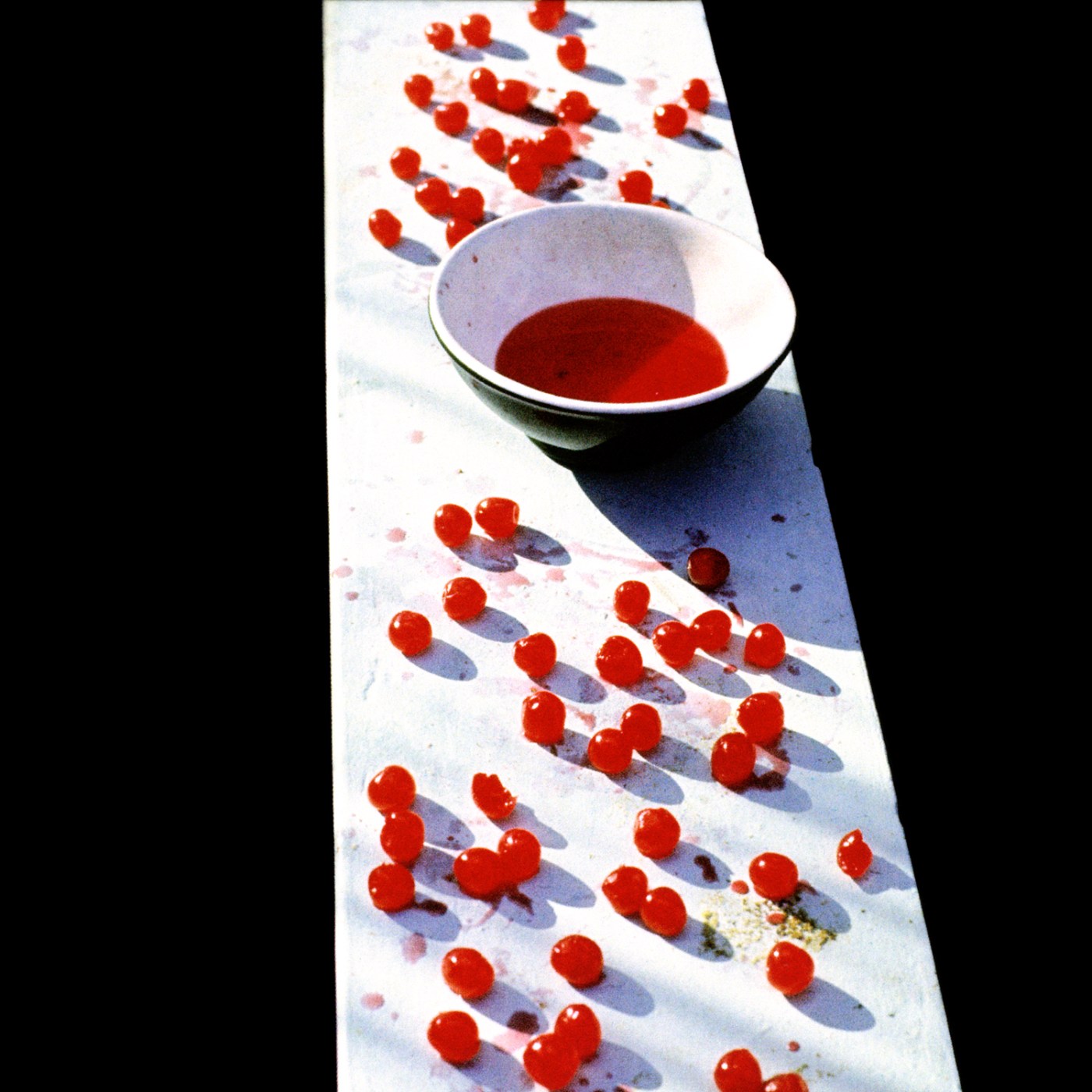
He called it McCartney, but since there have been two more albums with that title, I will refer to it as McCartney I. Sure, the critics hated it when it came out in April 1970, but that’s just Paul being ahead of the times, as usual. In 1970, he effectively invented Billie Eilish.
Let’s dive in, shall we?
‘The Lovely Linda’: Not much to say here, just Paul with an acoustic guitar singing a cute song about his wife. He even affects an American accent on the words “flowers” and “hair,” and it sounds much better than when he tried it on “Till There Was You” back in 1963. It was recorded mainly to test the recently-installed Studer 4 track tape machine, but much like the White Album Esher demos, that’s hardly a bad thing at all.
‘That Would Be Something’: It’s a song about meeting someone in the falling rain, which would in fact be something – maybe this was on Ethan’s iPod in Beautiful Creatures, given that he does indeed meet Lena in the falling rain. I don’t know if this song does much for me, but George Harrison liked it.
‘Valentine Day’: An instrumental intended to test Paul’s new tape machine, I honestly kind of like it – shades of “Long Tailed Winter Bird” from McCartney III, now that I think about it. The Beatles weren’t much for instrumentals, but Paul himself certainly is!
‘Every Night’: At last, an actual song! This song has had actual effort put into it, and it really shows – it was recorded at good old Abbey Road, and the lyrics are the closest Paul ever gets to discussing the pain he’d been going through in the aftermath of the Beatles’ split. He pairs that with newfound optimism and joy in the solace he had in his marriage to Linda, in true McCartney fashion. (Also note the melodic reference to “You Never Give Me Your Money.”)
‘Hot As Sun/Glasses’: Another instrumental, most of which came about from Paul’s Quarrymen days. It’s not too bad – the ending, involving the playing of wineglasses, is suitably eerie and strange.
‘Junk’: A simple acoustic ballad, describing the contents of a junk shop. He tried to include it on the White Album and Abbey Road, but the other three Beatles rejected it – so, of course it got recorded for this album. It’s not much of a song, but the melody is nice.
‘Man We Was Lonely’: As with some of the other songs on this album, this track deals very obliquely with the drama surrounding not only the Beatles’ break-up, but the contemporaneous lawsuits Paul was initiating in order to actually get that divorce John said he wanted. And in all things, Linda is his guiding light – she even sings backing vocals with him on this song, for the very first time ever. It’s quite sweet, honestly.
‘Oo You’: Would you believe that this song was recorded in the same studios as bands like Jethro Tull, Yes, and Black Sabbath? It’s true! I don’t think the lyrics are very much, but it’s nice to hear Paul having fun and letting his old rock-and-roll voice out again. He really is too good at improv.
‘Momma Miss America’: Two instrumental pieces that got smashed together into one, with the original title of “Rock and Roll Springtime.” Listen for the sound of a mellotron, just like on “Strawberry Fields,” along with an edit at 1:57 where the second piece comes in. So far as I can tell Linda has nothing to do with this track, but I’ll bet she was on his mind when this title came out.
‘Teddy Boy’: Another late-period Beatles reject, originating from the Let It Be sessions of 1968. Paul explains, “My second cousin Ted is the son of my cousin Betty Danher, who was a big influence on me musically… Ted was their first boy, so that’s partly why I refer to him as ‘Teddy Boy’. It’s an affectionate term, as I’m just over ten years older than him. […] So, Ted is the jumping-off point for the song, but as usual, it takes its own cues and puts on its own show.” For those so inclined, check out the slower take on the Get Back album, released at last on 2021’s Let It Be collection.
‘Singalong Junk’: An instrumental version of “Junk,” showcasing the lovely melody. This was apparently take 1, and includes more Mellotron. (The vocal version is take 2.)
‘Maybe I’m Amazed’: By far and away the best song on the whole damn album, and the best love song Paul has ever written, which is no small feat considering how many of them he’s written over the years. In one of the darkest periods of his life, he had a shining light in the form of Linda, and his love for her shines through every note. He even brings back his “Oh! Darling” vocal stylings back!
And I tell you what, it hits so much stronger now to me, as a married woman myself. (One week hence as of this writing. I love you, Sophie! You amaze me each and every day!)
‘Kreen-Akrore’: An instrumental piece to close us out, anchored mainly by Paul’s spectacular drumming. The guitar riff, of all things, reminds me of “Little Birdie” from It’s Thanksgiving Charlie Brown, which is quite something considering that cartoon hadn’t been made when this song came out. (It plays during the scene where Snoopy fights, and loses to, a lawn chair.)
McCartney is not, I’m sure, what anyone expected when people tried to imagine what a solo album by one of the best musicians in the history of popular music would sound like. George was famously cold on much of it, save for “Maybe I’m Amazed” and, for some reason, “That Would Be Something.” John told Rolling Stone that he was surprised at how poor it was.
But it can’t be that bad, can it? It made the top of the US album charts, and the only reason it didn’t do the same in the UK was because Simon & Garfunkel had just broken up! (1970: A big year for the end of musical institutions.)
It’s not the best post-Beatles release out there – that’s All Things Must Pass. Nor does it deal too much with the shock and the pain of the break-up – Plastic Ono Band is where you go for that kind of thing. But it is, I think, true to who Paul was then, and who he is now. He has never been the kind of guy to write confessionals or acidic diss tracks, a couple of songs from Ram notwithstanding.
I mean, come on. This is the guy who wrote the words “Take a sad song and make it better.” That is who Paul is. While John was screaming into a microphone and having a therapy session, and while George was combining his religion with his musical talent and showing the world how underestimated he’d been as a Beatle, Paul kept things simple and retreated to the things that made him happy – home, family, and love.
McCartney is the result: Paul, trying to take the saddest song there ever was, and make it as better as possible. And frankly, who can blame him? I know I can’t.


Leave a Reply