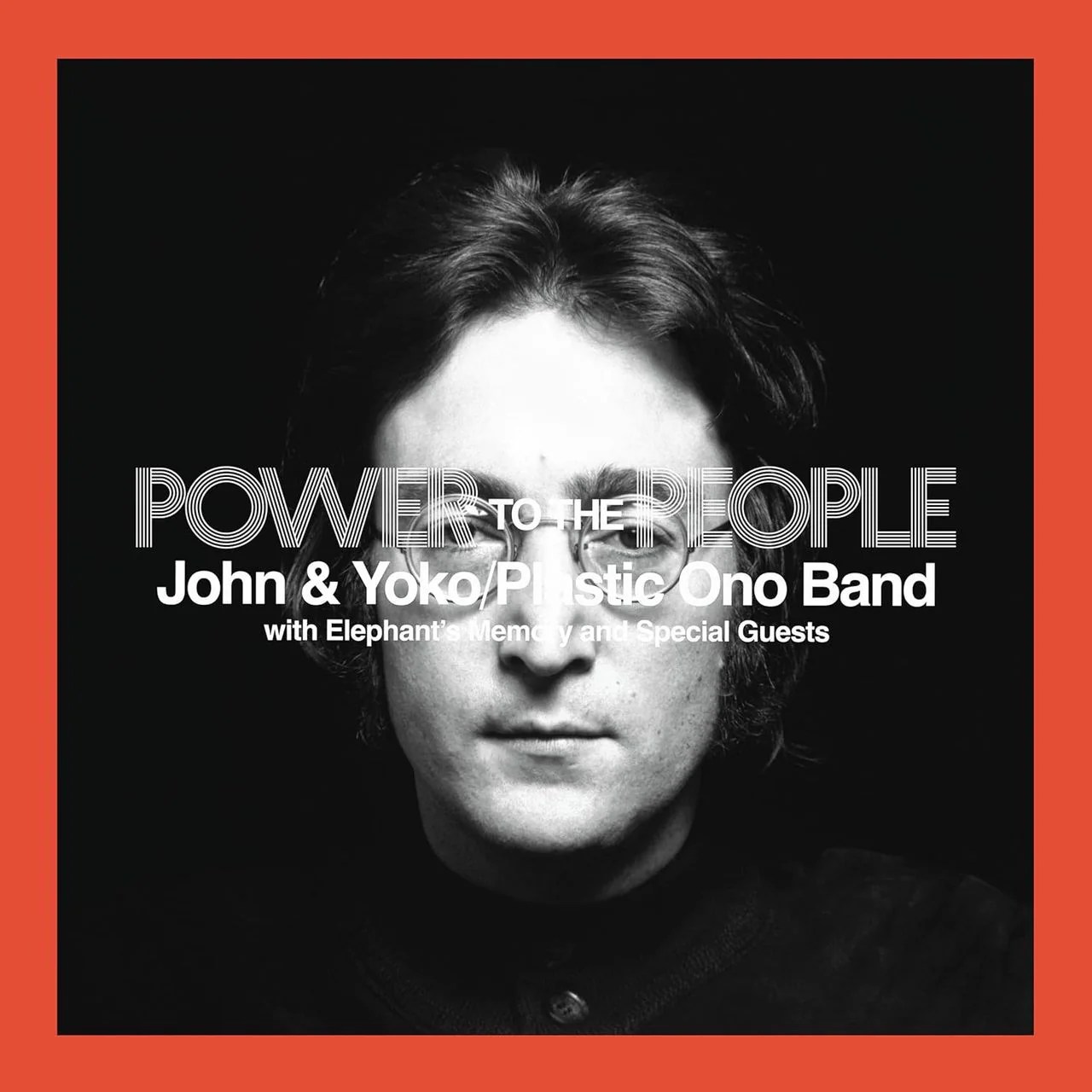
Having just covered the absolutely massive career-spanning singles box by Paul McCartney, I want to rewind the clock a bit and go back to the work of Paul’s songwriting partner – John Lennon. His solo career has been enjoying something of a renaissance in the last seven years, thanks to the release of deep-dive “Ultimate Mixes” of his various studio albums, starting in 2018 with the massive Imagine box.
Along with Imagine, Plastic Ono Band and Mind Games have also had their moment to shine, with Yoko masterminding the Imagine and Plastic Ono Band re-releases plus 2020’s career-spanning Gimme Some Truth collection, which expands the Ultimate Mixes project to the best of John’s later solo catalog. That is, selected songs from Walls and Bridges to Milk and Honey, and single tracks from Some Time in New York City, Anthology and even Menlove Ave., a very obscure collection of Lennon songs from 1973 and ’74.
Obviously, due to Yoko getting older and increasingly frail, her son Sean has taken over the various Lennon solo projects, starting with 2024’s re-release of Mind Games, which he mixed himself. All these new sets, as well as being a revelation in terms of how the songs sound, also serve as both a snapshot and a celebration of each album and its role in the wider tapestry of John’s wider career… but there’s one that’s missing.
Some Time In New York City, as I noted in my original write-up for that album, was the only one of John’s early solo releases not to receive a splashy box set – plans for one originally appeared to have been scrapped, with the Mind Games collection coming out instead, but it now seems we know the true reason for the delay…
They had to come up with a completely different album first.
Let me explain what I mean. Power to the People is not, per se, a celebratory deep-dive into what is by some distance John’s weakest solo album. Instead, it’s a complete and total re-imagining of everything to do with John and Yoko in 1972, with most of the focus being placed instead on the pair’s One to One concerts – the first, and last, full live performances John gave as a solo artist.
The Sometime in New York City songs are here, and newly remixed, but they’re relegated to disc 4 of a 9-disc set, with the first three being the (almost) complete One to One recordings, disc 5 being some Evolution documentaries, while the remaining four discs include even more live material, including the Live Jam that makes up the back half of the original Sometime in NYC release, along with plenty of demo recordings.
With all this wealth of material, reconfiguring what was probably meant to be Sometime In New York City: The Ultimate Collection into a thorough deep dive of John’s political period makes a bit more sense. Everyone knows the studio album is weak, so you distance yourself from it by focusing on other things. And, well, the One to One tracks were in need of a re-release anyway.
Even so, there is one key omission from this giant box set: the song “Woman Is The N****r Of The World,” the lead-off track on STNYC. It appears precisely nowhere on the entire box set – not in any of the live recordings, and not in the remixes of its former parent album, which itself has had its title amended to simply New York City. Given that the track was John reckoning with his own misogyny, its complete absence strikes a wrong note – particularly in the context in which this box set exists.
To be clear, I understand why they took the song out. The title’s use of the n-word was uncomfortable enough in 1972, nevermind in 2025 when the same word is being liberally sprinkled in Nazi group chats. But we are living in a world where the president of the United States is a man who has predated on women for several decades, and the party he represents has become not only nakedly fascist, but overwhelmingly pro-white and male.
Taking out the only song in John’s solo career that can speak to something like our current moment because of one word serves only to diminish his legacy and to muffle the feminist direction his music was moving in. Previous compilations of John’s work with this song on them have just censored the title entirely, I fail to see why this box set couldn’t have done the same.
But anyway. This is a massive collection, and while I certainly could try and write about everything, I won’t. Instead, I want to focus on what I think are the two main attractions of this boxset: the One to One concert and the newly remixed Some Time in New York City, or at least its studio-bound songs.
So, here goes.
The first three discs, as mentioned before, cover the One to One shows from August 1972. Discs 2 and 3 are the (nearly) complete live recordings for the afternoon and evening performances, while disc 1 presents a hybrid “best of” version of the concert, using tracks from both performances.
The audio from these concerts was last released on Live in New York City, a 1986 album which stripped out not only all of Yoko’s solo songs from the tracklist, but also mixed out her vocal performances on some of John’s songs, giving the listener the impression that John played these shows alone.
Power to the People restores Yoko’s voice at last, but is not without its own case of historical revisionism – not only is “Woman is the…” missing, but so is “Sisters, O Sisters,” Yoko’s own attempt at a feminist anthem. (That said, it does appear on the other six discs in various performances.)
For the sake of keeping things simple, I’m writing about the hybrid show:
“Power to the People / Intro”: Just a quick intro from Geraldo Rivera, back when he wasn’t a total lunatic on Fox News, followed by the crowd singing the title phrase from John’s 1971 single.
“New York City”: The title song from his 1972 album Some Time in New York City, what we have here is John doing one of his best solo-era rock songs, singing from the sheer joy of being in his new home. It’s a diary song in the tradition of “The Ballad of John and Yoko,” but with enough energy to power Manhattan.
I absolutely had this song in mind when I moved to Ithaca in 2023 – the energy surge is real. If possible, this live version rocks even harder than the album version does, amplified by Sean Lennon’s spectacular remix. John sounds like he’s right there in the room with you, it’s electrifying!
“It’s So Hard”: The strife and assorted difficulties of daily life have always been one of John’s favorite writing topics. For crying out loud, this is the guy who devoted two Beatles songs to the subject of sleep, whether too much (“I’m Only Sleeping”) or too little (“I’m So Tired”). “It’s So Hard” falls into a similar groove, but with some new optimism in the form of his musings on his feelings of contentment when he’s around Yoko.
“Move on Fast”: Yoko’s first song of the night, and the lyrics are really nice – it’s a song about not getting caught up in the moment, because nothing lasts forever. The backing band isn’t half bad either!
“Well Well Well”: In which John discusses women’s liberation, his daily life with Yoko, and the guilt they feel at having the luxury of being able to choose whether to take action or not when it comes to political causes. And he does all this while screaming the title phrase, over a backing track of his electric guitar paired with the thumping toughness of drums and bass guitar. I fucking love this track, it’s so wondrously angry. It’s John inventing punk rock… again. (See also “Yer Blues” from the White Album.)
(Yes he pulls a Bugs Bunny impression on the word “nervous.” Amazing. But even better? The way he adds “I did” after the second repetition of “She looked so beautiful I could eat her.” I could practically see the knowing smirk!)
“Born in a Prison”: This is a Yoko song about the various societal constrictions placed upon us in life… but it just doesn’t work. I’m sorry, but it doesn’t. It’s a little hard to take this seriously when the artist lived a life of privilege even before she fell for a Beatle. At least “Imagine” had an aspirational point to make, even if some of John’s lyrics can (unfairly, IMO) be read as being hypocritical.
“Instant Karma! (We All Shine On)”: This one has always been one of my favorite solo-Lennon songs, it was even my ringtone for years when I was in high school. Per Wikipedia, the lyrics “focus on a concept in which the consequences of one’s actions are immediate rather than borne out over a lifetime,” and I have to say, I understand this concept way better now as a practicing Wiccan. (Look up the Threefold Law for more information.) This track has also been covered by Duran Duran, and they did a fabulous job with it.
While we’ll never know for certain just how deep into the paganism scene John was in the 1970s, I’ve long felt as though he’s at least some Crowley and maybe Gardner and Valiente, given some of the lyrics in “Out the Blue.” (Maybe Sean can answer that question…)
“Mother”: If you’re coming to this song after his Beatles work, “Mother” is nothing less than an angry, much-deserved howl of frustration, as he finally lets loose with all the accumulated 30 years of rage at how both of his parents abandoned him. The live take is performed on an electric piano rather than the grand on Plastic Ono Band, changing the feel of the track somewhat.
In the live recording, John prefaces this performance by stating that contrary to popular belief, this song isn’t just about his own parents, but all parents: “alive or half-dead,” as he puts it. I like this approach – shades of Paul writing music for everyone, but with John’s unique flair.
Since he brought it up, lemme speak a bit here about my own family: While my relationship with my own mother has improved a lot since I moved to New York in 2023, that doesn’t erase the years of emotional abuse and psychological torment she put me through in my formative years. What I went through was nothing like what John did, obviously, but the howls of anger he deploys here are still relatable.
“We’re All Water”: Another Yoko song, inspired by a poem of hers called “water talk,” written in 1967. Per Beatles Bible, “The central conceit of the song is that, despite the many differences in people’s wealth, status, looks, actions and beliefs, humanity can be united through its collective spirit. Furthermore, the chorus ends with the line “Someday we’ll evaporate together”, a reminder that death is the great leveller.”
Honestly, I really kind of like this song? Yoko’s vocal performance is the best one she gives on the whole album, and it’s a fantastic rock number. About the only thing I don’t like is the wailing, but wailing is just how Yoko rolls, so I can deal with it.
“Come Together”: What we have is a rollicking performance of “Come Together” in which John, as is traditional, gets some of the words wrong. (Interestingly, it’s also played in a higher key relative to the studio version from Abbey Road.) This is the afternoon version, the evening performance of the song later came out on the 2005 greatest hits album Working Class Hero.
This mix of the song rocks harder than even the album version did – it makes you wonder what the Beatles as a whole would’ve been like if they’d decided to go touring again in the early 1970s. Is this my favorite version? No, that’s the evening show performance. But this one is still pretty good! I like him poking fun at himself at the end: “I’ll have to stop writing those daft words, man, I don’t know what I’m saying!”
“Imagine”: The Big One. Ask anyone to picture John’s solo years, and this, understandably, is the first one they’ll name. Some have called it an atheist anthem, and others see it as what it is – a plea for world peace at a time where it seemed like the entire world was burning down.
While its message has been derided over the years as being hypocritical, I feel like people who say things like that are missing the point. He can make these statements because he had been a Beatle. There’s no bigger platform than that, and no better legacy than this.
As with “Mother,” this song is performed on electric piano, which gives the track a very early-seventies vibe – reminiscent of some of the earliest demo recordings from early 1971, when he was first writing it. Also note a few wording changes: “Imagine no possessions/I wonder if we can” and “A brotherhood and sisterhood of man.” He’s trying to be inclusive, in a way that is now verboten in 2025 America. Good for him!
“Open Your Box”: I can only imagine what the crowd at MSG thought of this song when they heard it: as John and Yoko say in the intro, it got banned in both Britain and America! The lyrics are very simple: just Yoko imploring us to open various things, some of which are sexual and some of which aren’t, with that dolphin-esque screaming thing she does.
“Cold Turkey”: A song about John and Yoko each deciding to quit heroin… well, cold turkey. It has nothing to do with a cold Thanksgiving turkey, though that didn’t stop UMG from releasing a digital EP in November 2020 based around Lennon songs to play during the Thanksgiving holiday. Anyway, John’s first idea was to release this song as a Beatles single, which was vehemently refused. So John decided to release it himself instead.
I’ve always found the studio recording creeps me out to no end, I prefer this live version. It’s slightly faster than the single, enlivened with a big brass section, in keeping with John’s preferences regarding instrumentation during this period.
“Don’t Worry Kyoko (Mummy’s Only Looking for Her Hand in the Snow)”: In which Yoko implores Sean’s half-sister not to worry. That’s literally it.
“Hound Dog”: By this time on The Blog, we’re used to Paul being the one to do Elvis Presley covers, but John could do them too! In a way, its appearance here neatly presages John’s Rock ’n’ Roll album from 1975, only with more Yoko and better mixing. John is clearly having the time of his life here, as evidenced by his gleeful addition of “Elvis, I love ya!” in the last verse.
“Law and Order”: In which Yoko reads, and I am not making this up, the words of Adolf Hitler while the backing band gives her a beat. The really haunting thing about this is that, aside from the bit about Russia, everything else in that statement could’ve come from one of Donald Trump’s stump speeches.
Why did she read this? I haven’t the foggiest, but it makes for one hell of an intro to the final song, which represents everything that Hitler hated, and Trump hates now. Because as the No Kings rallies and the peaceful reactions to Trump’s Gestapo marching through American cities suggest, peace is how we fight fascism.
As John himself once said: “When it gets down to having to use violence, then you are playing the system’s game. The establishment will irritate you – pull your beard, flick your face – to make you fight. Because once they’ve got you violent, then they know how to handle you. The only thing they don’t know how to handle is non-violence and humor.”
Given how badly the current regime has crumbled inside of a year since the inauguration, I’d say there’s something to that theory.
“Give Peace a Chance”: John’s very first solo single, written and recorded in 1969 during a break in the recording sessions for the Abbey Road album. The happiest anti-war song ever recorded, it’s just John on acoustic guitar, encouraging the group around him to join in his demand for peace instead of endless war. This live version even includes an appearance from Stevie Wonder!
Originally meant to protest against the Nixon administration’s involvement in the Vietnam war, the song has remained relevant even in today’s world. As Sean said in the liner notes: “I don’t think my parents ever imagined that we’d still be entrenched in multiple foreign wars, it’s really sad. I definitely ascribe to this idea that we’ll never reach the stars or populate another solar system if we can’t get past killing each other.”
As a Star Trek fan, I concur.
John’s skills aș a live performer have never been in doubt – all you have to do is listen to the Beatles-era live recordings for an idea. But this is on another level! This is absolutely the guy who used to play 12-hour shows in Hamburg, Germany every fucking night, a million miles away from the clean-cut moptop that he was in the early Beatles days.
But reader, I was not prepared for just how out-of-this world incredible John sounds on this album. As Sean says in the liner notes, this has much to do with the quality of the performance as the restorative work undertaken to make these recordings sound as good as possible:
“Between the matinée and evening shows, there were microphone changes and stage layout changes that seemed to be last minute decisions. This all made for some compromised recordings in terms of leaks and lack of coverage. So it was a lot of work. But that makes it more rewarding from my perspective. It gave us a chance to really put our heads together and find solutions.”
The end result? Some of the best live material I’ve heard from any Beatle. It’s a crying shame that these were the only live shows he got to do as a solo artist, because in my opinion, this album is just as good as anything by Paul, George, and Ringo.


Leave a Reply