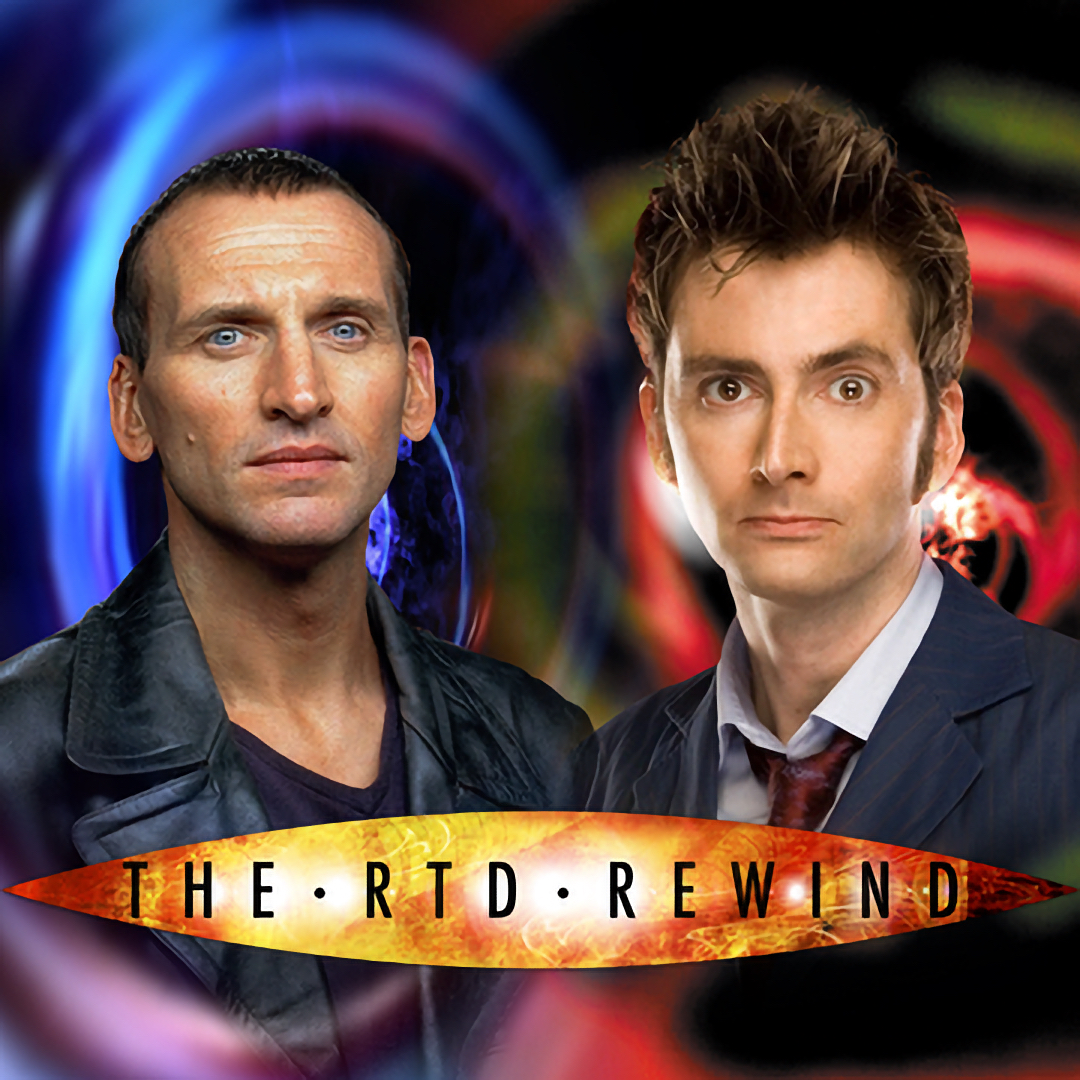
As with The Next Doctor, one gets the impression that Planet of the Dead is best seen when looked at as part of the extended coda to series four that sets up the Tenth Doctor’s regeneration, and from there, comparing these three final specials to the trio that rounded out the 60th anniversary. Having discussed those on their own merits already (at least on Patreon, you all on WordPress will see those entries later) it will, at least, give me something to talk about.
Planet of the Dead and The Star Beast both function, basically, as season premieres for a season that doesn’t actually exist – or, more accurately, they are very short 3-story seasons, a structure not unlike that of Moffat Sherlock. Planet and Beast, naturally, are our opening stories, while Waters of Mars and Wild Blue Yonder are the scary ones, and The End of Time and The Giggle are finales where a returning villain arrives, and the Doctor regenerates into someone else.
Admittedly, applying this framework to the 2009 specials doesn’t quite work, since those were broadcast more sporadically while the 60th specials were shown weekly in late 2023, but it’s all I’ve got, and let’s face it – the comparison was already there anyway, given who the lead actor is and what character he’s playing.
But anyway. Planet of the Dead works like pretty much any other Davies premiere episode does – a slender plot that is mainly there to introduce the new companion and give the Doctor (and the audience) a chance to get to know them before the inevitable “Companion steps aboard the TARDIS” scene at the end. The Star Beast,meanwhile, is basically an extended sequel to Partners in Crime, down to the tiny adorable white alien that much of the plot revolves around.
That said, there are differences. Planet doesn’t have a TARDIS scene like Star Beast does, because the Doctor actually refuses to take Lenatina with him. Because after all, these are specials, and the similarities to regular season openers are superficial.
Even so, you do wonder whether Lenatina was right or not: could she and the Doctor have worked together as a TARDIS team?
I’m gonna say maybe. Giving the Doctor a companion who is just as capable of owning the room and taking charge as he is would be one thing – making that same person a thief, placing her closer to the amoral end of the spectrum than the Doctor usually occupies, adds an interesting dimension to things. Especially since, as the Doctor admits, he’s a thief as well. Any criticisms he might offer of Lenatina’s chosen vocation are thus a little hollow.
With Donna obviously, these questions do not exist. We know how brilliant she is, as Davies spends 3 episodes reminding us. There is a reason why this TARDIS team worked so well in 2008, and continued working well in 2023. They are exactly who you turn to if your goal is to, essentially, bring around the people who ran away during the Whittaker era.
So, what about story content?
That’s a bit like apples and oranges, really, in that Planet of the Dead, as stories go, is kind of like the desert world of San Helios: empty and devoid of anything interesting. Next Doctor at least had exciting set pieces like the giant steampunk Cyberman and sheer “what the hell is going on” with the Jackson Lake plot. Whereas all Planet has is David Tennant’s charisma and his chemistry with Michelle Ryan. This is good stuff, but it’s not the stuff exciting television is made of.
Whereas Star Beast is honestly some of the best Doctor Who in years. Even when accounting for the significant curve implied by that previous sentence, it still holds up extremely well. It’s a story where the character drama and the science fiction stuff are working in tandem with one another, with the Meep plot eventually leading to the solution for the metacrisis plot, and thus, the healing of Donna Noble after entirely too long.
Moving away from comparative analysis, let me just register a significant technical achievement here: Planet of the Dead is actually the very first episode of Doctor Who shot in high definition, compared to the standard definition formats used during series 1-4. Even on the blu-rays I’ve been watching these episodes on, every episode up to now has been upscaled to HD.
The switch to genuine HD, aside from the obvious improvement in picture quality, means the show gets to do stuff that would simply have looked god-awful if it had been shot at 480p – here I am thinking of the portal effects, and in particular, the glorious scene transition from London to San Helios that occurs at 7:40, the one with the close-up on the Doctor’s face. That looks fucking fantastic, and it’s only possible because of the switch to HD.
And as noted above, Planet watches better when you can follow it up immediately with Waters of Mars, a much more exciting story that, as we’ll explore when we get to it, highlights the differences between the David Tennant Doctors.
While reading up on the background of this episode on Shannon Sullivan’s page, I learned something very interesting:
Alternatively, Davies considered reviving a notion which he and Gardner had discussed in 2004, while developing their initial ideas for Doctor Who. They had noted that its longevity on television was rivalled by only one other science-fiction property: Star Trek, which had debuted in 1966. Originally chronicling the adventures of the starship Enterprise as it explored the frontiers of space in the twenty-third century, Star Trek had spawned four sequel series as well as a number of feature films. The current iteration of the franchise on television was Star Trek: Enterprise, and Davies and Gardner had toyed with the possibility of coordinating a crossover between that series and Doctor Who. However, they had to drop the concept after Star Trek: Enterprise was cancelled in 2005, without any indication that another Star Trek show was forthcoming. Davies now thought that he might invent a thinly-veiled Star Trek parody, with the Doctor finding himself aboard the starship “Endeavour”.
Honest to god I would’ve killed to see a story with this plot line. True, we got something like it with the Assimilation Squared comic books, but a TV episode would’ve been a million times better. Sadly, with Doctor Who now being a Disney property and Star Trek belonging to Paramount Plus, such a storyline will only exist in our imaginations… or on my AO3 page. Ships named Endeavour are cool.


Leave a Reply