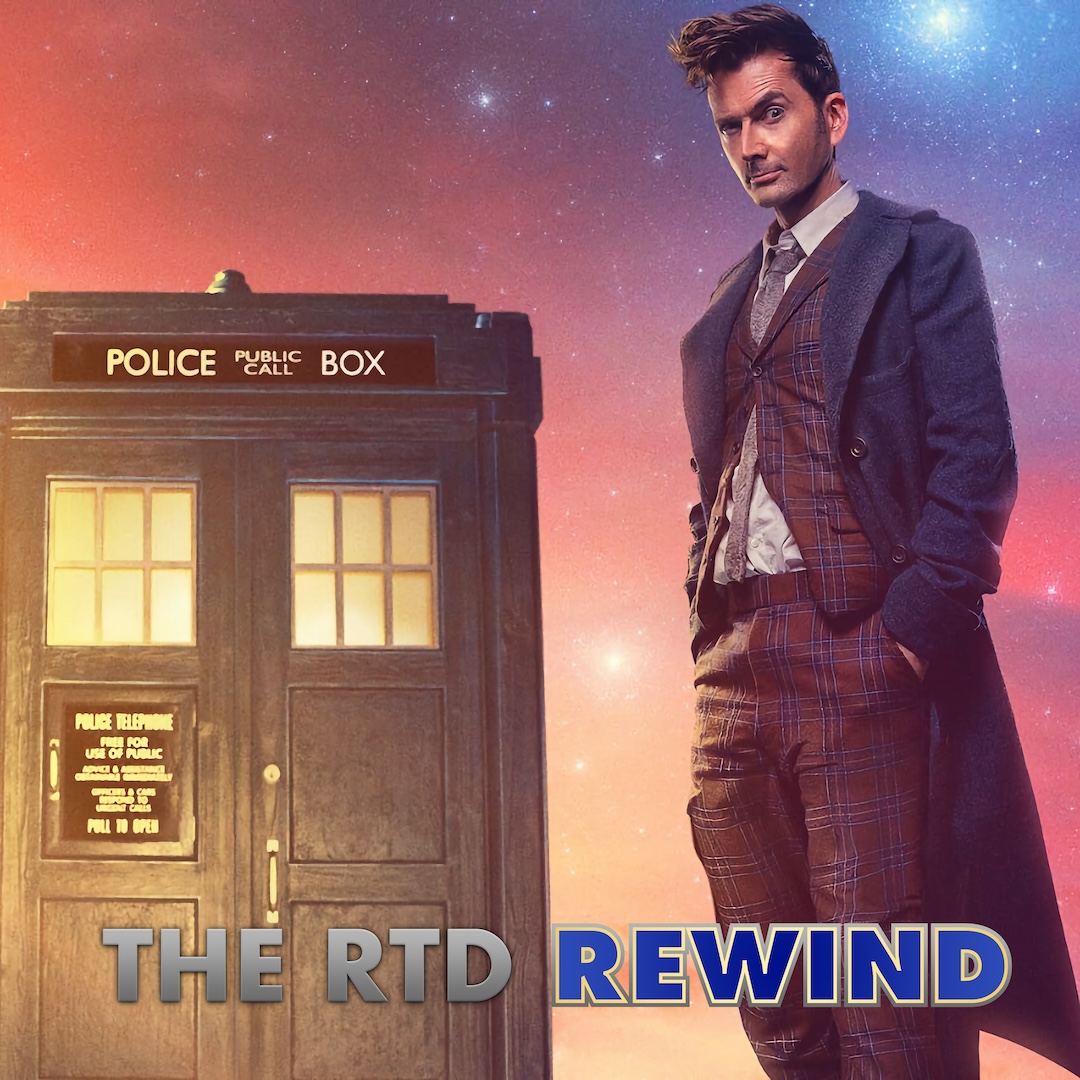
So, The Giggle then. It’s not really a goodbye to the Tennant Doctor like The End of Time was – 14 was too short-lived of an incumbent to really have something like that. So rather than a goodbye and the usual bit of the old Doctor regenerating into the new, we get the bi-regeneration instead.
Which is, if I’m honest, absolutely fucking brilliant.
If the Fourteenth Doctor is more or less a continuation of the Tenth with all of Ten’s negative aspects taken out, it makes perfect sense to me for him to now get the ending he always deserved to have: surrounded by his family and friends, not worrying about what’s next, because he knows that his future is in safe hands. No different, to me, than the Time War ending with Gallifrey being saved, rather than burned.
(Also it’s going to be much easier for Tennant to return now, and you know as well as I do he will at some point during the neo-Davies era. If Patrick Troughton can keep coming back as the Second Doctor, Tennant can too, complete with a built-in explanation for any future aging.)
And while I admit to being a Ten hater, I unabashedly love 14, so I’m very happy that he gets to keep having adventures offscreen, while the show now follows Gatwa.
And speaking of whom, good god what an impression! Gatwa completely owns the stage the moment he appears, and by the time we see him take off at story’s end, you already want more of him. I know I do! Christmas can’t get here fast enough!
What I like about this is that not only does it fulfill the tradition of anniversary stories being multi-Doctor affairs, the way it happens puts a very unique spin on what it means to have two Doctors on screen at once. Shades of Day in how well the Doctors got along, even with the good-natured ribbing between Eleven, Ten, and War. And putting the Doctor’s future self in a position to care for his past self? I love it! Physician, heal thyself indeed.
Gotta admit, I really enjoyed the Toymaker. Neil Patrick Harris’s British accent isn’t great, but given the character slides between mock German and even dips into his natural American for a couple lines, that’s just icing on the cake. The musical number is hilariously camp, and very on par for the guy who wrote The Sound of Drums. Put less charitably: Davies saw the Master as Rasputin and decided to outdo it massively, because why the hell not.
Also, it says something about where the show is now, culturally speaking, that it can afford Neil Patrick Harris in the first place. Granted, this being a limited turn probably helps with that, but it’s a little surreal to see Count Olaf driving the Doctor nuts like he’s a twisted version of Mr. Magorium with the powers of Q.
Then again, we know from Olaf that Harris is very good at playing villainous characters in family shows, in much the same way Richard E. Grant is not. Because unlike Grant, Harris actually gives a shit about the script and isn’t just phoning it in. When it comes to fairly obscure Sixties villains making a return appearance in anniversary years, I honestly prefer Harris over Grant, even if the Great Intelligence made more sense at the time.
(Also, that colorized footage of Hartnell and Gough looks good. Pity that the original story is so flamingly racist. And the less said about that monstrosity of an animation, the better.)
My favorite part of the episode though, as a Moffat fan, was the scene at the UNIT base as the Doctor exposits about how the Toymaker makes me wonder if Moffat wrote it, because “secret message buried in a television broadcast” is literally the resolution of The Day of the Moon. And honest to god, Tennant’s dialogue in that scene, and his acting, gave me big Smith vibes. Maybe I’m reading too much into it, but it’s nice to watch some RTD Who that shows he’s been learning from his immediate successor.
Also, I find it hilarious that while Amy, Clara, and Bill all got name-dropped (stating once and for all that the Moffat era happened, no matter what the haters say) the Whittaker era has been boiled down to just The Flux. Even the Timeless Child bit has been quietly taken off the board, thank goodness.
Darren Mooney uncovers a political bent to the episode’s opening scenes:
“Davies has his finger on the pulse, and it’s bracing to watch an episode of Doctor Who that is so charged and so aggressive in understanding its monster and making its point. There really hasn’t been an episode of Doctor Who this righteously angry since the comment on the health service in World Enough and Time. This is a lot more potent than something as limp as Revolution of the Daleks.”
It feels good to have Doctor Who making political references again, and I mean good ones rather than putting the Master in a Nazi uniform or “the systems aren’t the problem.” The world is increasingly filled with hateful rhetoric and society is littered with “rugged individualists” rather than people working together for the common good. This is post-COVID Doctor Who, in a world where we could very well have another Trump term in a year from now. Davies is aware of that, and I am so glad that he’s doing what he can to turn the show into a bulwark.
In a way, this is a finale to the BBC Wales era of the show, what with Tennant and Tate coming back, the continuity references, and so on and so forth. Just as Moffat’s restoration of Gallifrey launched the show forward into the future with Twelve, RTD returns to launch the show into the future with Fifteen.
So, Darren Mooney is wrong. David Tennant is not the incumbent Doctor, he’s the go-to past incarnation.
Ncuti Gatwa is the Doctor, and that’s as it should be. The rewind is over. Now, we go back to the future.
Allons-y.


Leave a Reply