As we approach the finale of this surprisingly short season, (if you don’t factor in the 60th and Ruby Road as part of the count, though you should, because it brings us up to twelve) we find ourselves in the odd position of coming to the end of what literally is RTD’s second-ever first season as head-writer of the show.
This is slightly deceptive description though, because very little of series 14 resembles anything from series 1. Most of the run has been an RTD solo project, with an assist from Steven Moffat and, in this case, Kate Herron and Briony Redman, both of whom are brand new to the show.
(As a friend of mine pointed out the other day, Rogue is the first episode since fucking Villa Diodati, four years and a pandemic ago, not to have been written or co-written by a current or former showrunner of Doctor Who. Good grief.)
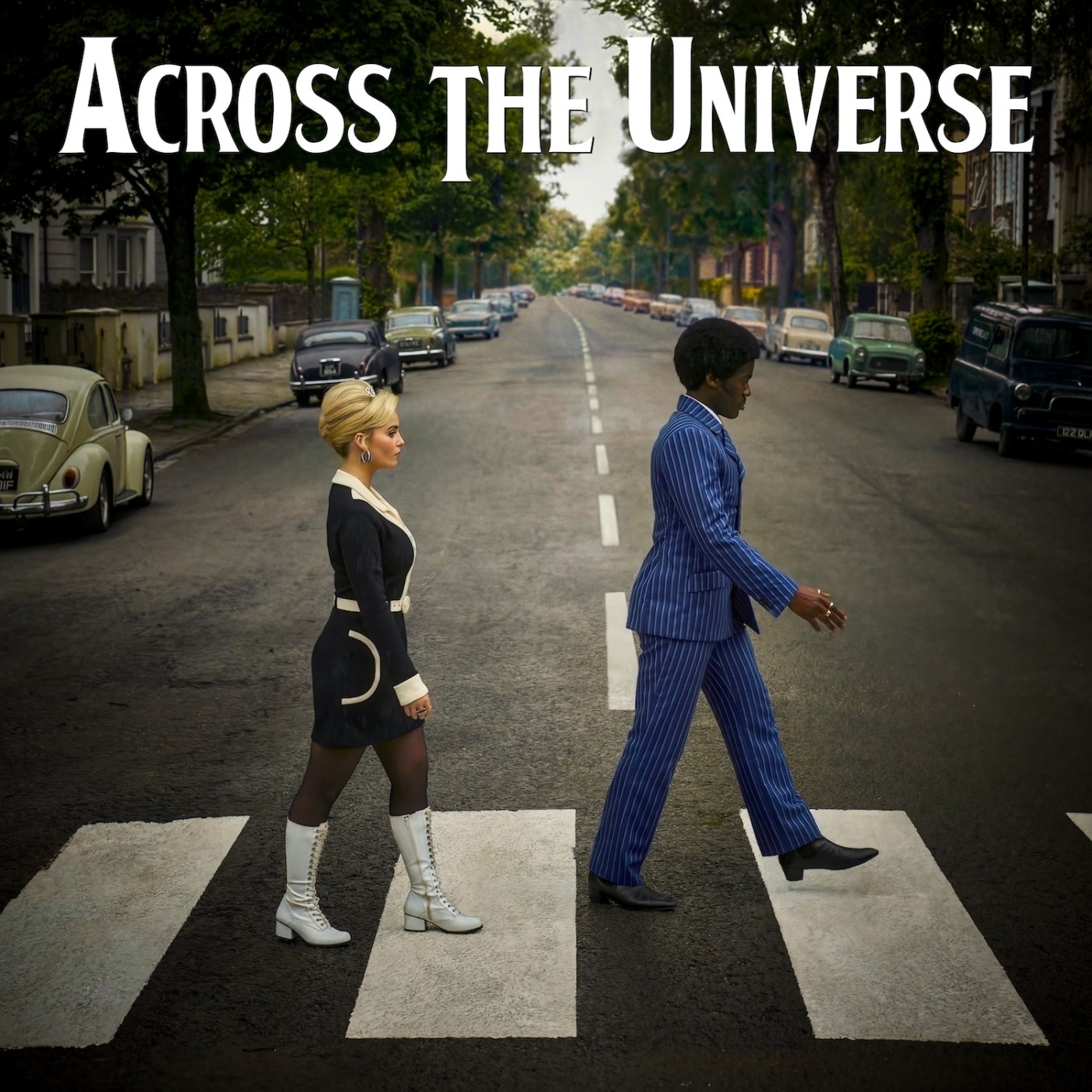
Moving on: While echoes of the Eccleston era seem to be thin on the ground, that is not the case this week. For my money, Rogue is the 2020s equivalent of The Doctor Dances, the second half of Steven Moffat’s very first canon Who story, which began with The Empty Child.
As Elizabeth Sandifer noted in 2013, “Underneath all the creepy horror, what we have is Moffat writing a story about sexual freedom. The worst thing in the world – the thing that will absolutely kill each and every one of us – is if we are sexually repressed and dishonest about our sexuality.”
19 years later, Herron and Redman pick up that baton and not just give us the first inter-racial gay kiss on the show, but use that kiss, and the social mores of 19th century Britain, to lead us into the Chuldur resolution.
The Doctor Dances was daring to be queer in 2005, at a time when Massachusetts was the only US state to recognize same-sex marriage, and kids I went to school with still used “gay” as a synonym for stupid. Now, we exist in a world where queer people are louder and prouder than we’ve ever been, perhaps because we know that in a year from now, our very existence could be made illegal.
This just makes the obvious queer joy in pairing the Doctor up with Rogue all the more important, and their forced parting at the end of the episode all the more heartbreaking. I hope, someday, Jonathan Groff returns.
Speaking of Groff, his involvement in the story, and the character he’s playing here, bring to mind the character of Captain Jack Harkness from series 1, but without John Barrowman’s considerable baggage as a walking, talking sexual harassment lawsuit.
Groff, no stranger to Disney-related projects, (he was in Frozen, which came out a few days before The Day of the Doctor) plays his part with an equal amount of wit and genuine pathos – he has exceptional chemistry with Gatwa’s Doctor, and it was a genuine pleasure to see them on screen together.
Further, I absolutely have to talk about the aliens. It’s been a long time since we’ve had a half-decent alien race on the show, and Chuldur (alien birds, people!) bring to mind the cat nuns from New Earth and Gridlock, but with far more realistic makeup. I particularly like the reveal that Emily Beckett is really one of the aliens, and the way the “Battle Mode” setting of Ruby’s earrings was used.
As an extended Bridgerton riff, I admit that aspect of the episode largely lost me, but I did appreciate the use of pop music done up in a setting-appropriate cover – apparently that’s one of Bridgerton’s big things. Shades of Foxes covering “Don’t Stop Me Now” all the way back in Mummy on the Orient Express back in 2014.
Last but not least, I want to address the hologram scene. The Doctor, literally seconds before he is supposed to die, produces a hologram of various previous faces in order to save his life, including both of David Tennant’s incarnations, the War Doctor, the Fugitive Doctor, Thirteen, Twelve, Eleven, and… RICHARD E. GRANT?!
Now there’s a delightfully out of left field choice. Grant has played the Doctor twice: once for 90 seconds in Moffat’s The Curse of Fatal Death, where he was really good, and then again in 2003’s Scream of the Shalka, the first story of a reboot that never was, where he was really terrible.
For the last couple decades, Shalka has been something of a footnote in Who history, since RTD’s revival of the series in 2005 was announced as promotion on Shalka was getting underway, consigning Grant’s Doctor into the dustbin before he’d even really had a chance to make himself known. Even the story’s 20th anniversary went unremarked upon!
Even so, including him here as part of the Official Lineup of Doctors, in a blink-and-you-miss-it shot no less, feels like a nice tip of the proverbial cap. The show is taking a far more open-ended and fast-and-loose approach to canon now, and it’s probably the best possible result of the Timeless Children debacle from four years ago.
In the end, Rogue is a delightful breather of an episode, coming as it does between heavier stories like 73 Yards and Dot and Bubble, and just before the season finale.
My thoughts so far: Series 14 feels like Doctor Who used to, back in the golden age of the late 2000s and early 2010s, albeit souped up with Disney money and considerable star power, even beyond Ncuti Gatwa himself. Neil Patrick Harris, Jonathan Groff, and Jinx Monsoon would’ve been unthinkable in the Chibnall era.
It’s not RTD’s finest hour, but then, it doesn’t need to be – he doesn’t have anything to prove. This isn’t 2005, where he’s working really hard to make that one season count because he might not get the renewal. He gets to coast a bit, even as he establishes that a 60 year old sci-fi franchise still has a lot of life left in it.
Ball’s in your court, Star Trek.


Leave a Reply