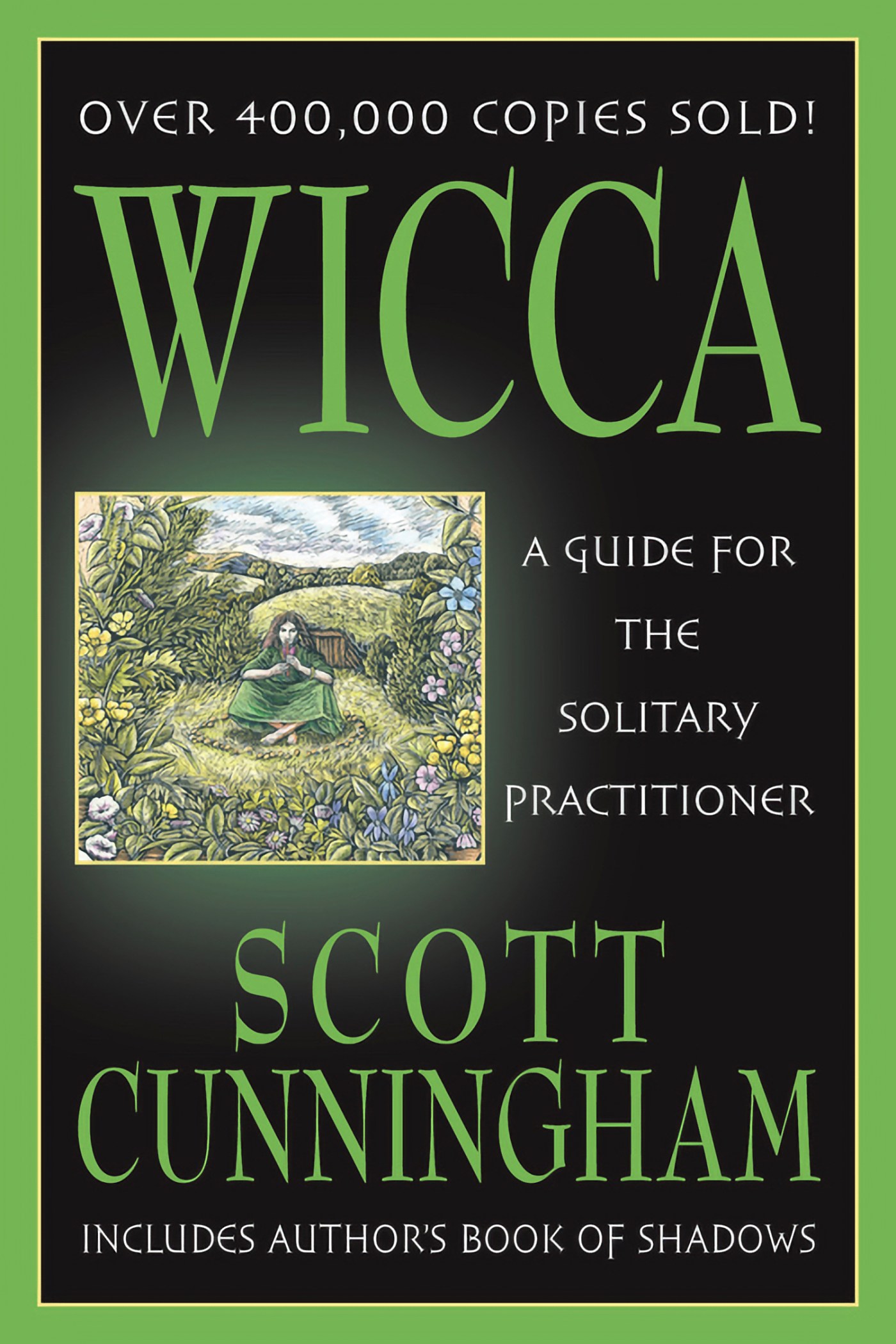
Let me tell you the story about how I became a Wiccan. Believe it or not, Scott Cunningham is involved.
It was a warm morning in mid-May 2024, and recently, witchcraft had been on my mind. I was getting back into the Beautiful Creatures books again, making playlists and reacquainting myself with the magical world that has defined the last decade of my life. One morning, I woke up and said to my girlfriend, “I want to study witchcraft.”
She’d previously mentioned studying the Craft a couple of months earlier, but it wasn’t until May that I finally took her up on it. She replied, “Well, luckily enough, a couple of Scott Cunningham books are on their way to the house.”
Then she handed me Drawing Down the Moon, I devoured that, and then (because I was convinced that Wicca was the spiritual home I’d been looking for since leaving Catholicism) began crafting my initiation ritual, using the one Cunningham provides in his book as a guide. (Most of the final wording is all me, but there’s some Cunningham in places.)
I say all this because, bluntly, the religious path I’ve been following since that day in May last year would not have been available to me had it not been for the publication of Wicca: A Guide for the Solitary Practitioner in 1988. Prior to that, as he himself discusses at many points throughout the book, Wicca was strictly a coven-based religion, going back to when Gerald Gardner first developed it in the 1950s.
While there were prominent voices within the wider Wiccan community who called for the development of solitary practice, (including no less a figure than DOREEN VALIENTE, MOTHER OF WITCHCRAFT HERSELF) it was not until Cunningham’s book was published that would-be solitary witches had something they could use to build their own practices around.
As my friend Anna Katherina writes:
“Cunningham’s material was in direct contrast to the guiding material already released by people like the Farrars in ‘A Witches’ Bible’, which had retained the emphasis on creating traditional Covens in the traditional manner despite Self-Initiation being viewed as a viable and valid means to establish the High Priest/ess’ of said Covens. And by doing so, he ultimately engendered the quintessentially NeoWiccan tradition: An Open Court, non-oathbound denomination of Wicca whose practices were based on information and traditions from Traditional Wicca’s Outer Court system, and which was specifically intended to be solitarily practiced by individuals (or sometimes in small pseudo-Covens).”
The book was an absolute smash hit when it did come out, which compelled Cunningham to write a sequel: 1993’s Living Wicca. Reading the introduction, one gets the sense that Cunningham understood that for Wicca to grow, there would need to be a solitary element. Wicca is, by its nature, a relatively small religion that does not advertise itself. We do not have temples on every street corner like Christianity does. Covens are hard to find, and they don’t usually admit new people unless those people express a sincere desire to follow the path.
This book fills a much needed gap in the magical marketplace, and it is because of this book that every solitary witch practicing today, including me, is able to do it at all. Is it any wonder why the book proudly shouts about how over 800,000 copies have been sold? We all needed this book, and while there were definitely witches out there who gnashed their teeth and complained, the fact is, our religion is better off because we have Scott Cunningham.
The book is split into three sections: the first part sets up the theory, a shorter second part focuses on practice, while the third is a complete Book of Shadows, intended to give the reader a foundation on which to craft their own rituals and BOSes. While it is not as comprehensive as, say, DJ Conway’s Wicca: The Complete Craft, it doesn’t need to be. Cunningham provides you with the basics, and repeatedly stresses that you, the reader, are in control.
In that regard I much prefer his book over Conway’s. His writing style has the air of someone, maybe a kindly uncle, sitting you down and giving you a beginner’s course in witchcraft. There are no long lists of pantheons, and no insistence that a practitioner Must Do this or that thing in order to be a Real Witch. What he emphasizes is that, at its core, Wicca is about a relationship between the individual and the divine – the Goddess and the God. Magic is a significant part of it, but it’s not the whole enchilada.
From an outsider’s perspective, coven-based Wicca can look intimidating. The insistence that one must study for a year and a day before they can even be considered for an initiation ritual, the degree system, the sheer volume of rules and regulations that each coven might have… who knows how many would-be witches looked at all that and ran away, never to be seen again?
Cunningham’s book strips all that away to focus on the bare essentials. Ours is a participatory faith, as the practitioner and our gods work together to effect change in the world. It is a religion built upon the reverence of nature, and doing what we can to repair the considerable damage done to our planet. It is deeply personal, as every witch learns to build a relationship with the divine that is entirely unique to them, and them alone. And most of all? It is a religion built on joy, happiness, and love – three emotions that we could all stand to have more of these days.
It’s worth nothing the cultural context here. When this book came out in the late 1980s, Ronald Reagan was president and the dominant religion in the US was not just Christianity, but the specific authoritarian right-wing formulation that demands conformity, sameness, and suppression of the self in order to live a “godly” life.
Not here. Wicca, particularly among solitaries, is a religion that thrives on the expression of one’s true and whole self in order to make magic work. When I did my initiation ritual, (which I call the Claiming, in tribute to my namesake) I did not choose to take a Craft name, like some witches do. I simply stood before the gods as Lena, as myself, and they welcomed me home.
This book shines like a beacon of light, extolling the gospel of self-empowerment and a close, personal relationship with the gods in the face of an ascendent religious right. That was huge in 1988, and it’s huge now in 2025, when forces are moving to turn America into the “Christian nation” it never was in the first place.
Cunningham didn’t live to see what his book would do in the 37 years that have passed since he wrote it, but I have zero doubt that he would be proud of the impact it’s had on whole generations of witches. By placing Wicca into the hands of anyone who wants to practice it, he gave us the tools we need not only to insist upon our sovereignty, but to defend it.
And for that reason, I will carry this book with me into the next round of fascist resistance.
Do no harm, but take no shit.

