So it’s been a while.
Last time we met, the 2024 election hadn’t happened, if you’re reading this on Patreon. If you’re reading this on WordPress, then the last 2 posts have both come out under the shadow of the second Trump administration. I’m writing this on January 21st, the day after his second inauguration, and already things look bleak. Trans people like me are now public enemy #1, the J6 rioters have all been pardoned, Elon Musk did the Hitler salute during the inaugural parade…
And that’s just day 1.
So with all that in mind, why come back to these books now?
Simple: comfort in dark times. And the society of a fictional small Southern town like Gatlin, quite neatly, is reminiscent of America today, as we’ll get to a little further on in our analysis. So, let’s jump right in with our next pair of chapters: “Collision” and “Broken Glass.”
“Collision” is a one of the most important chapters in the whole series, because this is the one where Ethan and Lena first meet. As we saw at the end of “A Hole in the Sky,” Ethan runs out of school and jumps into the Beater, acting largely out of panic than anything else. He drives out into the storm, and from his description, it’s nasty out there – pitch black clouds, horizontal rain, constant lightning and thunder. (Growing up in the Midwest, I’ve seen plenty of such storms myself over the years.)
And then, as the Beater becomes completely undrivable, he slams on the brakes and just about manages to avoid running into a girl… a girl with green eyes and black hair.
How he describes her is one of my favorite moments in the whole series: “I knew she had green eyes; I’d seen them before. But tonight they looked different—different from any eyes I had ever seen. They were huge and unnaturally green, an electric green, like the lightning from the storm. Standing in the rain like that, she almost didn’t look human.”
The first time I read that, I don’t think I knew that Lena was magical. This is the first hint we get, I think, that she is – it’s a subtle moment but it means so much in the grand scheme of things.
The Caster lore that we get much later in the book indicates that people like Lena, according to the wiki, “a “higher being” with the ability to use magic, known as casting.” What exactly that uncanniness is supposed to be, we never learn. But sometimes, implication is enough. This is a book, after all – the reader’s imagination can do way more than any special effects budget.
Their actual conversation as Ethan drives her home to Ravenwood Manor, where her uncle Macon lives, is really cute. He’s obviously intrigued by her, and if you read that section closely, she starts to gain a kind of curiosity about him too. They’re not friends yet, little yet the couple that they’ll grow into, but there’s a natural attraction between them that feels really nice to read.
The moment invites some comparisons to the equivalent sequences in the first Twilight book, which this series was endlessly compared to when it came out. It’s not hard to see why – both series are about a mortal narrator falling in love with a supernatural being of the opposite gender: a vampire and a witch, respectively. But that’s about where the similarities end.
For one thing, the Caster books are better written than the Twilight books ever were – that those books became the Huge Thing and inaugurated the supernatural YA romance book of the late 2000s and early 2010s is a crying shame. What Edward and Bella had was nothing more than lust. There was no chemistry between them, they just got together because the poorly-written plot said they had to.
Twilight, even just the brief extracts I read for this post, has some of the worst prose I’ve ever seen in a professionally published novel. Bella Swan’s stilted, overly formal narration would be one thing if the character was posh – I write a well-educated witch from Mars who talks like that. But she’s not, she’s just an ordinary American teenage girl who happens to sound like she swallowed a thesaurus.
Then you’ve got strict adherence to “traditional” gender roles, an emphasis on getting married and having kids, and Bella acts like a stereotypical 1950s housewife, doing all the cooking and cleaning in between schoolwork and having implied terrible sex with Edward when she finally does get married. And that’s before you factor in the fact that seemingly everyone in the series, or at least the central trio of Bella, Edward, and Jacob, are all emotionally abusing each other.
All this is why I think it’s such an injustice that the Caster books didn’t take off and become huge like Twilight did – the Twilight books are actively harmful, overwritten dreck. That the books took off says a lot about American society, and none of it is good. There’s a reason we elected Trump twice.
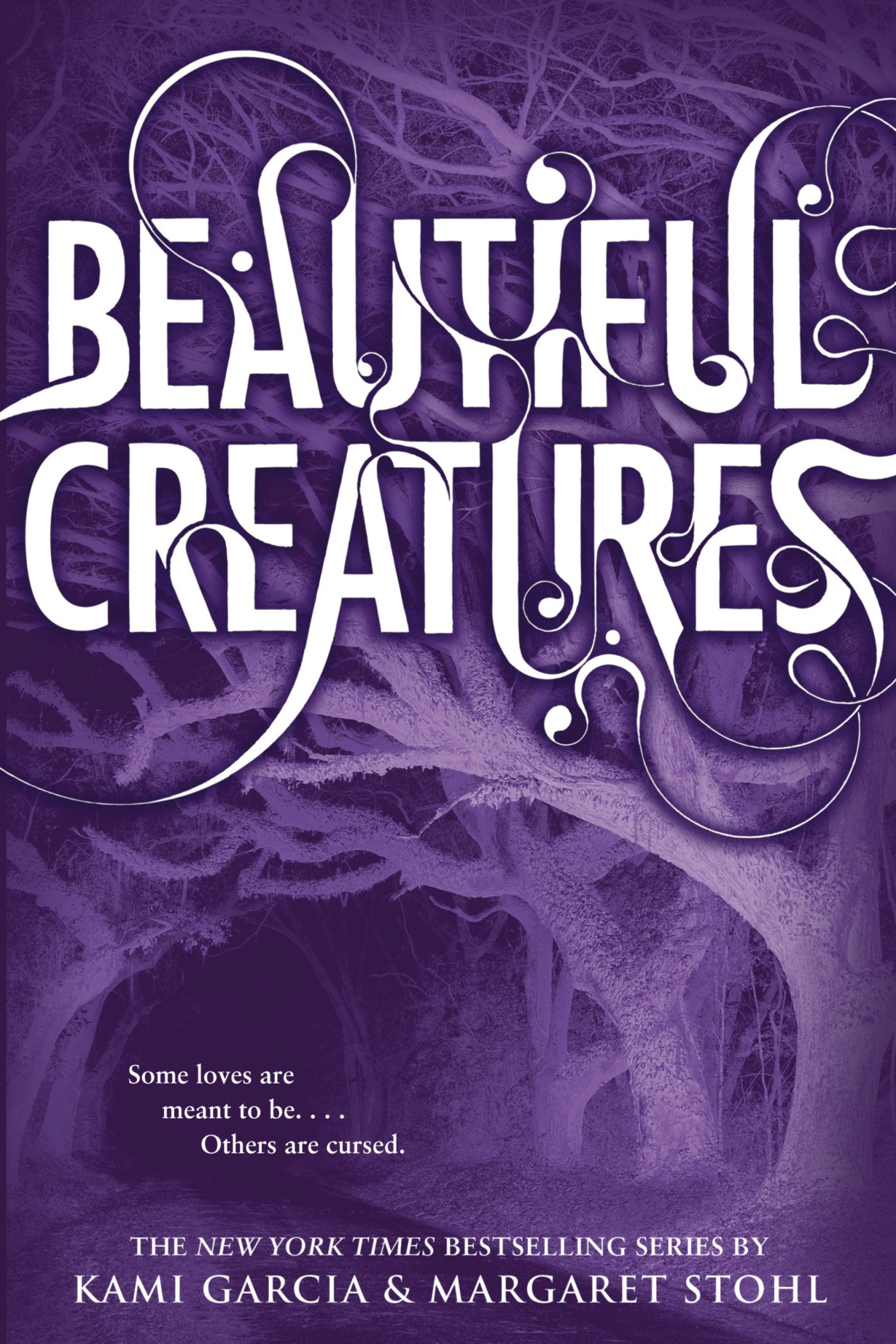
Perversely, I admit I have Twilight to thank for giving me the world of Beautiful Creatures at all. According to the movie companion book by Mark Cotta Vaz, Margret Stohl recalled that some of what happens in the Caster books was, in part, a response to Twilight:
“My daughters are really smart and opinionated, with strong personalities, and they’re also fencers. And they were indignant [about] a few points they said kept coming up [as they read young adult literature]. They said, ‘Why does the girl always have to fall in love and never be powerful and have to follow the boy around? Why can’t the girl be powerful?’ When we started writing our book, the kids said, ‘Don’t be generic, don’t have vampires, let the girl be powerful and magical.”
Just flipping the Twilight dynamic isn’t enough – Stephenie Meyer did it twice and didn’t improve the story one bit. You have to change your operating assumptions too. For example: While both series involve the two leads being unable to “be together” (as the Caster books call it) out of fear that the supernatural will kill the mortal, the subtext is entirely different.
With Edward and Bella, it’s an extended metaphor for the Mormon custom of not having sex before marriage. For Ethan and Lena, it’s because they’re teenagers who are going through puberty and therefore want to do things that most teenagers do: be physically intimate. Even the passionate make-out sessions that Ethan and Lena have are enough to put his life in jeopardy.
There’s a thousand reasons why the Caster books, flawed though they are, are still superior to the vampiric tetralogy that preceded them. Ethan’s narration is refreshingly realistic – he sounds like an actual American high schooler. (No doubt Kami Garcia’s job as an English tutor helped out there.) But as we’ll see, Lena’s arc is all about her insisting on her personal sovereignty in the face of various opposing forces.
But most importantly? Lena falls in love with Ethan because she likes this total goofball of a mortal, and that’s it. She’s not trying to get into his pants, nor is she obsessed with getting married/become a vampire like Bella is. She just loves him, and that’s that.
The recurring theme of this series is “Claim yourself.” The overarching theme of Twilight is, “Be claimed.” And that makes all the difference.
Okay! Twilight rant over. Onwards we go to our next chapter, “Broken Glass.” Ethan’s life has already started to change because of meeting Lena – he found a silver button from the vest she was wearing on the floor of the Beater at the end of “Collision,” and has it with him all throughout the chapter. And it’s a good thing too, because now we get to see their burgeoning relationship be placed in a larger context – the social politics of Jackson High.
There’s an exchange between Ethan and Lena, early in the chapter, that is both hilarious and horrible, in that it is very easy to imagine what must’ve gone through the minds of everybody else when they overhear it:
“I guess when I started thinking, I stopped walking, and I felt someone bump into me. Only it wasn’t a steamroller this time, more like a tsunami. We collided, hard. The second we touched, the ceiling light shorted out over us, and a shower of sparks rained down on our heads.
I ducked. She didn’t.
“Are you trying to kill me for the second time in two days, Ethan?”
The room went dead quiet.
“What?” I could barely get the word out.
“I said, are you trying to kill me again?”
“I didn’t know you were there.”
“That’s what you said last night.”
Last night. The two little words that could forever change your life at Jackson. Even though there were plenty of lights still working, you would’ve thought there was a spotlight on us, to go with our live audience. I could feel my face going red.”
Poor Ethan. We know he’s referring to almost running Lena over with the Beater, but as far as anyone else in the room is concerned, Lena might as well be talking about a night of sexual intercourse that went incredibly off the rails, which Ethan alludes to in his narration. (And implied by Link talking about “hooking up” a page or two earlier.) It’s clear from her amused look a line or two later that she was probably just joking, but… yeah. Context is key, and Ethan’s classmates don’t have any.
But let’s move on. In this chapter, we are introduced to Kelting – the magical telepathic connection shared between Lena and Ethan. It allows us a glimpse into our heroine’s mind, and since Ethan’s narration is meant to be his internal monologue, that means she can hear it, and occasionally comment on it. (Such as when she insists that the cheer squad would, in fact, hate her whether Ethan was in the picture or not.)
The main action in the chapter takes place during English class, where a lesson on To Kill A Mockingbird (a book which Emily hates, because modern American high schoolers despise reading) is disrupted by the cheer squad bullying Lena for being, well, herself. Much is made of how significant a contrast Lena is compared to the cheer squad, but the real drama starts when they start bringing up Macon and casting aspersions on him.
Lena’s italicized lines (her own inner thoughts) allow us to keep track of the mounting tension in the classroom, as her increasingly loud demands for the bullying to stop ultimately lead to Lena’s magic going haywire and dramatically shattering a classroom window. Looking terrified, she runs off like a startled deer while the cheer squad accuses her of trying to kill them, and the chapter ends there.
The thing Ethan repeatedly stresses, both in this chapter and in “Collision,” is where Lena stands in Gatlin’s social circle. She is the ultimate outcast, and is treated as such by the other characters, particularly by Emily and Savannah. As Ethan discovers over the course of the book, to be associated with Lena Duchannes is to find yourself being an outcast as well.
But is being an outcast such a bad thing in a town like Gatlin? I wouldn’t think so. Because look at the dominant culture of the area – this is a deeply religious small town in the Bible belt, where anyone who is perceived as Different, whatever the reason, is therefore suspicious.
This is something Kami Garcia discusses in the movie companion book: “There’s a different sensibility in a small town. We changed a persecution of race to a persecution of difference. In our universe it began with outsiders, then moves on to Casters. Whether it’s racial or religious or sexual orientation, there are people being pushed to the fringes because they don’t fit into the mainstream.”
The same social dynamics at play in Gatlin, sadly, are also at play in modern America. When I first read this book in 2015, we were well into the Obama years – this was the summer when marriage equality was made the law of the land, we had a Black president, and the trans community was starting to become more visible and more accepted within the cisgender community. It felt like we were starting to win out over the Emily Ashers and Savannah Snows of the world.
And then Trump got elected president. Twice.
Bluntly, this chapter of the book hits very differently in light of his second inaugural address yesterday. He may have been trying to lighten the mood after his “American carnage” speech in 2017, but being who he is, the mask didn’t last for very long. But what I want to draw attention to isn’t his long list of threats and grievances masked as populist rhetoric, but his conception of unity:
“National unity is now returning to America, and confidence and pride is soaring like never before. […] We will not forget our country. We will not forget our Constitution, and we will not forget our God. […] We are one people, one family and one glorious nation under God.”
Aside from the fact that the last line is an echo of something Adolf Hitler used to say, (“Ein Volk, ein Reich, ein Führer”) the entire paragraph is a conception of unity rooted in the idea of conformity. In Trump’s America, we will dress the same way, worship the same singular God, and believe in the same things. Anything and anyone different must be expelled, expunged, and exterminated. In Trump’s America, we will truly be free… as long as that freedom is to be just like the Jackson High cheer squad, rather than Lena Duchannes.
I saw a political cartoon yesterday that seems incredibly apropos for our current moment, both politically and in regard to what I’m writing about here. In the cartoon, the Statue of Liberty has been tied to a stake, with a bundle of logs under her dress. The plinth on which the logs are resting is labeled, “DEMOCRACY.”
A mini version of Trump is toward the middle of the picture, holding a burning torch. His speech balloon has him yelling “SHE’S A WITCH!” whilst pointing to Lady Liberty, facing a crowd of MAGA voters (red hats and all) with torches of their own. You can probably guess what will happen next: Trump and his minions will light the fire, and democracy will die. Not in darkness, but by the light of a blazing inferno.
This is how it’s always been. Ever since witch trial fever gripped Europe in the 1500s and America in the late 1600s, particularly in Salem, any woman who dared to go against the grain (as Lena does in the book) was claimed to be a witch and was killed for it. (Though not usually, ironically, by burning.) Since then, “witch” has become synonymous for an evil woman bent on destruction, so much so that it’s become a slur among Casters, like in Lena’s family.
But in our real world, the word “witch” has been reclaimed and retooled to become a symbol of pride and even defiance against those who would try to snuff us out. And we’ll need that spirit of independence now, as fascism comes to America at last. Trump’s government is full of people like Emily Asher and Savannah Snow, ready to burn everyone and everything that does not fit their view of who an American is.
Our task for the next four years, and beyond, is simple: In a world of Emily Ashers, be a Lena Duchannes.

