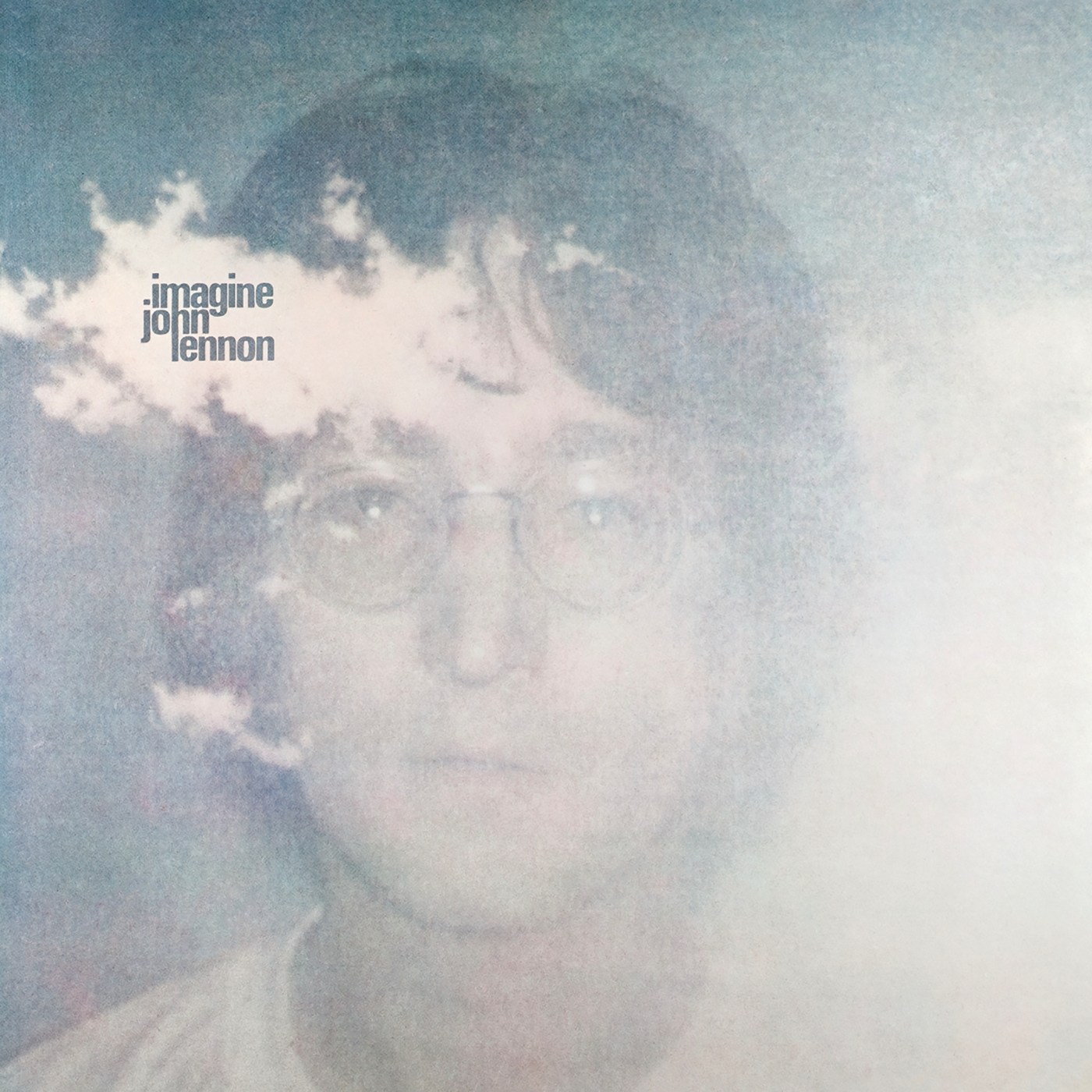
Imagine is one of those albums that seemingly everybody on Earth has an opinion about. There’s no question that it’s the masterpiece of John’s solo career. From the title song on down, this is an album that distills the popular John Lennon into pure sonic beauty.
With greater control of his inner demons thanks to the personal banishing ritual that was Plastic Ono Band, John was able to focus on making music for everyone, not just himself. Across the album’s ten songs, we are presented with meditations and pleas for peace, some of the most beautiful love songs ever written anywhere, some political musings, and of course, a good dose of Lennon’s trademark snide anger and rage.
John himself saw both Plastic Ono Band and Imagine as being two sides of the same coin. In 1980 he said to David Sheff, “The album Imagine was after Plastic Ono. I call it Plastic Ono with chocolate coating.” There’s some truth to this: four of the album’s songs return to POB’s major theme of self-reflection, but in a more traditional pop music format.
Certainly, Imagine basically defines the sound of a John Lennon solo album: The man himself, of course, lots of piano and brass, session musicians like Jim Keltner and Alan White on drums, keyboards, guitars… this album is sonically huge, a world away from the intimacy of Plastic Ono Band’s power trio of John, Klaus, and Ringo.
Through it all though, there was still a thirst to prove himself in this new post-Beatles era. As he explained at the time, “I was still full of wanting my own space after being in the room with four guys, and always having to share everything, share shirts, share the same dry cleaner, the same everything.”
Does he succeed? Let’s jump in:
‘Imagine’: The Big One. Ask anyone to picture John’s solo years, and this, understandably, is the first one they’ll name. Some have called it an atheist anthem, and others see it as what it is – a plea for world peace at a time where it seemed like the entire world was burning down.
While its message has been derided over the years as being hypocritical, I feel like people who say things like that are missing the point. He can make these statements because he had been a Beatle. There’s no bigger platform than that, and no better legacy than this.
‘Crippled Inside’: In which John indulges in some good old fashioned country rock, featuring George Harrison playing dobro… and according to the lyrics, I think it’s about mental illness? Which is certainly pretty huge for the early 1970s. (Not to mention relatable.) Also listen for the line “You can live a lie until you die,” a reference to the Paul is Dead myth.
‘Jealous Guy’: As mentioned in the Esher Demos post, this song began life as “Child of Nature,” when John was high on learning transcendental meditation in India. He set new lyrics to the tune from 1968, resulting in this piano-based confessional.
I must’ve been about 12 or so when I first heard it, and the sheer vulnerability of it hit me like a freight train. (And it still does!) The last decade of John’s life was one where he tried to make amends from all the pain and awfulness of his youth, and this song is part of that process.
Exactly who the lyrics are directed toward depends on how read them. My personal reading is that it’s him apologizing to all the women in his life whom he hurt over the years, but Paul McCartney, in 1985, said that he thought the song was about him. If read in that way, it could be John apologizing to Paul for all the trouble and strife both of them experienced in the last year or so of the Beatles.
I don’t think so though. Kind of hard to do an apology song before the one where you viciously attack the guy you’re ostensibly confessing to.
It’s So Hard: The strife and assorted difficulties of daily life have always been one of John’s favorite writing topics. For crying out loud, this is the guy who devoted two Beatles songs to the subject of sleep, whether too much (“I’m Only Sleeping”) or too little (“I’m So Tired”). “It’s So Hard” falls into a similar groove, but with some new optimism in the form of his musings on his feelings of contentment when he’s around Yoko.
I Don’t Wanna Be A Soldier Mama I Don’t Wanna Die: An extended rant about the various pressures inherent in modern society, “Soldier” is kind of like a descendent of “I Want You (She’s So Heavy)” from Abbey Road, with John’s vocal treated with slapback echo, heavy reverb on the part of Phil Spector, and a truly amazing sax solo from King Curtis, a legend of the jazz world.
‘Gimme Some Truth’: Easily my favorite of John’s protest songs, in which he speaks out about deceptive politicians, hypocrisy, and chauvinism. Given that this was the 1970s he includes some digs at Richard Nixon, but I have zero doubt that if he had been alive to see the Trump administrations, he would’ve released a new version with 47’s name in place of Nixon’s. (And maybe Dhani Harrison subbing in for George on the solo, as he did for a 2007 cover by Jakob Dylan, son of Bob.)
In 2021, Peter Jackson’s Get Back documentary revealed that John and Paul had worked on this song together during the sessions for the abortive Get Back TV special. The line “Money for rope/Money for dope” is Paul’s phrasing, and in unused Imagine liner notes, John wrote that Paul helped with the middle eight.
In essence, this is, in a way, the last ever Lennon-McCartney song to be released during John’s life, and the only one to be released outside of the Beatles. (“Now and Then” from 2023 is the real last Lennon-McCartney song, as Paul got to write a line of verse that John never finished.)
‘Oh My Love’: The tenderest song on the album, this is a love song to Yoko, with its origins from the same 1968 sessions that produced the Beatles’ White Album. Quoting the Beatles Bible: “The lyrics, which reveal feelings of clarity and rebirth at having fallen in love, are among the album’s most elegant and direct, and the references to the wind and clouds are reminiscent of Ono’s instructional works.”
‘How Do You Sleep?’: This is it. The nastiest song on the album, and probably the nastiest of John’s career, because it’s such a direct attack on Paul. The feud between them arose when Paul released the song “Too Many People” on Ram earlier in 1971, which contains several implied digs and criticisms of John and Yoko. John responded with this vicious diss track, featuring George Harrison on slide guitar, playing the best solo I’ve ever heard. Mixed originally in mono, the 2018 remix is the first time it’s ever been heard in stereo.
‘How?’: Staying with the theme of John being confessional on a piano, this song finds him trying to figure out whether, or if, he’s capable of love given all the difficulties he’s experienced over the course of his life. The chorus (“You know life can be long”) inject a bit of optimism into the lyrics, suggesting he might have come up with a solution.
‘Oh Yoko!’: Proving beyond a doubt that John can do joyful exclamations of love for his wife just as well as Paul can, he comes up with this, the closing track from Imagine. It’s absolutely delightful, with little nods toward his Beatles days – “My love will turn you on” evokes “A Day in the Life,” while the harmonica toward the end echoes his songs from 1962 and ’63, when they were first starting out.
The 2018 remix of the album adds these bonus tracks:
‘Power To The People’: A non-album single of John’s from 1971, when he was at his most intensely political – in this case, he shows off his development as a feminist during verse three, and a commitment to the working class heroes of the world in verse two. But what I like is the opening two lines, where he repeats the first line of his song “Revolution,” and then follows it up with a desire to get things moving, rather than the more cautious approach he took in 1968.
Well… (Baby Please Don’t Go): A cover of a song from 1958 by The Olympics, recorded for Yoko’s birthday in February 1971, during the Imagine album sessions. Keep this one in mind, because we’ll be hearing it again next week as a live take – this is the studio version.
God Save Us/‘Do The Oz’/‘God Save Oz’: These three songs, combined, came about as a request for help to John by the publishers of Oz, a British humor magazine. In 1970 the Oz offices were raided, and the three publishers arrested. They were then brought up on obscenity charges.
Per Beatles Bible: “The magazine set up Friends Of Oz to raise money for its legal costs. One of the Friends, Stan Demidjuk, knew Lennon, and asked if he might help the defendants. Lennon agreed to write and record a song, for which all the royalties would be donated to Oz.”
The final song was “God Save Oz,” which was then reworked and re-recorded into “God Save Us” for international release. Bill Elliot sang the final version, though an early take with a guide vocal from John appeared on the Anthology collection in 1998. “Do the Oz” is the B-side, featuring John and Yoko singing together.
‘Happy Xmas (War Is Over)’: John’s one and only Christmas song, and the first one to be recorded by a Beatle since “Christmastime Is Here Again” in 1967. Like “Give Peace a Chance” before it, the goal of the song is to promote an end to war and strife, and optimism for the coming new year. It has since become a holiday standard, right up there with Paul McCartney’s own Yuletide track, “Wonderful Christmastime.”
If you’re expecting me to start trashing Imagine like I did A Hard Day’s Night in Off the Beatle Track, prepare to be disappointed. I love this album, completely unreservedly. It’s John’s best work by far, and it really isn’t hard to see why it’s so beloved. This is John at the height of his powers, creating music for the whole world.
As the decades pass and the world seems to turn further and further away from the utopia he envisions in the title song, I anticipate I’ll be playing this album a lot in the coming months and years. The rise of the far right, both here in the US and beyond, is terrifying, and we need John’s messages of hope more than ever.
There must be a light in the midst of all this darkness, and there’s nowhere else I’d rather look to find it.


Leave a Reply