Let me tell you a story.
When I was in college, I had a Black roommate named Craig. One night, his dad (who was also named Craig, and worked as an architect) came to give his son a haircut. While he was doing this, I sat down on a chair and listened to Craig Sr. tell me, a pre-everything white trans woman, about how haircuts work for Black people… and the singular importance of the barbershop in African American culture.
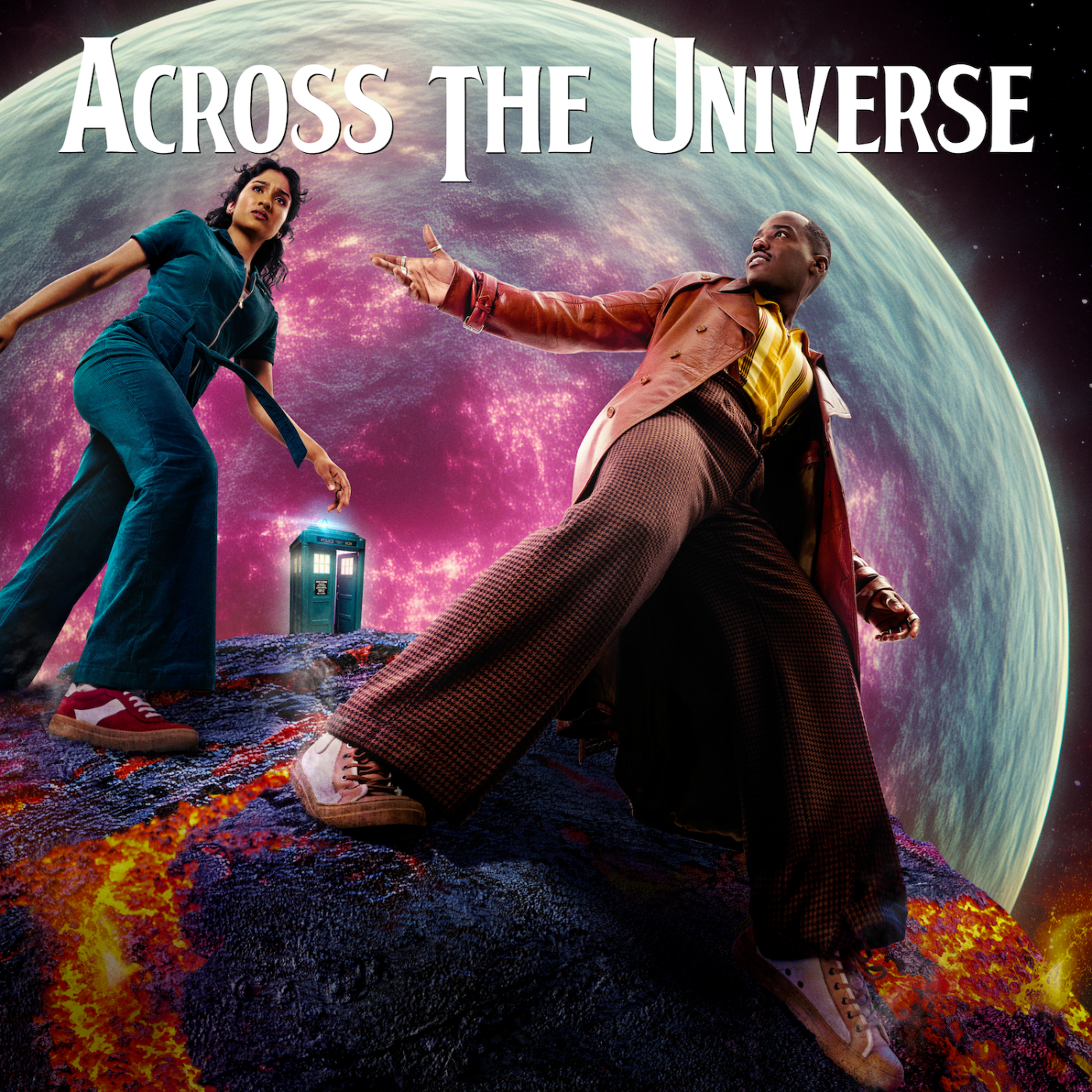
One of the things Craig Sr explained to me was that, as the Doctor alludes to in the first TARDIS scene, getting a haircut was about more than actually getting one’s hair cut – to be Black, and to enter a space owned by and patronized by people who look like you, was and is extremely important. The judgmental stares of white America did not cross that threshold, and they were free to talk about whatever they liked, without fear.
I thought back to that night, a little over eleven years ago now, when watching this episode. How it feels to be in a minority group, and the importance of being surrounded by similar people – whether that’s as a racial minority (like it was for both Craigs and the Doctor) or a gender minority, or a religious minority. I’ve been in Telegram chats just for trans women, and Discord servers just for pagans.
And in all those spaces, what makes it all worthwhile is freedom.
And freedom? That’s a pretty precious thing. It can be given, and it can be taken away. Just look at what’s been happening in the US since January 20th, as Trump and his goons roll back the entire Civil Rights Movement, and erase the accomplishments of Black military service members and the mere existence of trans people from Stonewall National Monument. And when he’s not doing that, he’s imprisoning immigrants in El Salvadoran prisons. Or jailing college students for writing op-ed pieces in their school newspapers.
So I sit here, in the year of the Goddess 2025, watching the first ever episode of Doctor Who to be entirely devoid of people who look like me, and I smile. As The Witchfinders (the nearest equivalent to this episode in the Whittaker era) did for the Doctor and gender, here we get the Doctor and race. And in Africa, no less – where the show has never gone before.
And what animates this absolute slice of perfection? Something I can speak at great length about, but haven’t had the chance to yet.
The power of stories. And in this case, what’s more powerful than the stories of the gods?
Real gods this time, not the fake ones that we’ve had since RTD came back. A whole bunch get name-dropped: Loki, Saga, Anansi, Dionysus, Bastet… and our villain, the Barber, was their poet. He told their tales, and grew strong. He got a taste of their power and decided he wanted more. And the gods struck him down, insisting that he know his place. But he kept going, until he came up with a plan to kill all the gods.
The Doctor is horrified by this, of course, and who can blame him? He even says so! “Humans are tied to the gods,” he says. “Destroying them would harm the very essence of humanity. A world without stories? How would they pass on tradition?”
And he’s right. The Celts, be they the Iron Age Irish or the Welsh bards who told the story of Cerridwen, didn’t write anything down – we only have the stories we do because of the Christian monks, who copied down the tales they heard with more than a little artistic license… just like our Barber here.
And, like the Barber, those early Christian missionaries were filled with hubris. They were intent upon showing the pagans of Wales and Ireland that their one god was far more powerful than the many different ones they were used to worshipping. And over time, the stories changed: Cerridwen, once honored and revered by the early Welsh, became a hated figure.
But now, things are shifting. Worship of the old gods is coming back into vogue – The Story and the Engine exists at a time when paganism is getting increasingly popular, and it’s becoming easier than ever to find books that tell the stories of the various pantheons on their own terms, without the various additions from the Christians.
As a case in point, let me digress a little bit to Kim Curran’s novel from February 2025, simply titled The Morrígan. It is a retelling of this particular Irish goddess’s own myths, stretching from the arrival of the Tuatha De Danann in Ireland and all the way to the famous Irish epic, Táin Bó Cúailnge, or the Cattle Raid of Cooley.
Crucially however, Curran elects to tell all these stories in the voice of the Great Queen herself, which lends the inescapable impression that (speaking as one of Her devotees) we’re reading her autobiography. Early in the book, she writes:
“Our story has been told a thousand times. A thousand times a thousand. And each telling a wound. With each version they stripped me away, like willow whittled to strips. […] It was bad enough when it was the poets showing off their skills reciting my prophecies from memory. But then Ogma showed them how to write. And write they did. The calves they slaughtered for skin to fill with black ink to tell the story of their God. They tied me up with him, too, placed my life in a timeline that led to his birth. […] Yet no one has told my story. But I will try to tell it now. In my own words. My own voice.”
The Morrigan, in this book, has a dim view of poets – and understandably so. I can very easily see her glaring at the Barber, this impudent mortal who thinks he can stand tall among the divine, just because he knows how to weave a story. But the thing is, storytelling is magic all by itself. Even she understands that – after all, she’s a goddess of prophecy, she tells the stories that haven’t happened yet.
Sound a bit familiar?
“We’re all stories in the end,” said my Doctor in The Big Bang, and those words have stuck with me for the last fifteen years. Because it’s true. We can’t always control what kind of story we become – we’re viewed differently by people who love us versus people who don’t. All we can do is try, as the other half of the quote goes, to “make it a good one.”
And everything ends well for our Barber. He survives, and continues to collect stories, and the gods keep living and keep watching out for their devotees. It’s the only kind of ending you can have in a story that draws so heavily from African lore. But then, who’d want anything else?
It’s like I said earlier: the old gods haven’t vanished. If anything they’re flourishing, whether they come from the Norse pantheon, the peoples of Africa, or the Welsh, or the Irish. And that’s how I view this story, in the end – a love letter to the ancient deities of the past, the present…
And the future.


Leave a Reply