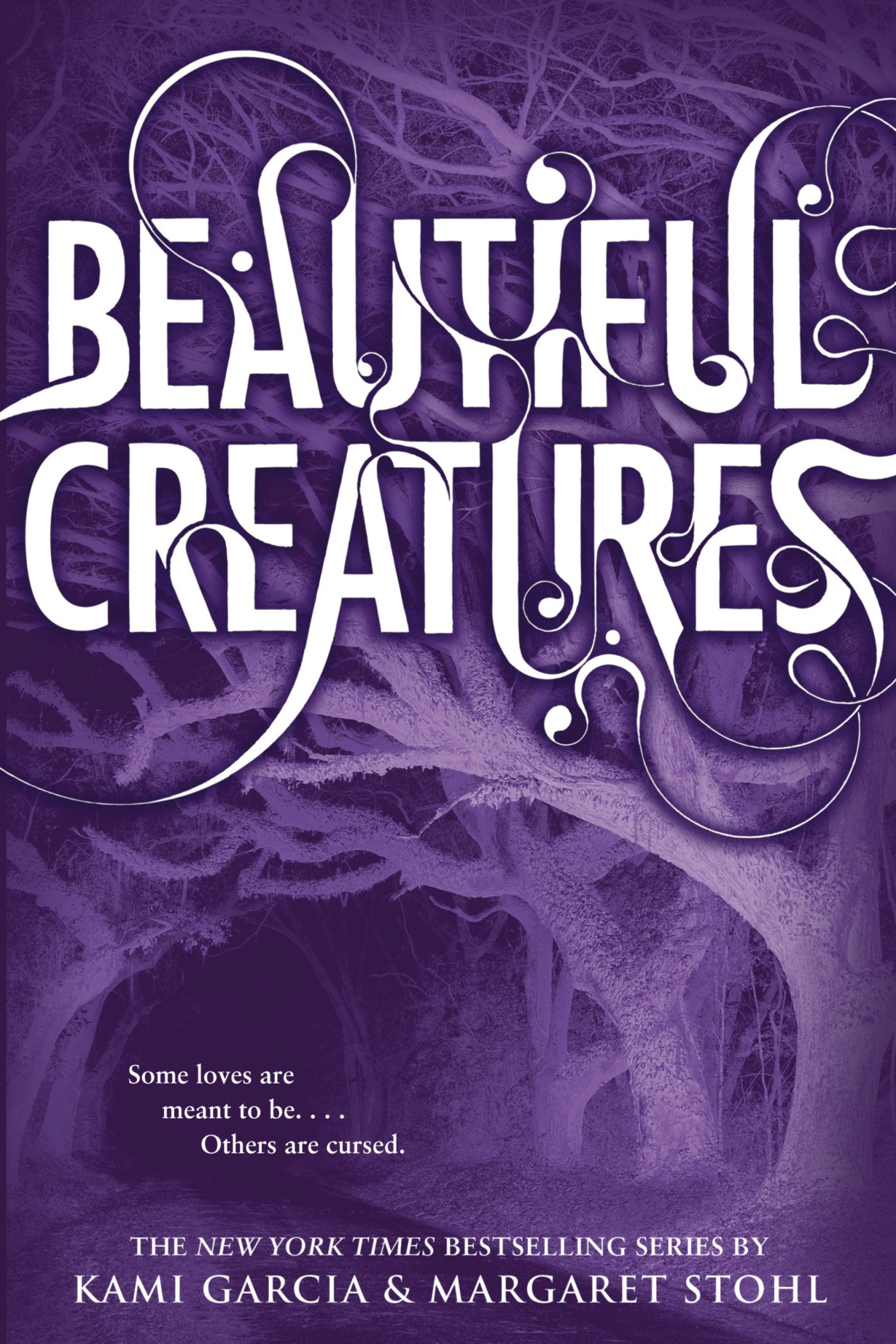
This week, our two chapters are primarily about world-building. Our first one is set primarily in Lena’s room, which means we get a peek into what she’s like when she’s not at school. A lot of focus is paid to the poetry she writes, and it’s really cool:
On one closet door was scrawled fate decides. On the other, it said until challenged by the fated. Up and down the door I could see the words desperate / relentless / condemned / empowered. The mirror said open your eyes; the windowpanes said and see.
But by far the stuff that gets the most detail is Lena’s descriptions of the Caster world, how magic works and what kinds of powers various members of her family all have. Ridley, we discover, is a Siren, and just like the ones from Greek mythology, she can influence mortals into doing whatever she wants them to do, without them even realizing what she’s doing.
Reading the books now, I make connections that I wouldn’t have back in 2015, when I first read them. The descriptions of Lena’s abilities reminds me a little of the active powers the Halliwell sisters have on Charmed, but in the Caster world, everyone has the ability to at least move objects telekinetically, like Prue can. And like the Charmed Ones, specific powers are tied to what sub-variety of Caster they are. Ridley, for example, is a Siren, granting her the ability to manipulate mortals without them even realizing what they’re doing.
Since I’ve been exposed to magic in various forms since I was a kid, I’ve always been fascinated by how different writers and creators approach the subject of what we’ll call supernatural magic – telekinesis, shapeshifting, freezing things, and so on, the kind of magic you only see in fiction. (As opposed to ceremonial magic, AKA the kind of magic I do all the time.)
For example: everyone knows how magic works in Harry Potter – you wave a wand (or an unsharpened pencil, like my brother did when he was eight and pretending to be Harry) and say some vaguely Latin-adjacent bullshit, there’s a flash of light, and the next thing you know, a spell happens.
It looks cool, but I tend to favor magical systems that don’t involve heavy wand use. After all, as the old saying goes, “the magic isn’t in the tools, it’s in the witch.” My Little Pony: Friendship is Magic gives us not only various forms of unicorn magic, which includes Celestia and Luna’s abilities to raise the sun and moon, but also stuff like pegasi being able to walk on and manipulate clouds as if they were solid objects, and of course, the magical super-weapons that are the Elements of Harmony.
In my own writing for Starlight Endeavours, (an original science fiction project featuring a starship captain who is also a practicing Wiccan) I tend to base much of the magic in my stories on genuine Wiccan material, up to and including rituals and spells taken straight from my Book of Shadows. Part of this is because it saves time – why come up with something entirely new when I can just use what already exists?
That said, I do now understand why so many writers tend to make supernatural magic their focus — even 1996’s The Craft, a cult favorite film within the witchcraft community, augments its portrayal of Wicca with supernatural flourishes, since not doing that and just depicting, say, the gathering of spell ingredients, would make for a fairly boring visual. So, I’ve ended up combining bits and pieces of Charmed and Beautiful Creatures magic with Wiccan magic, and so far, it seems to be working out pretty well.
But I digress. Caster magic is fucking cool, and of the various magical systems I’ve encountered, I’d probably describe it as my favorite. Lena does all kinds of neat things throughout the early chapters that I like, whether making clouds move in “Greenbrier,” or this week, when she carves a heart-shaped hole in her wall, which gives the chapter its name. She says she doesn’t mean to do it, but I don’t think I believe her.
There’s one more aspect about Caster lore (and we get a lot of it in this chapter) that I want to dig into: specifically, the whole deal with names. As Lena explains, “Most Casters know their real names, but my family’s different. In my family, we don’t learn our birth names until we turn sixteen. Until then, we have other names. Ridley’s was Julia. Reece’s was Annabel. Mine is Lena.”
This explains something about the previous chapter, when Ridley shows up to Ravenwood and everyone calls her Julia instead. Julia was the name she went by pre-Claiming, and Ridley is the name she goes by afterwards – the Caster version of the magical name some Wiccans use among their fellow witches. (Gerald Gardner, for example, was Scire.) Lena’s birth we learn in Beautiful Redemption, was Josephine – daughter of Sarafine, and with which it partially rhymes.
But the thing about Lena is, she’s always been an independent spirit. So, even though she knows full will what her post-Claiming name is, she chooses not to use it, because she doesn’t want even the slightest bit of similarity to her mother. As far as she and the rest of us are concerned, her name is Lena.
And honestly? That’s how it should be. Josephine is a name for stuffy widower aunts who are obsessed with grammar, not for ridiculously powerful magical practitioners in what is kinda/sorta an inter-species relationship with a mortal. (As noted later in the book, Casters are technically human, but their supernatural gifts also mean that they aren’t quite, though specific details are never mentioned.)
The key bit of lore comes shortly after the name discussion, as Lena brings up Claiming for the first time – whether someone will be good or evil. For most Casters it’s voluntary, but in Lena’s family, it’s forced upon them on their sixteenth birthday. Lena’s fear that she’ll turn Dark carries her through the first and second books in the series, and to be fair to her, Dark Casters tend not to be very nice people… and that’s putting it mildly.
Not that it stops Ethan any. He and Lena have their first kiss in this chapter, and that kiss introduces the whole Caster-Mortal incompatibility thing that runs through the entire series. Sure, they love each other, but they’re not supposed to. Lena could kill him if they’re ever physically intimate together. Even kissing proves to be a lot.
But that’s part of the draw of the books for me. Ethan won’t give up on Lena for anything. He’s fiercely loyal to her, because he sees that Lena is a much better person than she’ll ever allow herself to admit. That’s the kind of love I desperately wish we saw more of in the world, and it’s the kind of love I have with Sophie. Ethan’s all in, and so am I.
***
We move on to Waders’ Creek, where Amma used to live before she became the housekeeper/mother figure for Ethan and Mitchell Wate. Ethan is woken up by the sound of Amma leaving the house in the dead of night, and goes off to investigate. When he gets to the swamp in question, he finds Amma wearing her Sunday best…
And talking to Macon Ravenwood.
Their conversation is short, but important: not only do they know each other, but they’re each mixed in with Lena’s Claiming and everything to do with the events of the past few chapters. Amma’s tied up into the Caster world as much Macon is – her form of magic is just different from what Macon and Lena can do.
As I’ve noted here before, Amma’s magic – the reading of tarot cards, making charms out of stuff found around the house, and so forth – is all part of what I know as witchcraft, but Amma’s character part of the Gullah subculture, at least in the books. (In the film she belongs to the Yoruba people, a choice made by her actress, Viola Davis.)
In this chapter, we get to see another aspect of Amma’s craft: ancestor veneration. This includes things like leaving offerings, like the shrimp ’n’ grits and lemon meringue pie, as well as asking (not commanding, as that asshole Christian Day would have you believe) the spirits of the deceased to offer help. It’s not as flashy as what Macon can do (and he’s visibly dismissive of it) but it’s still magic.
And just like with real-world witchcraft, the moon is very important in the Caster world, though the specifics are different. In the books, a full moon (bewilderingly) is used for baneful magic, while a first or third quarter moon is used for beneficial magic, though the books use the terms White and Black – a distinction that isn’t used in Wiccan circles. It’s not wrong, per se, just a little confusing, as someone who’s been a practicing witch for about a year now.
Even so, the chapter ends with Amma and Macon continuing to work together, albeit reluctantly on both sides. They need to be on the lookout for Sarafine, Lena’s birth mother, and Macon is suspicious of Ethan: he thinks Ethan has powers, presumably like a Caster’s. (He doesn’t, but Macon’s a bit too stubborn for his own good sometimes.)
Next week, Ethan and Lena have an argument, and Ethan pays the town’s librarian a visit – and gets more than he bargains for when he starts to learn the true nature of Lila Evers Wate’s connections to the Caster world.


Leave a Reply