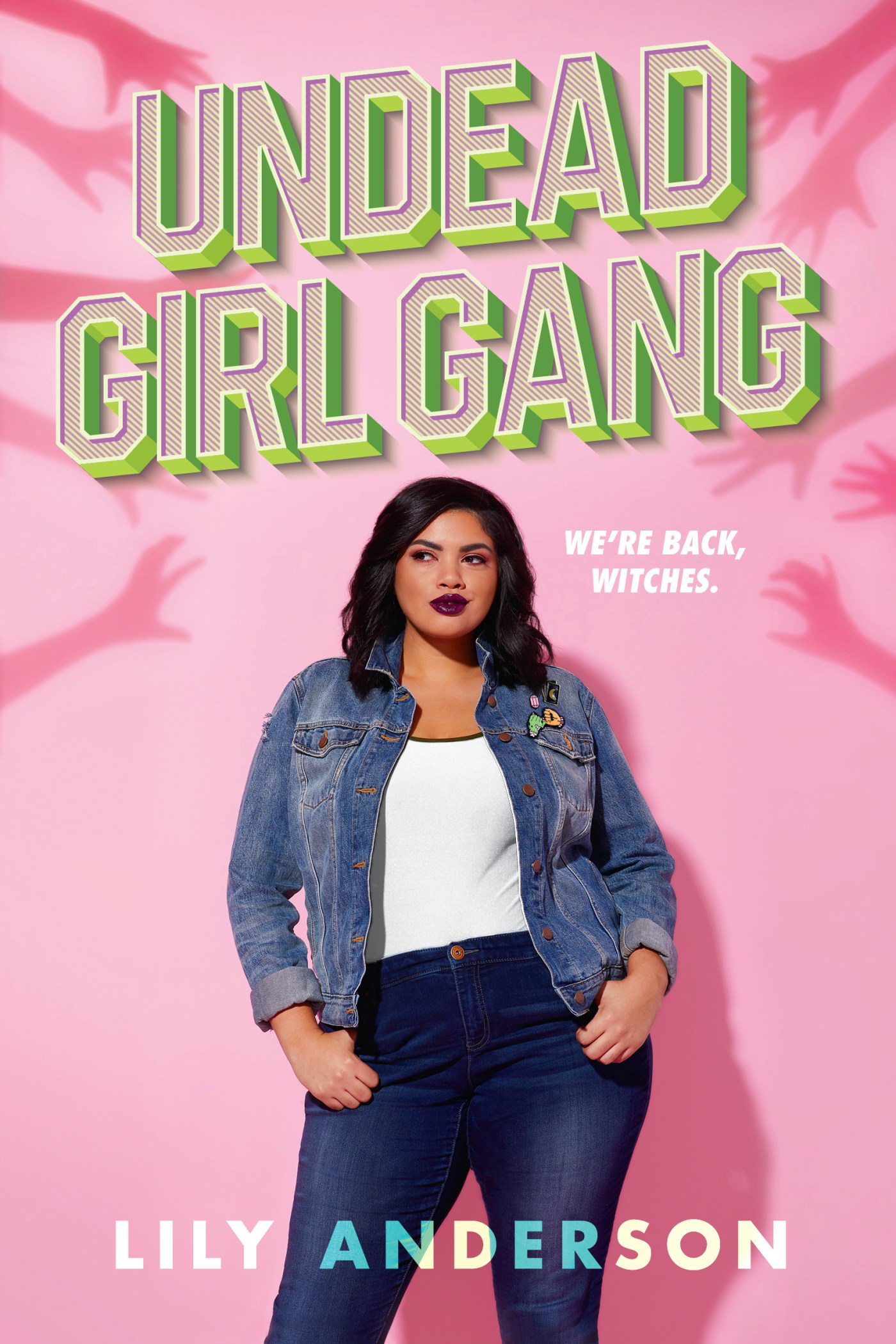
Hello witches! I’m writing to you from my AirBnb in Salem, Massachusetts, the most magical city I have ever been to. Not only am I here to get married (and I will be by the time this post goes up on WordPress) but I’m also taking the opportunity to throw myself into the witchcraft scene here, visiting as many shops as I can, and hoping to find more books to read! (Because I don’t have enough of those already.)
I wasn’t planning on doing any work while I was in town, but one book I read on my first full day in Salem had me spellbound. It’s a fiction book this time, and I’m talking about it primarily because, when it comes to fictional depictions of Wicca and modern witchcraft, this is bar none the best one I’ve ever seen.
I took a more fantastical approach to the magical side in my Arcbeatle story “Potestas Trium,” which you might’ve seen in last year’s winter anthology, A Christmas Codex. (Despite the title of the collection, my story is actually about Yule, and includes a ritual taken from my Book of Shadows.) The religious stuff is all legit, but the magical system I’ve made is a mix of real Wiccan magic with aspects of Charmed and Beautiful Creatures – but then, I’m writing sci-fi for adults, and this is straight contemporary YA.
And that, I think, is the difference. Though Lily Anderson and I are both Wiccans (she’s been one since she was eight) we take completely opposite approaches in how we incorporate our faith into the fictional world. I lean more heavily on the religious aspects, whereas Anderson focuses on magic. And it’s the focus on magic that really makes this book sing for me.
This is because a lot of pop culture Wicca depictions you see out there are clearly just using it as a synonym for general witchcraft – Bones and Buffy both don’t do much with the actual Craft as it’s practiced in America today, they’re just reaching for the term “Wicca” because it’s the most well-known form of witchcraft out there. (And then there’s the episode “Red Rum” from The Mentalist, which is genuinely offensive, since it involves a Wiccan priestess who uses her magic to murder someone.)
Fortunately, Undead Girl Gang doesn’t fall into those same pitfalls. As noted before, it was written by an actual Wiccan and you can tell – yes there is an ancient grimoire and the two big spells we see get cast are clearly fantastical in nature, but that’s artistic license, it’s the surrounding context that matters.
For example: in the big resurrection spell that kicks off the bulk of the book’s plot, Mila casts a circle and calls the quarters, as a lot of witches do. (I’ve never called the quarters myself, but I know other people do it.) The incantations rhyme. Both of the spells end with the words “So mote it be,” the Wiccan equivalent of “Amen” in Christianity. For crying out loud, we even get mentions of Samhain and greetings like “Merry meet” as well as “Blessed be!” Those are the kinds of relative deep cuts that most forms of fictional Wicca don’t even realize exist.
What appeals to me most about the book, though, isn’t just how spot-on the details of magical mechanics are. There is a theological element here, split between Riley and Mila (two young teenage witches who end up getting way over their heads) and Toby and her coven, the Quarter Moons.
After Riley’s funeral, Mila is so convinced that her friend didn’t die by suicide that she casts the aforementioned resurrection spell, over Toby’s objections. Toby is an older woman who runs Cross Creek’s only Wiccan supply store, and when Mila first approaches her for help with putting together the resurrection spell, she coldly refuses: “The dead do not walk. Not ever. Not even for a moment. In metaphors or allegories, maybe, but never literally. It’s against nature. It defies the will of the Goddess.”
Aside from the actual murderer, Toby spends much of the book as a quasi-antagonist, starting from the quoted scene in chapter 4. During the long climax scenes, she shows up at the abandoned house where Mila and friends have been working, ready to kill the three zombies, because she finds them to be so abominable. And lemme tell ya, I have a lot of thoughts about that point of view.
Toby stresses repeatedly that the Law of Threefold Return is just that – an invaluable law of witchcraft to which every Wiccan must adhere… but Anderson knows her shit well enough to imply, via Mila, that it isn’t quite as cut and dry as all that. The Threefold Law is more advice, not a commandment – there are plenty of Wiccans out there who don’t follow that rule. That doesn’t mean such people are “doing Wicca wrong,” it just means they consider their magical ethics through a different lens.
Which brings me to my next point. For a religion that prides itself on being open-minded and anti-authoritarian, there are still a lot of Wiccan practitioners out there who end up bringing their own personal biases into the Craft, and framing them as more or less divine edicts.
In Drawing Down the Moon, Margot Adler briefly touches on some Crafters who believe that some acts of pleasure (read: homosexuality) are perversions in the eyes of the Goddess, while also discussing the trans-exclusionary “feminism” of women like Zsuzsanna Budapest, contrasted with the more open-minded approaches of people like Morgan McFarland.
But this isn’t just a recent thing, it’s been around since Gerald freaking Gardner. I went looking up his supposedly ancient “Wiccan Laws” once, and while I’ll happily give him credit for establishing the powerful position of women in the Craft, whether in the form of a high priestess or the Goddess herself, he also says shit like this:
“For as the god himself kissed her feet in the fivefold salute, laying his power at the feet of the Goddess because of her youth and beauty, her sweetness and kindness, her wisdom and justice, her humility and generosity. So he resigned all his power to her. But the High Priestess should ever mind that all power comes from him. It is only lent, to be used wisely and justly.”
It’s a good thing that Wicca has evolved and shifted with the times in the way that it has, because if something like that was one of the first things I read about the Craft, I likely would still be atheist. Because ours is not an Abrahamic faith, we don’t have a central text that tells us what the Goddess and God said about a specific thing. “The Charge of the Goddess” is as close as it gets, and not even that can be said to be direct accounts of the Goddess speaking to Her followers. Most of the time, all we have to go on is UPG, and the whispers we might hear from our deities.
So, given that, I want to break down not just the above-quoted “will of the Goddess” line, but a subsequent elaboration from Toby just a few paragraphs later: “Any book that purports to have the answer to death isn’t Wicca, I’ll tell you that much. This is some dark shit. You are inviting the devil to your door.”
This is an amazing statement, considering that (as Mila herself replies in the very next line) we don’t believe in any devils, whether you call him Satan or Iblis. There is no figure of absolute evil in Wiccan theology, period. There’s just personal responsibility, and accepting the consequences of the magic we do. While it can be argued that Mila was violating against nature in reviving her friends, she wasn’t doing it just for shits and giggles – she was doing it because she believed they’d been murdered, and she needed their help to find the culprit.
Anderson touches on this idea later in the book, when Mila and Toby argue yet again about the resurrection spell:
“They don’t eat people. This isn’t a monster movie.”
“They’re an abomination,” Toby says.
Different religion, same words. It might as well be Riley’s mom wearing that motorcycle jacket. […] “It’s against the will of the Goddess,” Toby roars.
“Then why did She let me do it?” I scream back.
Riley’s mom, incidentally, is Christian, and I find it highly amusing that Toby is repeating similar rhetoric in a Wiccan context. What she actually means here is “It is an abomination to me,” but she’s presenting her opinion as the word of the Goddess, rather than owning up and admitting her own biases. Besides, she’s not exactly perfect either, as one line in chapter 24 reveals: “Toby, didn’t you spend three years trying to drag your soul mate to you?” That sure sounds like a free will violation to me!
But anyway. I think Mila brings up an interesting point in her response to Toby’s statement about the Goddess’s will, and it connects back to what I said earlier about Mila’s rationale for casting the resurrection spell. If you believe, as I do, that the gods are keeping an eye on us and are willing to help us in our workings, then it follows that the Goddess was able to determine Mila’s intentions and elected to help, since her cause was just and honorable. After all: Mila didn’t even think the spell worked at all until the earthquake that preceded the arrival of Riley, June, and Dayton hit.
I don’t think it’s our place, as mortals, to decide that we know better than the gods do. But lots of people, whether you’re Christian, Muslim, or Wiccan, do it anyway. I think what Toby forgets is that the Goddess has agency, just like we do. The Morrígan has her own reasons for favoring one side over another in a given battle, all we can do is try and ask for her help – she may not give it.
But anyway. I loved this book – it raises fascinating theological questions that don’t get talked about much in most fictional depictions of Wicca, but Anderson’s experience means she’s able to tackle those questions in ways that the average writer, who may’ve only heard about Wicca through a For Dummies book, if they did any research at all, wouldn’t be able to.
She doesn’t try to resolve those questions though, nor can she. These kinds of conflicts on magical ethics, the will of the gods, or the temptations behind dark or baneful magic, have been argued within the Craft for decades, and will likely continue to be, because they’re inherently unresolvable. All we can do is the best we can, and try to do right by our gods and our own moral codes.
In the end, if you’re in the mood for a comedic horror story that shines a light on Wiccan theology while also serving as an excellent murder mystery, Undead Girl Gang is for you. Blessed be!


Leave a Reply