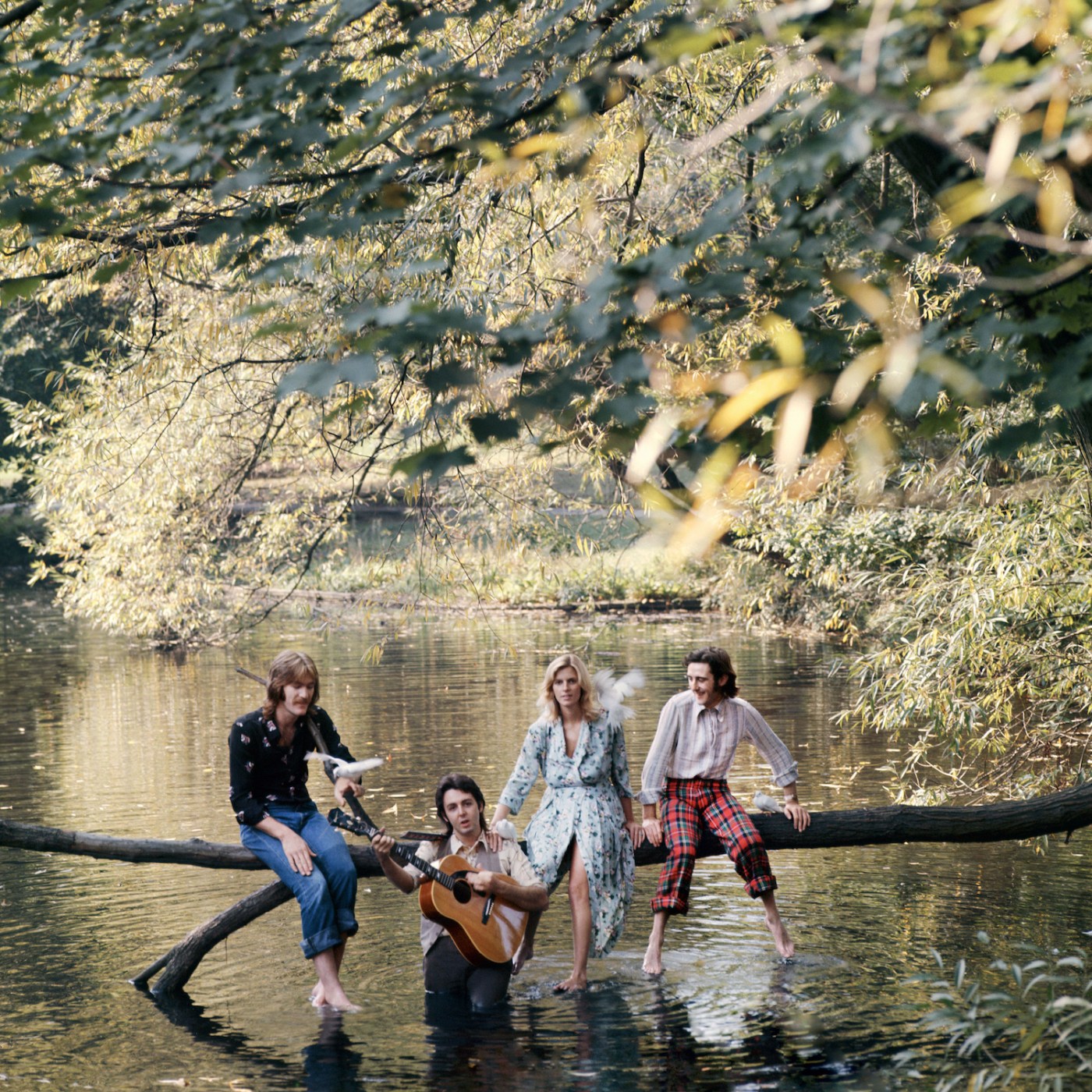
This week, we join Paul as he tries to start a new band, and hopefully wipe away the traumas that caused the implosion of his last one. It’s not a surprising move for Paul – he’s always liked playing in a group, as anyone who’s seen him in concert (like me) can attest. With Wings, he was eager to start over and work from the bottom up, like the Beatles did when they were scrappy underdogs in northern England.
And so, that was exactly what he did. Per Beatles Bible, “McCartney enlisted drummer Denny Seiwell, who had previously played on Ram, and Denny Laine, formerly of The Moody Blues.” They came together to record Wild Life, their debut album. It was engineered by Alan Parsons, (yes, that Alan Parsons) and sonically, it feels very like a sequel to McCartney… whether or not that’s a good thing remains to be seen.
‘Mumbo’: A perfectly solid piece of early ‘70s rock and roll, featuring Paul breaking out his Little Richard impression for the first time since, I think, mid-1965. But good luck figuring out what the song is actually about though – his vocals are so buried in the mix, you’d think he was inventing early R.E.M.
‘Bip Bop’: On the complete opposite end of this scale is this little ditty. Cute, but it doesn’t amount to much. Even Paul didn’t think so, describing it as “The weakest song I have ever written in my life”, until Trevor Horn from Frankie Goes to Hollywood said he liked it. (Which makes perfect sense – they’re Liverpudlians as well, after all.)
‘Love Is Strange’: Originally an instrumental called “Half Past Ten,” it became a cover of Mickey & Sylvia’s 1956 R&B hit, though Paul likely would’ve heard Lonnie Donegan’s version from 1957. The Wings version is more of a reggae type song, just as “Ob La Di Ob La Da” was a take on ska.
‘Wild Life’: The title song from the album, inspired by a trip Paul took to Kenya in 1966, presumably during the long gap between the end of the Beatles’ summer tour and the beginning of the Pepper sessions. It’s a very political song, regarding animal conservation.
I can get behind that cause, especially these days as the anthropocene ramps up, and extinction gets worse. I’m Wiccan for crying out loud! Not only are we destroying the Goddess’s gift to her children (our environment) we’re murdering the creatures the Horned God is meant to look after! It’s a travesty.
‘Some People Never Know’: Officially a love song between Paul and Linda, though there are some who think it’s Paul’s response to “How Do You Sleep,” given the lyric “Some people can sleep at night time/Believing that love is a lie”. I don’t know that I buy the argument, but I can see how people get there. (Similarly, some people believe John’s song “I Know (I Know)” from Mind Games is a response to this song. That, at least, makes more sense – for crying out loud, the guitar riff from that song is the same one from “I’ve Got A Feeling.”)
‘I Am Your Singer’: Another Paul-Linda love song, with Linda joining her husband on lead vocals for the first time ever. I admit, though, that when I hear this song, I’m reminded of a Werewolf game I played once where the person who held the role of “Wedding Singer” volunteered to be executed on the first game day, since we knew that would be strategically advantageous. My character, coincidentally, was a musician, and played this song in tribute after the Singer died.
‘Bip Bop Link’: Nothing much to see here, just more “Big Bop.”
‘Tomorrow’: The optimistic sequel to the famous “Yesterday” from his Beatles period, describing hope that the future will be brighter than the darkness of the past. As noted by Beatles Bible, “Aside from the similar titles, the two songs share the same opening chords – D, C#m7, F#7, Bm7,” though the differing keys make the similarities a little hard to spot.
‘Dear Friend’: A one-take performance with Paul on piano. This was written explicitly to John Lennon, regarding the musical argument they’d been having throughout 1971. As Paul puts it, “It was a really difficult time. I just felt sad about the breakdown in our friendship, and this song kind of came flowing out. ‘Dear friend, what’s the time?/Is this really the borderline?’ Are we splitting up? Is this ‘you go your way; I’ll go mine’?”
This song was his way of reaching out, and it seemed to work. Though he and John never worked together again in a formal capacity, they did at least visit each other throughout the 1970s, most famously in 1974 when John was recording Walls and Bridges.
‘Mumbo Link’: One more bit of Mumbo, just to bring the album to a close. It’s always nice to hear Paul’s bass guitar.
Wild Life is, if I’m being honest with myself, a bit of a misfire in Paul’s solo catalogue. There are tracks that work, and ones that don’t. Certainly as debut albums go, it’s a bit more McCartney than Please Please Me or Plastic Ono Band. As Beatles Bible says, “Several of the songs were made up on the spot in the studio, and five of the eight tracks were first takes. McCartney hoped to harness the magic that occasionally accompanies spontaneity, but inspiration was in short supply.”
No arguments there.


Leave a Reply