1980 did not start off well for Paul McCartney.
The year began with a Wings tour of Japan, which would’ve included shows at the Budokan – the famous Japanese martial arts arena. Back in 1966, Paul and the rest of the Beatles were the first rock musicians ever to play there, much to the displeasure of some Japanese. (Excerpts of the shows have been released in the Anthology CDs and documentary, but, uh… they sound terrible.)
Still, the Beatles proved to be the thing that helped turn the Budokan into a music arena, because throughout the 1970s, American hitmakers like Santana, Cheap Trick, and Bob Dylan appeared there too, with live albums and everything! So for Paul, coming back to the Budokan would probably have felt a bit like a homecoming, given what the Beatles did for their Japanese fans in the summer of ’66.
Except, of course, the Wings Budokan shows never happened. Paul got arrested at the airport for marijuana possession and spent a few weeks in jail instead, bringing an immediate end to the Wings tour. Going by what biographer Philip Norman writes in Paul McCartney: The Life, the entire experience was deeply traumatizing for him – a million times worse than what he’d experienced in Hamburg around 20 years earlier. (But at least George sent him a nice telegram, which is more than can be said for John and Ringo, who barely reacted at all.)
Needless to say, the Japan disaster proved to be the final nail in Wings’ coffin – Denny Laine, Laurence Juber, and Steve Holley had all lost income from the cancelled tour, and Paul himself had practically no enthusiasm for the band anyway. As Norman puts it, “Paul would even ask himself whether, at some subconscious level, he had known just what he was doing. […] ‘It was almost,’ he told Mary, ‘as if I wanted to get busted.”
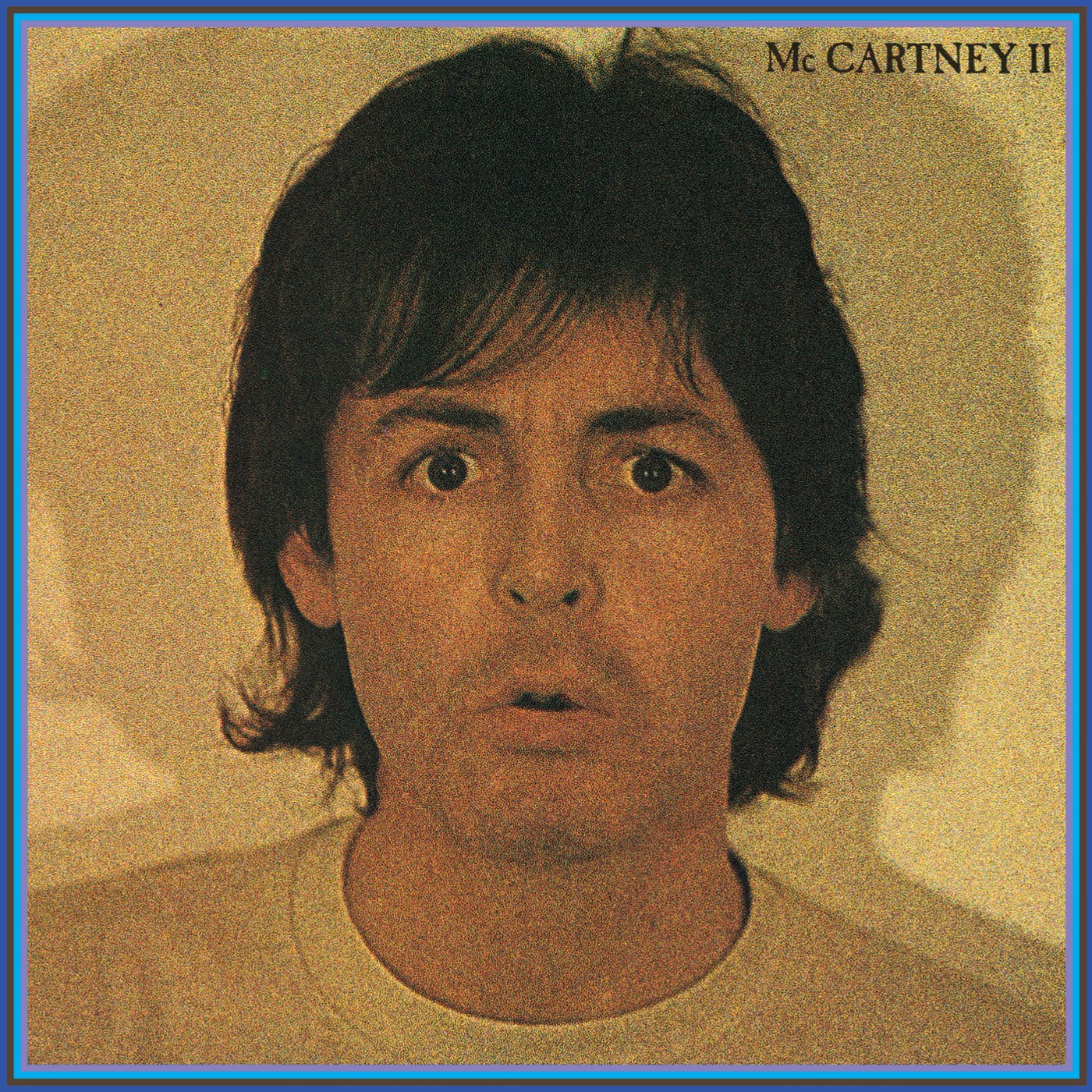
While Wings hadn’t broken up yet, it was also clear to essentially everyone that the band was effectively dead. So, when he was released from prison and deported from Japan, Paul went back to England and released a new album – his 11th post-Beatles project, and only the second credited to him alone, as Ram had been a co-production with Linda. It was called, what else, but McCartney II.
Like the first album in the sequence, McCartney II features Paul all on his own rather than with a band. The tracks date from the summer of 1979, are highly experimental in nature. Let’s dig into it:
‘Coming Up’: Paul’s hit single from 1980, it’s a delightful slice of classic McCartney optimism, enlightened with Paul’s heavy use of a vari-speed machine: a favorite trick of the Beatles in the mid-Sixties. In this case, he uses it to make his voice sound younger, just like on “When I’m Sixty Four.”
When it was released as a single in April 1980, it reached #2 on British charts and #1 on Billboard’s Hot 100, much to Paul’s happiness. It also proved to be the song that re-launched John Lennon’s interest in recording music again: he described it as “a good piece of work” in an interview with David Sheff, and if Paul is to be believed, threw himself into the studio to work on the albums that would become Double Fantasy and Milk and Honey.
I would also recommend that you track down the music video for this song, because it’s absolutely delightful. A performance by The Plastic Macs, Paul plays every member of the band, (except the backing singers, who are played by Linda) and even cosplays as his early Sixties Beatles self, Höfner bass guitar and all. (It’s a credit to how little Paul visibly aged in sixteen years that he looks pretty much exactly the same.)
‘Temporary Secretary’: The weirdest song ever put out by any Beatle, “Temporary Secretary” is Paul returning to the epistolary writing style of “Paperback Writer,” only this time his protagonist is a slightly creepy guy who needs to hire a woman for a temp job, so he asks a staffing agency for help. He even tries to sing in an American accent! (Emphasis on “tries.” Paul, I love you, but you can’t sound American to save your life.)
When I saw Paul live in 2016, this was the second song of the night, coming after a performance of “A Hard Day’s Night.” It was unreal, but I’ve kind of fallen in love with it. That said, you couldn’t write this song today. As Paul himself observed in The Lyrics, “I doubt it, and I wouldn’t want to. But this was a different time, and the world has rightly progressed since then.”
Still slaps though.
‘On The Way’: A bluesy number now, with Paul’s vocal absolutely drenched in echo. It’s got a great guitar solo, and was apparently inspired by a TV special on the blues, The Devil’s Music. I just wish I understood why he decided to pan his vocal all the way to the left.
‘Waterfalls’: A heart wrenching ballad of sorts, anchored by electric piano, synth strings, and a lovely acoustic guitar solo. Paul’s lyrics are, as usual, love-themed, but with a very haunting quality as his protagonist implores the object of his affections not to do dangerous things – after all, he needs her desperately. Paul thinks the song is somewhat underproduced, but I disagree – the simplicity of the arrangement is what gives it so much power and beauty.
‘Nobody Knows’: Another blues number like “On the Way,” but uptempo this time. The lyrics make very little sense and even take a turn for the Biblical, but who cares? It’s a great rock song that, if he’d played it live, would probably have gone over huge with the audience.
‘Front Parlour’: An instrumental piece this time, as Paul experiments and plays around with the musical instrument of the 1980s, the keyboard synthesizer. He notes: “That was the first thing I did on the album and it was done in the front parlour of an old farmhouse. It was empty at the time so we just brought the recording machinery in and used the kitchen as an echo chamber.” I dig it!
‘Summer’s Day Song’: A truly gorgeous classical-inspired piece, but done entirely with synthesizers and a Mellotron – the same one from Strawberry Fields, flute setting and all. The vocals were recorded at Replica Studio in London: an exact replica of Studio 2 at Abbey Road, built into the basement of MPL’s office there. This one’s going in my Litha playlist!
‘Frozen Japanese’: Despite the accidental racial slur in the original title, this one actually has nothing to do with Japanese people. Instead, it’s built around a melody that, according to Paul, sounded “Oriental.” I like it well enough, but then I’m a white Irish-American, what the hell do I know.
‘Bogey Music’: A ‘50s style rock and roller, but with a twist: the people doing the rocking and rolling are bogeys, as in the creatures who live under the beds of children and frighten them. The song was inspired by a scene in the children’s book Fungus The Bogeyman, where all the younger bogeys rebel against the old ones and start getting into rock and roll.
The end result? A delightful pastiche of early Fifties rock as the bogeys would’ve played it – Paul uses a varispeed effect on his voice again, making his vocal deep and appropriately monstrous-sounding, with echo, of course, while the guitar solo is performed just slightly out of key with the rest of the song, making a discordant effect that actually really works. It’s easily my favorite track on the album because it’s so wonderfully strange.
‘Darkroom’: Despite the title, this song has nothing to do with Linda or developing film. Instead, according to Paul, “You know, a fellow saying to a girl, ‘Come to my dark room,’ is a bit like a ‘Come, let me take you to the Casbah,’ kind of thing. And then I added a sort of atmosphere thing in the background and that’s it. It’s supposed to sound like a sort of freaky darkroom or something.” Given the creepy-sounding instrumental, it sounds like the aforementioned girl is about to be used as a sacrifice for a ritual of BANEFUL MAGICK. (That’s a joke, fellow witches!) I don’t hate it!
‘One Of These Days’: A nice, peaceful acoustic track to play us out, with Paul drenching his vocal in echo and reverb. According to him, it was written “a Hare Krishna bloke came round to see me. He was a nice fellow, very sort of gentle. After he left, I went to the studio and the vibe carried through a bit.” Of all things, it reminds me a bit of “Mother Nature’s Son,” minus the horn section.
McCartney II is an interesting album, and on the whole, I think I like it much more than the first one in the trilogy. Some of it might just be the synth-driven sonic palette appeals to me more, but it also feels like there’s more ideas here that actually go somewhere. Critics hated it when it came out in that year, but these days it’s become something of a cult favorite.
Given the terrible events that bookended 1980 for Paul (his arrest in January, and John’s murder in December) it’s nice to have a little slice of happy experimentation. Gods know the man sure needed it, given the turbulent times in which he now found himself.
Next week, a two-for-one special: Tug of War and Pipes of Peace. (You’ll understand why when we get there, I promise.)


Leave a Reply