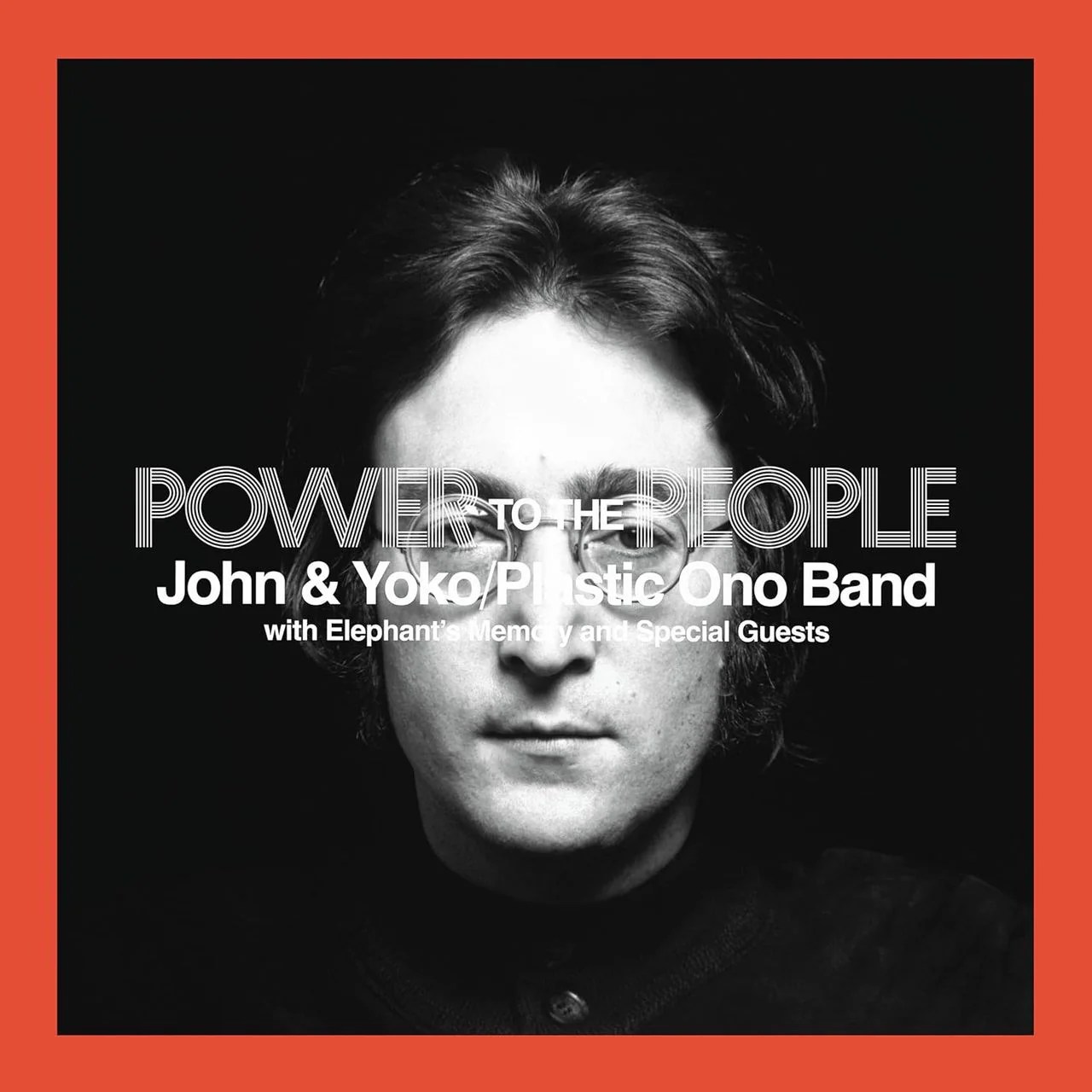
With the live tracks moved off to disc 7 and the loss of the album’s original opening track, I don’t think it quite makes sense to refer to this disc as a remix of Sometime In New York City. It’s a fundamentally different album, and perhaps tighter in its focus, though that’s not the same thing as being good. The shorter title definitely adds to the vibe that this is meant to be a different beast.
What’s interesting to me is that this remix is only available on streaming services, and even then you have to hunt it down. The physical CD and vinyl versions largely focus on the One to One material, the only way you can have these remixed album tracks in physical form are if you buy the massive 12-disc CD/Blu-Ray box.
They really want to bury this thing, don’t they?
“New York City”: Newly rechristened as both title song and opening track, I’ll give Sean credit: this really is an effective way to use this number. What we have here is John doing one of his best solo-era rock songs, singing from the sheer joy of being in his new home. It’s a diary song in the tradition of “The Ballad of John and Yoko,” but with enough energy to power Manhattan. I absolutely had this song in mind when I moved to Ithaca in 2023 – the energy surge is real.
The new mix is really good too, the song sounds so much clearer than it did before! I can hear the double-tracking on John’s vocal better, and there’s some really nice drum work happening too. It actually sounds really Beatles-y, which is surprising considering the only Beatle on this track is John himself.
“Sisters, O Sisters”: Yoko makes her vocal debut on this song, and I do like the lyrics a lot. This is a solidarity anthem, as she makes her plea for all women to come together to build a better world. I will say, though, it hits very differently here in the 2020s, where we’ve spent the best part of a decade with a known rapist as president of the United States… elected by a majority of white women.
That’s not Yoko’s fault though. Women have always been very good at stabbing each other in the back. Even in the 1970s, when they were trying to pass the Equal Rights Amendment, you had people like Phyllis Schlafly speaking out against ratification, or Zsuzsanna Budapest, who founded of a Wiccan tradition that allows only cisgender women into its ranks – trans women like me are very explicitly not allowed.
Budapest’s version of Dianic Wicca, as Margot Adler writes in Drawing Down the Moon, is about as biological essentialist as it gets: “There’s an emphasis on what Barrett calls “the five blood Mysteries,” which are birth, menarche, giving birth/lactation, menopause, and death.” It’s a shame that Phyllis Schlafly, a Catholic, would’ve burned Budapest at the stake for practicing witchcraft, because the two of them could’ve bonded over their mutual hatred of trans people.
Anyway, I’m with Yoko on this one. Women should work together. But as anyone who has paid attention to the feminist movement since the 1970s can tell you, we really suck at getting past our own internal biases.
“Attica State”: This song was inspired by the prison riot at Attica Correctional Facility in September 1971, during which 39 people died. John and Yoko sing this song together, and while the lyrics aren’t anything to write home about, I’m all for rants against the cruelties of the carceral system. (In one of life’s little ironies, Mark David Chapman was imprisoned in the very same place after his murder of John in 1980, and remained there until 2012. He has since been transferred twice.)
“Born in a Prison”: Staying with the jail theme, this is a Yoko song about the various societal constrictions placed upon us in life… but it just doesn’t work. I’m sorry, but it doesn’t. It’s a little hard to take this seriously when the artist lived a life of privilege even before she fell for a Beatle. At least “Imagine” had an aspirational point to make, even if some of John’s lyrics can (unfairly, IMO) be read as being hypocritical.
“Sunday Bloody Sunday”: No relation to the U2 song of the same title, but they’re about the same thing: the 30th of January, 1972, in which twenty-six unarmed civil rights protesters and bystanders were shot by soldiers of the British Army in the Northern Ireland town of Derry.
John, who had a significant amount of Irish people in his family tree, was absolutely incensed by what happened. As he said at the time, “Here I am in New York and I hear about the 13 people shot dead in Ireland and I react immediately. And being what I am I react in four-to-the-bar with a guitar break in the middle.”
I don’t think it’s his best lyrical work, and I’m not entirely sure if he has the right to speak for Irish people when he never lived in the country and is just as English as any of the people he’s yelling at, but at the same time, I understand his point. Colonization is inherently genocidal, and that’s as true for us Americans as it is for the English taking over Ireland.
Screw you, Oliver Cromwell. And you too, William Brewster.
“The Luck of the Irish”: Of the two songs on this record that involve the Troubles, this one is easily the worst of the two… but that’s mainly down to Yoko’s verses. She leans very heavily on cliches like shamrocks, rainbows, and leprechauns, which… uh… geez. It just doesn’t work, especially when placed against her husband’s verses about the various atrocities visited upon the Irish by the English.
Still, it’s better than Paul McCartney’s “Give Ireland Back to the Irish.” Which isn’t really saying much.
“John Sinclair”: More successfully we have this song from John, written about the man named in the title. Sinclair was sentenced to ten years in jail for giving two marijuana joints to an undercover police officer, because this was the 1970s and marijuana was still illegal even at the state level.
John was asked to write a song about the situation, and the end result was performed live at a rally in support of Sinclair in December 1971. Three days later, Sinclair was freed. It was horribly out of date by the time the album came out, but who cares? It’s a great song anyway, and probably my favorite track on the album.
“Angela”: As noted by Beatles Bible, “‘Angela’ was written in support of Angela Davis, a Black Panther supporter who was tried and eventually acquitted for suspected involvement in the murder of Judge Harold Haley in California.” I like the melody a lot, though the lyrics are… well, they exist. I like how Yoko and John share the melody together though.
Remix note: this is the second time this track has received the “Ultimate Mix” treatment – the last version was on the 2-disc Gimme Some Truth compilation, issued for John’s 80th birthday. “Angela” was the only song to represent the STNYC era, which is quite something given how much space there was for music from his other solo albums.
“We’re All Water”: Another Yoko song, inspired by a poem of hers called “water talk,” written in 1967. Per Beatles Bible, “The central conceit of the song is that, despite the many differences in people’s wealth, status, looks, actions and beliefs, humanity can be united through its collective spirit. Furthermore, the chorus ends with the line “Someday we’ll evaporate together”, a reminder that death is the great leveller.”
Honestly, I really kind of like this song? Yoko’s vocal performance is the best one she gives on the whole album, and it’s a fantastic rock number. About the only thing I don’t like is the wailing, but wailing is just how Yoko rolls, so I can deal with it.
One thing Sean does here that he didn’t do with the Mind Games mix from 2024 is add some studio chatter to the beginning of every song – it gives the album a different vibe, almost like what Paul tried to do with the Get Back album in 1969. We’re back in the studio with John and Yoko!
As you may remember from my original write-up, I came out quite cold on the album when I listened to it. Sean’s remix has really improved things – it’s a much tighter-sounding record now, and when stripped of the live songs, it actually flows along quite nicely. I think if it had been technically possible for them to mix it like this in 1972, the music press might’ve been warmer to it than they were.
Having said that, I can see why they focused on the contemporaneous live shows – as good as these album tracks are, the live ones are even better. Should they have put “Woman is the…” on? I personally would’ve left it just because of historical accuracy, and just censored the title. But at the same time, I get why Sean thought they had to take it off.


Leave a Reply