Time once again to turn our attention to live performances by a Beatle following the breakup. Paul, of course, has done plenty over the years, with his live albums stretching from 1976’s Wings Over America to 2019’s Amoeba Gig. John only did a few live shows, with his most well known being the One to One concerts in 1972 – those got a deluxe reissue last October as part of the Power to the People box set.
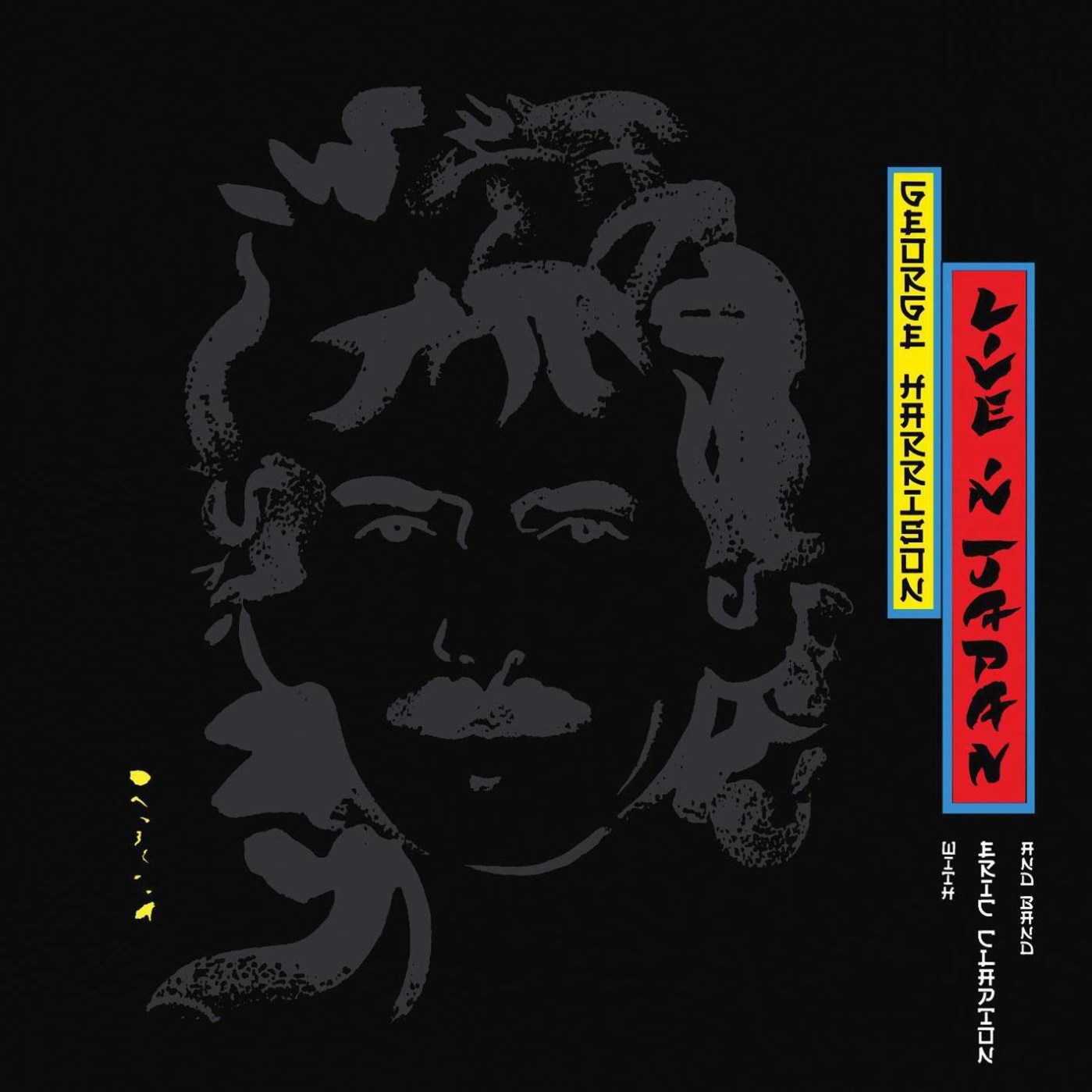
George, though, performed live concerts very sporadically, the most famous example being the Concert for Bangladesh shows of 1971. Then there was the infamous Dark Horse tour of 1974, for which no live album was ever released, and last of all was this: Live in Japan, a double live album released in July 1992, chronicling a tour of Japan that he went on in 1991.
What’s striking about this collection is George’s openness to not only play Beatles songs, but the sheer variety of them: Two of his three Revolver songs are on here, as are tracks as obscure as “Old Brown Shoe,” which was the B-side of “The Ballad of John and Yoko.” My favorite inclusion, naturally, is “Roll Over Beethoven” – that mainstay of Beatles live concerts, and included on both Hollywood Bowl albums.
Let’s hear the rest of it:
I Want To Tell You: According to the man himself, this song is about “the avalanche of thoughts that are so hard to write down or say or transmit,” and came about after George tried LSD for the first time and felt his mind expand. Revolver is very much the George album, and this song (his unprecedented third) proves it. He may not get such a spotlight again on a Beatles record, but when he does show up, he makes the most of what he gets.
‘Old Brown Shoe’: An often-overlooked George song, Harrison was inspired by dualities as McCartney had been in 1967, but applied them to love instead. It, along with many of his other compositions in the mid to late 1960s, reflects his growth as a songwriter in the shadow of Lennon and McCartney, but it would take the band’s breakup for him to reach full strength.
Taxman: Yes, I am aware that this is probably the most politically conservative Beatles song out there, since it’s two minutes of George Harrison bitching about paying taxes on his Beatles earnings… despite being unfathomably rich anyway. But I don’t care, because it’s a great fucking rock song to boot. This is the only time George gets the lead-off spot on a Beatles album, and I think it’s a sign of just how quickly he progressed as a songwriter that this is even the case.
The live version heard here begins with the same count-in as the album version, which George apparently needed permission to use, but it’s muffled by the crowd noise. He’s also taken the opportunity to update the lyrics a bit – the references to Harold Wilson and Edward Heath have been updated to John Major and Neil Kinnock, the respective British Prime Minister and Opposition Leader as of 1991.
George also adds a new verse referencing VAT (what the British use instead of sales tax, as in America) along with new references to Boris Yeltsin and George H.W. Bush, the respective heads of the Russian and American governments at the time. There’s also a new bridge in which the titular villain threatens to tax the listener’s hands, pants, mats, and flags.
‘Give Me Love (Give Me Peace On Earth)’: As George wrote in his autobiography, “This song is a prayer and personal statement between me, the Lord, and whoever likes it.” And it’s something I can relate to far more strongly now as I’ve developed as a Wiccan. My deities may be very different from George’s, but in the end, we’re both yearning for the same thing – connection.
‘If I Needed Someone’: A great George song, I really wish this was the last track on Rubber Soul. It has “album closer” vibes for me, and it would’ve ended the record on a more optimistic note than the actual final song does, as well as leading nicely into “Taxman” on Revolver. The best mix is easily on the expanded version of Red from 2023, where it gets a new sparkle and shine that the original stereo mixes didn’t have.
‘Something’: If there was ever any doubt that George Harrison had grown by leaps and bounds during his Beatles days, this should put those doubts to rest. Abbey Road was his happiest album, perhaps because he suspected that this part of his life was over. “Something,” as a love song, is one of the best ballads anyone ever did, and I appreciate it even more now that I’m married to Sophie and Ariel, and dating Katie, Alice, and Mixie. I’m an exceptionally lucky woman, and I will not let these loves of mine go for anything.
‘What Is Life’: Issued as a single in 1971, “What is Life” feels to me like George’s equivalent of “Maybe I’m Amazed” from McCartney. The song wears its Motown influence on its sleeve, as evidenced by the descending guitar riff that begins the track. While it is a love song, there is a matter of debate as to whether the object of his affections is a girl or a deity. (Personally, I think it’s a girl, but given the religious overtones of the album, I can see an argument for the other reading.)
‘Dark Horse’: The title song from his 1974 album, most remembered these days for George’s terrible voice on the studio version. He sounds much better here, thanks to quitting smoking. It was inspired by some wordplay George remembered from his youth in Liverpool: “When I was a kid, I always remember them saying, ‘Oh, have you heard about Mrs Penguin from the Co-op? She’s knocking off Mr Jones. Oh, she’s a dark horse.’ It was always that sort of thing. I was brought up knowing that dark horse was a phrase like that.”
As well as serving as the album’s title track, the song also gave George the name for his new label, Dark Horse Records – the logo for which is included on the cover art. George would gradually transition to that label after releasing his final Apple record, 1975’s Extra Texture.
‘Piggies’: Thinking about the British political situation, are we, George? I feel like this is a anti-Tory song, and I was broadly right: “‘Piggies’ is a social comment. I was stuck for one line in the middle until my mother came up with the lyric, ‘What they need is a damn good whacking’ which is a nice simple way of saying they need a good hiding. It needed to rhyme with ‘backing,’ ‘lacking,’ and had absolutely nothing to do with American policemen or Californian shagnasties!”
As with “Taxman,” the live version also includes new verses, though these were cut from the original studio recording.
Got My Mind Set On You: The hit single from his 1987 comeback album Cloud Nine, this song finds George sounding like he’s never had before. His voice is much changed from where it was for much of the 1970s, with a new lower register that makes him sound warmer. His vocal is also pushed further forward in the mix, so he sounds present in a way he doesn’t usually. (“Give Me Love” follows this track, so listen to the two together to hear what I mean.)
The single was a huge hit for George, topping the singles charts in Australia, Belgium, Canada, Ireland, and the USA. It was George’s final US number one single, and the last by any of the former Beatles to top the Billboard Hot 100. It also hit the top the week prior to The Beatles’ induction into the Rock & Roll Hall of Fame.
And in 1988, the song received its highest honor: a parody version by Weird Al Yankovic, released on his album Even Worse. To date, it is one of exactly two Beatle-related parodies by Al, the other being “Pac-Man,” a parody of George’s song “Taxman.”
‘Cloud 9’: The title song from his 1987 comeback album, George is joined on the studio recording by a veritable who’s-who of British rock royalty: Eric Clapton and Elton John both appear here, playing bass and piano respectively. George said: “There seems to be a running thread here about music and its powerful hold, eh? And it’s that way, too. We who love music, we love the people who make it, we love the sound of it, and we love what it does to us, how it makes us feel, how it helps us love.”
‘Here Comes The Sun’: Here comes George with the happiest Beatles song he ever wrote. The song has only gotten more popular in recent years, and in fact, it was the first Beatles track to reach a billion streams on Spotify. Given the anxious times in which we live, a little burst of Harrison’s sunny optimism is exactly what we all need.
‘My Sweet Lord’: If “Imagine” was John’s signature song, this is George’s equivalent, as spiritual as the former was decidedly agnostic in its outlook. Lyrically, this is his first big engagement with his faith since 1968, and the first time he’s invoked Captal-G God by name ever. The whole track is George expressing his desire to know and be near his god, complete with the backing vocals switching from “Alleluia” to the entire text of Vedic Sanskrit prayer.
And I gotta say, that hits real differently now that I am a practicing Wiccan. It was not until I read Drawing Down the Moon for the first time, back in 2024, that I realized I too felt the same yearning for spiritual connection that George writes about here. Compared to the Christian god, who too felt impersonal for my taste, Cernunnos, Danu, Cerridwen, and the Morrígan all felt (and still do) Present in my life. The night I Claimed myself was a powerful spiritual experience – I felt welcomed, warm, and safe in their embrace, and that’s still true even after all this time. My sweet lord, and ladies, indeed.
All Those Years Ago: No prizes for guessing who this song was written for. Originally set to different lyrics and intended for Ringo, George rewrote it following John’s murder in December 1980. As Ray Cooper put it: “George was devastated. He and John had a very special relationship. He loved him, and he had just written a song about him.” The studio version was recorded during the sessions for Paul’s album Tug of War, and features not only Ringo on drums, but also Paul, Linda, and Denny Laine on backing vocals.
Cheer Down: One of my, if not the, favorite George songs of all time, and it’s so freaking obscure that the studio version didn’t even get an album release until Best of Dark Horse 1976–1989, which itself has fallen into obscurity. It was released in 1989 as a single and then on the Lethal Weapon 2 soundtrack.
‘Devil’s Radio’: Another Cloud Nine song, featuring more of Clapton and Elton John on the studio recording. George said at the time: “I have to go past this little church to take my boy to school and they have a little billboard – just a little board outside the church – saying, ‘Gossip: The Devil’s Radio… Don’t Be A Broadcaster.’ That’s all. So I thought, that’s good, that’s a song, and I wrote it going to one of the Eurythmics concerts. I sort of spent a bit of time with Dave Stewart, checking out his live show on – what was that tour called? – Revenge. The Revenge Tour was coming around England and I went to a couple of shows and I thought, ‘Yeah, I can do this. I can write these.’ So I wrote a couple of rockers.”
Big improvement over the endless “Hell is Real” billboards blanketing the Midwestern US!
‘Isn’t It A Pity’: Despite the tone of the lyrics, this isn’t actually about the breakup in any way whatsoever. The song dates to 1966, and George tried to include it on three separate albums: Revolver, Sgt. Pepper, and The Beatles, only to be rebuffed each time. In his 1980 autobiography, George wrote: “’Isn’t It a Pity’ is about whenever a relationship hits a down point … It was a chance to realise that if I felt somebody had let me down, then there’s a good chance I was letting someone else down.”
Given the subject matter, the song proves to be a perfect fit coming after “Wah-Wah” – it’s a plaintive song of reflection, mourning, and loss on the end of a relationship, and one can certainly read the opening verses as evoking the dramatic collapse of the Beatles. But again, this is a universal theme, tying into similar sentiments as “While My Guitar Gently Weeps.”
Still, the Beatles comparisons are inevitable. This take is one of two featured on the album, and of the two this one is far more Beatle-ish, what with lyrics that, in places, read like George responding to some of Paul’s late-period Beatles songs. The lines “How we take each other’s love/Without thinking anymore/Forgetting to give back” are George exploring the inverse of Paul’s famous couplet from Abbey Road – what happens when the love you take isn’t equal to the love you make.
But perhaps the strongest comparison (and the one this track most resembles) is with “Hey Jude.” Both songs are responses to failed relationships, but where Paul tries to make things better by pointing out, essentially, that every cloud has a silver lining, George’s approach is much gloomier, as has been his wont since “Don’t Bother Me.” His lyrics center the pain almost at the exclusion of all else – even the second verse manages to take a downbeat look at the bright side.
And of course, just like “Hey Jude” it ends with an extended coda in which the word “nah” is used a lot, though unlike the former song, these nahs are buried in the mix somewhat, and mixed in with repeated cries of “What a pity.” The first album version even lasts for seven minutes and eleven seconds, just like Paul’s song.
Ironically for a track that started life three years before breaking up was even an idea in anyone’s mind, this song perhaps presents the best reflection on the emotional trauma of it all. Delivering it as an unintentional but fitting musical antithesis to Paul McCartney’s sunny optimism is just icing on the cake.
‘While My Guitar Gently Weeps’: The last of the live Beatles songs, and the second one taken from the White Album. This is one of my all time favorite songs of his, serving as it does as a commentary on the band’s rapid disintegration. The only bad part is the inclusion of Eric Clapton, a noted racist piece of shit. I get that he was George’s friend, but I really question George’s taste, to say nothing of his decision to gloss over Clapton’s racism over the ensuing decades.
‘Roll Over Beethoven’: As a native St. Louisan, I’m contractually obligated to like George’s version of this classic Chuck Berry number, but even if I wasn’t, I’d still enjoy it because George does such a fabulous job with it. He can do straight rock songs just as well as John and Paul, and this one proves it. It’s the oldest song on the whole damn album, and it still rocks as hard as it ever did.
It’s a crying shame that unlike Paul, George just wasn’t into doing live shows, because when you get a good band behind him, he sounds fantastic. Certainly these songs sound better than any of the tracks the Beatles played in their own tour of Japan – harsh, sure, but true.
I like that he’s sprinkled in plenty of his Beatles songs after only playing three of them in the Bangladesh shows. He’s come to terms with his past and brought them all together into a glorious whole, just as Paul had at around the same time. And fitting, given that TWO NEW BEATLES SONGS would exist before the decade was out.
George may not have been doing much by way of releasing music outside of Traveling Wilburys albums at this point in his life, but this record makes plain he still had the chops.


Leave a Reply