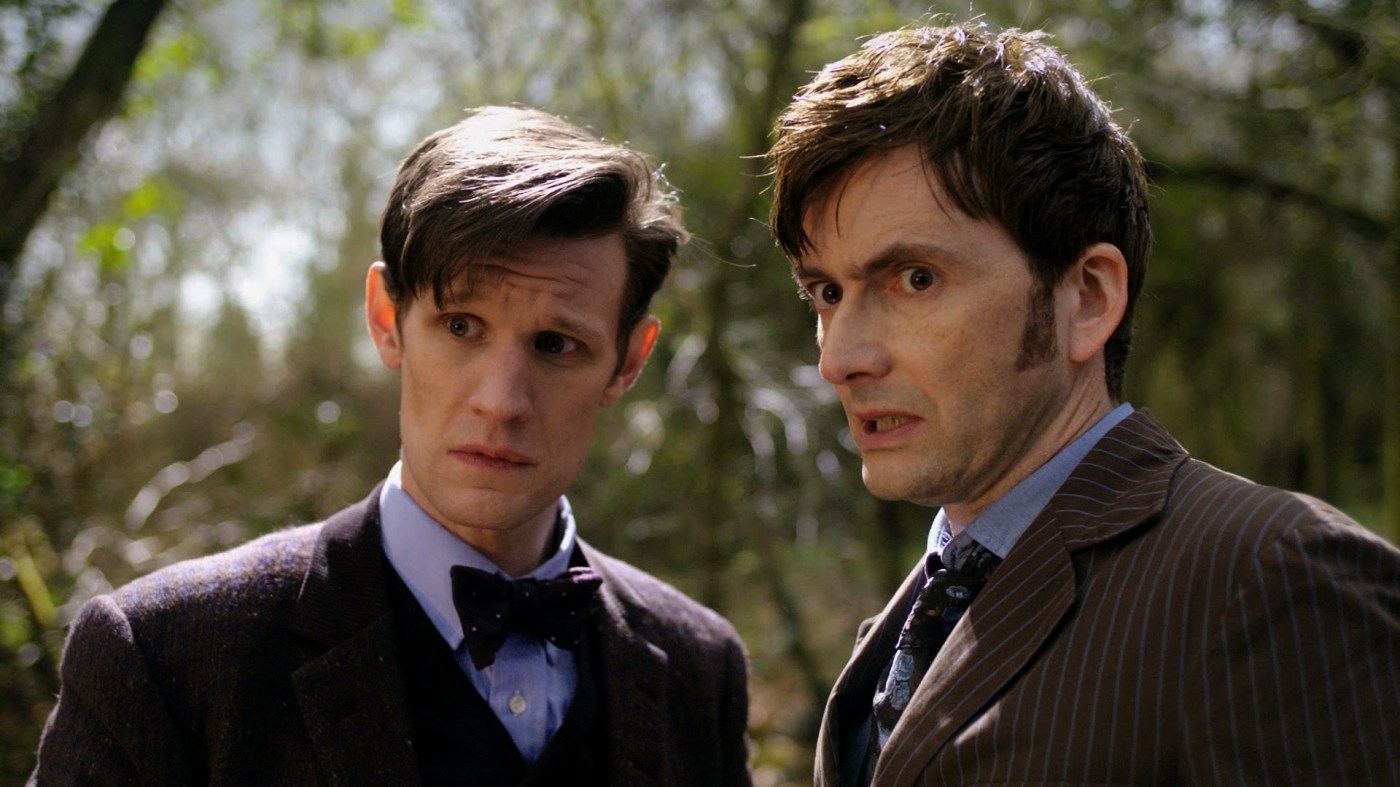
It’s May 16th, 2022. David Tennant will be returning as the Doctor alongside Catherine Tate in what looks like every dream that a certain contingent of Doctor Who fans have been having coming true once and for all: their preferred Doctor, showrunner, and companion back in control, the way things should be. A grand reset to the status quo of 2008, before Chin, Eyebrows, and Woman came along.
But look beneath the surface, and a different picture emerges: the Doctor’s wearing an altered costume, and the Tennant/Tate reveal comes between the announcement of the show’s first Black lead, and then the announcement of its first trans companion, both of which have actually generated more hype than the Tennant/Tate news. This is not a recreation of past glories, but something new and stranger than that.
I’ve been thinking about nostalgia a lot lately: its seductive whispers have been in our culture for years now, from reboots to sequel series. Culture is IP-driven now, and what better producer of IP but the stuff you loved 30 years ago, happening again? Ian Chesterton was wrong, time does go round and round in circles.
Nostalgia is not, on the face of it, a bad thing. What matters is how it gets used. In Doctor Who terms we have Big Finish spending over 20 years telling new stories for old Doctors, but they’re a niche of uber-fans dedicated to pleasing another niche of uber-fans, so that gives them leeway.
Where nostalgia becomes poisonous is when you decide to bring back old characters and concepts simply because you can. Patrick Stewart only came back to Star Trek because he had been assured that he wouldn’t be doing a Next Generation tribute, there’d be new things to do and new stories to tell, and on that basis Picard has been an absolute success. Through a coincidence in timing, that show’s first season aired at around the same time as series 12 of Doctor Who, but with a near inverted attitude toward reverence of the past.
Series 12, as I’ve written in other places, can best be described as RTD-lite, slavishly recreating the things that worked back in the late 2000s with hopes that the show might reach a similar amount of success, but that gamble failed. Just look at Captain Jack’s return: his lovable macho pseudo-American con-artist schtick worked in 2005 when he could convincingly play it, but he’s 15 years older in Fugitive of the Judoon and the character is still acting like he was then, rather than being aged up to account for that. (The wrinkles and the bad wig don’t help either.) And on top of all that he’s absolutely disposable, every scene he’s in can very easily be cut, he was only there to deliver exposition about the season finale! He is only here because he was once part of the Doctor Who Universe, which itself is based on the premise that More Show is justifiable for its own sake, and is somehow doing the world a public good.
We’ve been down this road before. In the 1980s, the terrible trio of John Nathan-Turner, Ian Levine, and Eric Saward started pandering to the show’s fanbase rather than the general public, resulting in travesties like Attack of the Cybermenand the show being put on hiatus for 18 months for being, to be blunt, complete shit. That we got three seasons of brilliance under Andrew Cartmel and Sylvester McCoy, followed by the barnstormingly successful BBC Wales eras of Russell T Davies and Steven Moffat, is absolutely miraculous.
Here is something that the Nostalgia Lovers don’t seem to understand: you don’t win new fans by pandering to the ones you already have. Furthermore, Doctor Who is just a TV show and multimedia franchise, it is not actually a public good, unlike the fire department, bakeries, or Tom Hanks. The world needs more fire departments, bakeries, and Tom Hanks movies, the world does not need more Doctor Who. If we’re going to have more Doctor Who, it needs to have a reason to exist that isn’t “filling a slot on the BBC’s TV schedule,” or “Giving something for Ian Levine to be performatively outraged about.” Doctor Who, in the ‘80s, failed to present its case for continued existence, and BBC management obliged.
Since then, the show came back to life and became a television powerhouse, reaching new heights under the tenure of Tennant and Davies, coasting for a bit under Moffat, Smith, and Capaldi, and then cratering spectacularly under Chibnall and Whittaker. Series 11, while rough, now comes across as the best of those three seasons, if only because of a BBC mandate to cut out continuity for that year. 12 and 13 have been obviously less successful, and had Davies not agreed to help the show in its hour of need, we could have been looking at a second Wilderness Years. The classic series was canned in the 26th anniversary year, the new series could’ve been killed in the 59th. Happy birthday.
The temptation with anniversaries is to look back and remember the past, to say “Weren’t we great once?” The Five Doctors did this for the classic series, and as far as I can tell, the still untitled BBC centenary special will do this for the new series: old actors returning to their old roles to say hello, more museum exhibits than the people we remember watching in their prime.
But that’s not the only answer. The 10th and 50th anniversary specials each celebrated the past, yes, but also set up the future: The Three Doctors gives the Doctor the ability to travel in time and space again, while The Day of the Doctor has all thirteen incarnations unite to save Gallifrey and heal the wound separating the classic and the new, so the Twelfth and Thirteenth Doctors can travel without burdens.
And all of that, from what I can see, is what Russell T Davies is doing for the 60th. Having David Tennant return and play the Tenth Doctor again worked fine in 2013 when he’d only been gone four years, but he’s aged more since then. Presenting the 60th anniversary as a “lost” episode from the 45th is what lesser writers would do, not RTD. The universe has to move forward, and it will.
Allons-y.


Leave a Reply