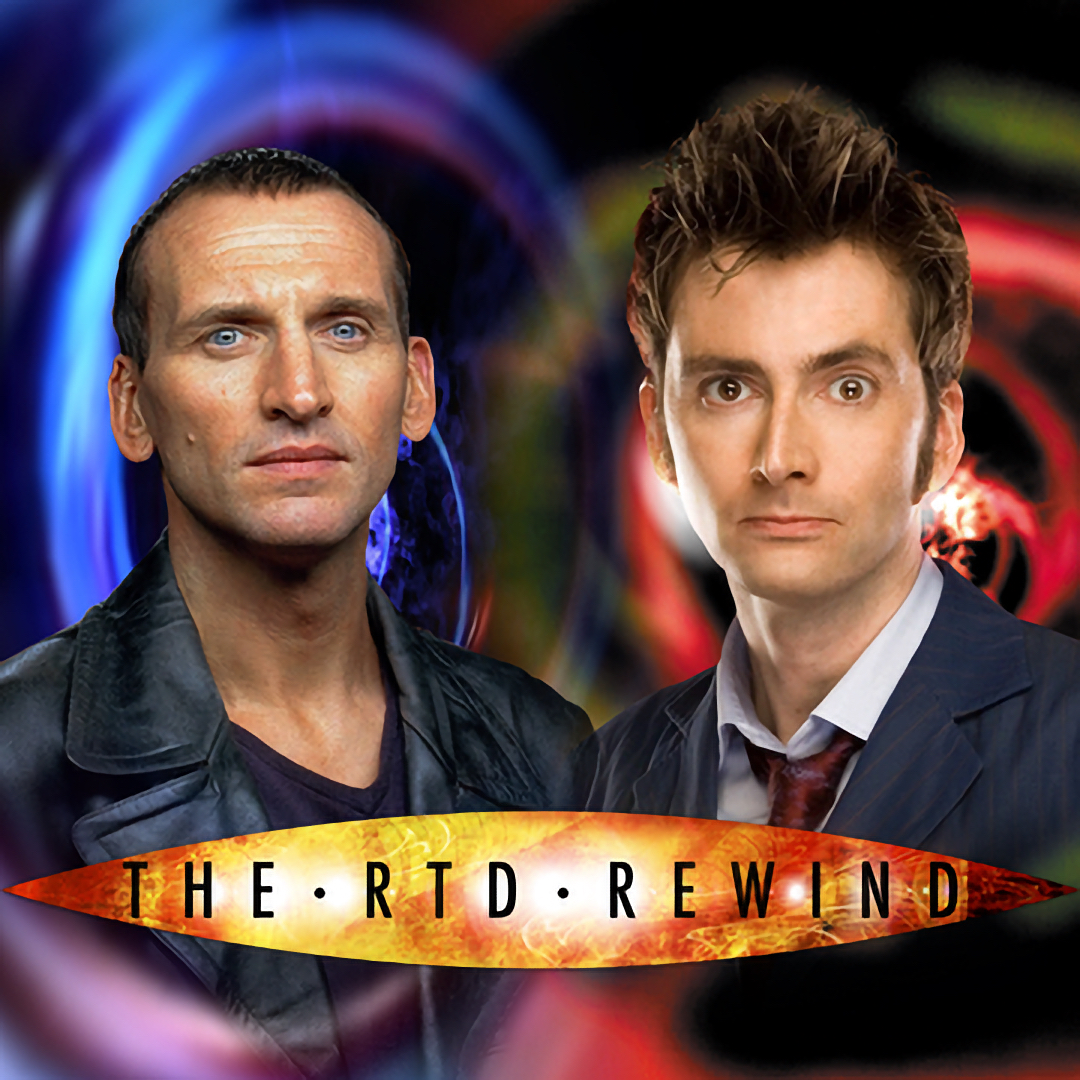
One of the things Davies had to do when bringing Doctor Who back was show off the range of stories the show can tell, and the kinds of things it can do. To help accomplish this, he set up a basic template that all of his seasons follow: an opening triptych of modern-day Earth/far future/distant past stories, a two-parter with a monster in it, three more future-past stories, another monster two-parter, a cheaper bottle episode, and a two-part season finale. He varies it a little in series 2 and 3 (the present-day Earth story is The Christmas Invasion, while the positions of the future and past stories are swapped in series 3) but even with those minor changes, this is just how he does things.
So, The End of the World: immediately after the events of Rose, the Doctor takes her forwards in time to the year five billion or so. Earth is an uninhabited national park at this point, but the money’s run out, so the folks involved have decided to just let the planet finally die, and the galaxy’s richest aliens have come together to mourn it. Rose, understandably, gets hit with a severe case of culture shock, and spends most of the rest of the story on her own in another viewing platform.
What stuck out at me on this rewatch was Davies’ attitude toward humanity’s future, and it’s something that other future-set stories in his tenure (including the three in the “New Earth” trilogy, of which this is the first one) all build on. They survive. Yes, they adapt and change and evolve as all species do, as Cassandra mentions when she talks to Rose about how she views the “New humans and Proto-humans and Digi-humans, even Humanish” as mongrels, but (as we see in later episodes of this season) the humanity of the distant future looks a lot like the one we have right now.
Davies’ relentless fondness for humans reminds me a little of Gene Roddenberry, the creator of Star Trek. When he was coming up with the original series, one of his main points was that the society of the Federation, and the bridge crew of the original Enterprise in particular, was something humanity could aspire to become one day: men and women of all nations and all races coming together in service of a common goal, with none of the hate and fear that remains commonplace even today.
True, Davies subverts his pro-humanity tendencies every now and again: Midnight is perhaps the most obvious example of this from within Doctor Who, in which the Tenth Doctor’s love of humanity gets twisted and turned against him, but even just a few episodes later he’s back to cheerfully expositing about how wonderful humans are.
On the other side of the coin (and if you know me at all you should’ve known this was coming) is Steven Moffat. The Beast Below is basically his own version of The End of the World: it explores the distant future of humanity long after Amy’s time, Amy has a moment where she reflects on someone having been dead for a long time, there’s even a shot of she and the Doctor standing at a giant window toward the end!
Where the two stories diverge is, again, on the subject of humanity. Where End of the World casts them as something to be admired or respected, in The Beast Belowthey are unquestionably the villains, since they capture a Star Whale and send electrical charges through its brain to make it fly through space. The Doctor even bursts out toward the end, “Nobody talk to me. Nobody human has anything to say to me today!” Kind of a jarring shift, but an important one.
As for where I stand on the issue of humanity’s goodness: I admit, speaking as someone who has repeatedly asserted her rejection of her birth species in favor of presenting as an anthropomorphic wolf, and claims wolves as her true cousins, I fall more toward the cynical end of the scale than the optimistic end. Humans can be good when they want to be, but I’ve also seen that they’re a bunch of greedy selfish bastards who want to harm other people who are different from them, just because they can. Politicians get elected on a platform of positive change, then either fail to deliver or make the situation worse. Ordinary people refuse to do basic things like wear a face mask or get an important vaccination because they feel it’s their right, and any attempt at forcing them to do those things is tantamount to fascism.
I look at the world today and I see a species that isn’t heading toward a future Federation of Planets or a bountiful Human Empire, to use an example from later in this season. I see a species that is veering toward the Terran Empire, the fascist global state that exists as the flip side to Roddenberry’s Federation, or more accurately, a collection of several such authoritarian empires that then all get wiped out anyway because of… well, global warming. So it turns my stomach just a bit to see Davies acting as humanity’s hype man, even if it’s more of an undercurrent here than in later episodes.
“You lot, you spend all your time thinking about dying, like you’re going to get killed by eggs or beef or global warming or asteroids. But you never take time to imagine the impossible, that maybe you survive,” says the Doctor at the top of the episode, just before the title sequence. And maybe they will! Maybe, through some miracle, humanity manages to push through and adapt to life on a warming planet, or maybe they terraform Mars and get a whole new planet to wreck. I can certainly bet that if that happens, it won’t be the ordinary people who survive, but the so-called great and the good, the people who can afford it. (And, of course, Keith Richards.) Because, as the Doctor cynically observes later, it still comes down to money.
But who knows. As a wise Starfleet captain once said, “The past is written, but the future is left for us to write.” And after all, we’re *all* stories in the end. So let’s make it a good one.


Leave a Reply