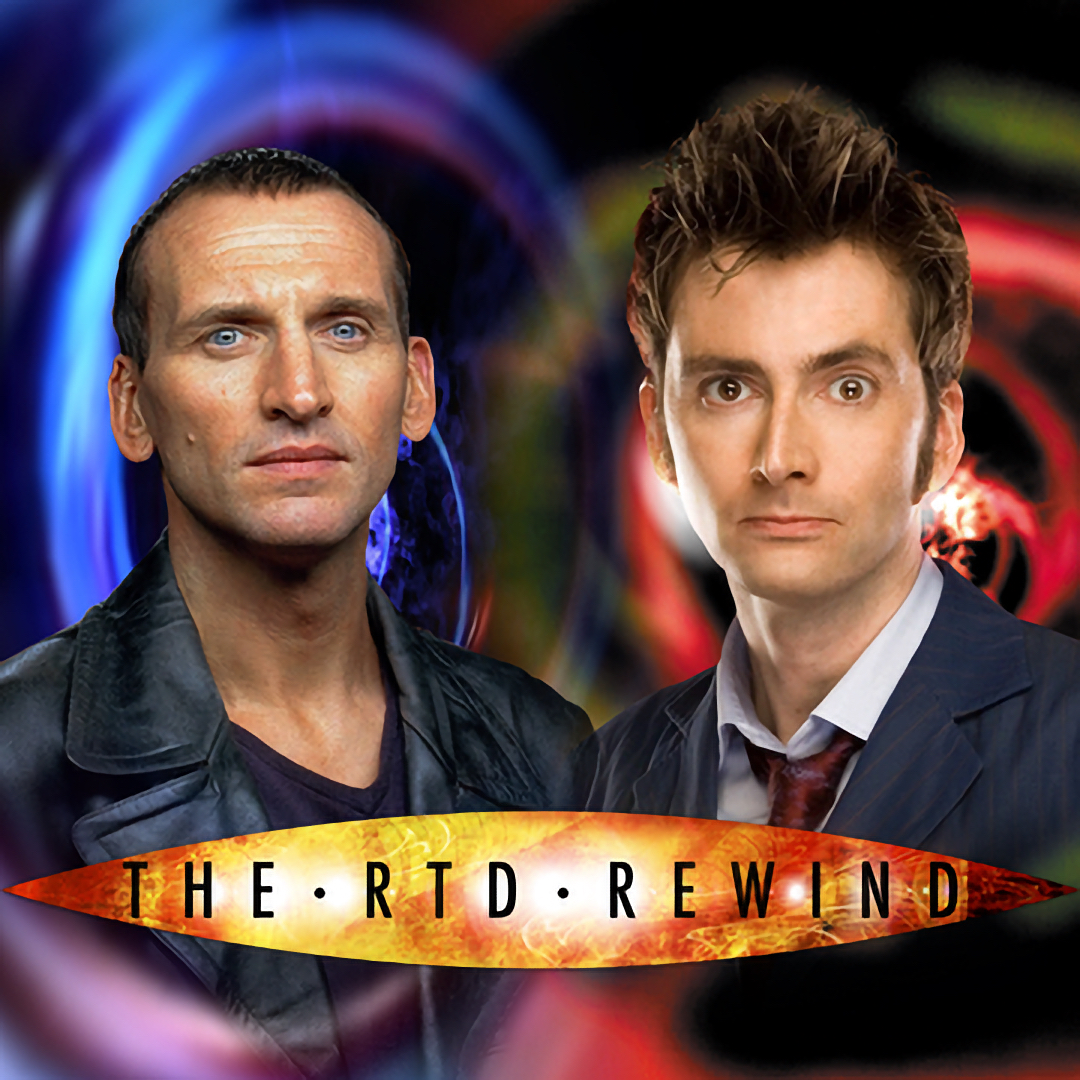
Since this is his penultimate story in his era, let’s take a bit to gush about Christopher Eccleston’s take on the Doctor. As I’ve mentioned, the Ninth Doctor was an intentional break from the posh quasi-Victorian/Edwardian gentleman figure that the character had originally been created as, he is instead the intergalactic working class hero. And in this episode, we see him give what is (at least for my money) his finest performance in a season full of them.
Evidently still riding the high from the events of last week’s episode, the Doctor is all smiles, cracking jokes and generally being the most laid back we’ve ever seen him so far. His interactions with Jack and Rose at the beginning suggest that this is a TARDIS team who have been together for a good while, (and indeed, the Titan Comics Ninth Doctor range explores this in more depth) and even when shit does start to hit the fan and he has to go back to work saving the world, he doesn’t let that stop him for a moment.
Obviously, the big scene is the one everyone praises when they talk about this story: the Doctor and Margaret have a conversation over dinner about murder. Eccleston is magnificent here, absolutely refusing to give any ground to Margaret when she throws his “You happen to be kind” speech back in his face. It’s brilliant stuff, and it’s honestly a damn shame Eccleston only has two episodes left, he could’ve done so much more. (Indeed, allegedly his relationship with RTD had soured so much by this point in production that the two men actually came to blows, forcing Clarke and Barrowman to pull them apart. Much as we fans want it, a second season of 9 was never on the cards.)
There’s one other bit in the dinner scene that I want to highlight, and it’s Margaret’s little speech about the devastation the Doctor leaves in his wake: “From what I’ve seen, your funny little happy go lucky little life leaves devastation in its wake. Always moving on because you dare not look back. Playing with so many peoples lives, you might as well be a god.”
Admittedly, when this line first came out I barely registered it at all: I’ve heard such lines about the Doctor before, albeit more often from Moffat’s pen rather than RTD’s. What Margaret tells him is just the first version of a criticism that Davros also pulls out in three seasons from now, and it’s what leads an army of all his enemies to come together and put him in a box so they can save the universe from him. The Doctor is a mythic being of utterly immense power, “god” is the only word that comes closest to describing him.
But Looking at the line in the context of series 1, the critique is seemingly based on nothing at all, what devastation we see after the climax in Rose also shows people starting to recover, while in other stories, there isn’t any devastation to be had. Davies is referring back to something deeper than that though: he came into the franchise in the late ‘80s, and his very first piece of professional Doctor Who fiction was the book Damaged Goods, part of Virgin Publishing’s New Adventures series of Seventh Doctor stories.
While the Cartmel years started the trend of depicting the Doctor as a manipulative and perhaps even devious figure, the Virgin books ran with the idea, turning Seven into such an anti-hero that even Walter White looks cuddly by comparison. Davies’ take on that concept fuses it with survivor’s guilt from the Time War, lending the “Only a killer would know that” line a little more weight.
I am of two minds about this darker take on the Doctor: on the one paw, it made sense in the mid-late 2000s, as that was the time of the anti-hero in global pop culture, between the Nolan Batman trilogy starting up, the early Daniel Craig Bond movies, and Breaking Bad. And given the sheer amount of television RTD is known to consume, he knew reinventing the Doctor like this was bound to pay off. (And it does, as we’ll explore over the course of the next three seasons.)
But on the other paw, it’s not a shift that I’m much of a fan of. As regular readers already know, I came to the show in the Moffat era, which spends a good chunk of time responding to and gradually deconstructing this take on the character during the Smith years, then rebuilding it during the Capaldi seasons into defining the Doctor as just a traveler, with a box, passing through, helping out, and learning. In a world that seems to be falling apart day by day, the idea of a straight-forwardly heroic figure stepping in and helping out where possible is vastly preferable to me than what we’re going to get in a few episodes from now, which I’m describing henceforth as “time/space drama queen dreck.” Yawn.
Which brings me back to Christopher Eccleston. He has exactly two episodes left after this, and from his public statements on the matter since as well as what other writers have revealed, I can’t say I blame him for wanting to leave quickly. And given what the last three-quarters of the Davies years are going to throw at us, it’s probably just as well, I certainly can’t imagine him doing something like Journey’s End or The Waters of Mars. Granted, those episodes might’ve unfolded very differently indeed had he stuck around, if they’d happened at all, but of course, we’ll never know.
What I can say for sure is that I’m going to miss him, and thank goodness for Big Finish, because once I’ve written these last two posts on the Eccleston era, I’m going to listen to the first of his BF seasons, just so I can have a little bit more of this fantastic man and his Doctor.
But I don’t have long. Because a certain someone is knocking on my door, and he’s got beaming white teeth, Chuck Taylors, and a swishy brown coat, and sooner or later I’m going to have to deal with him.
The shadow of Ten draws near.


Leave a Reply