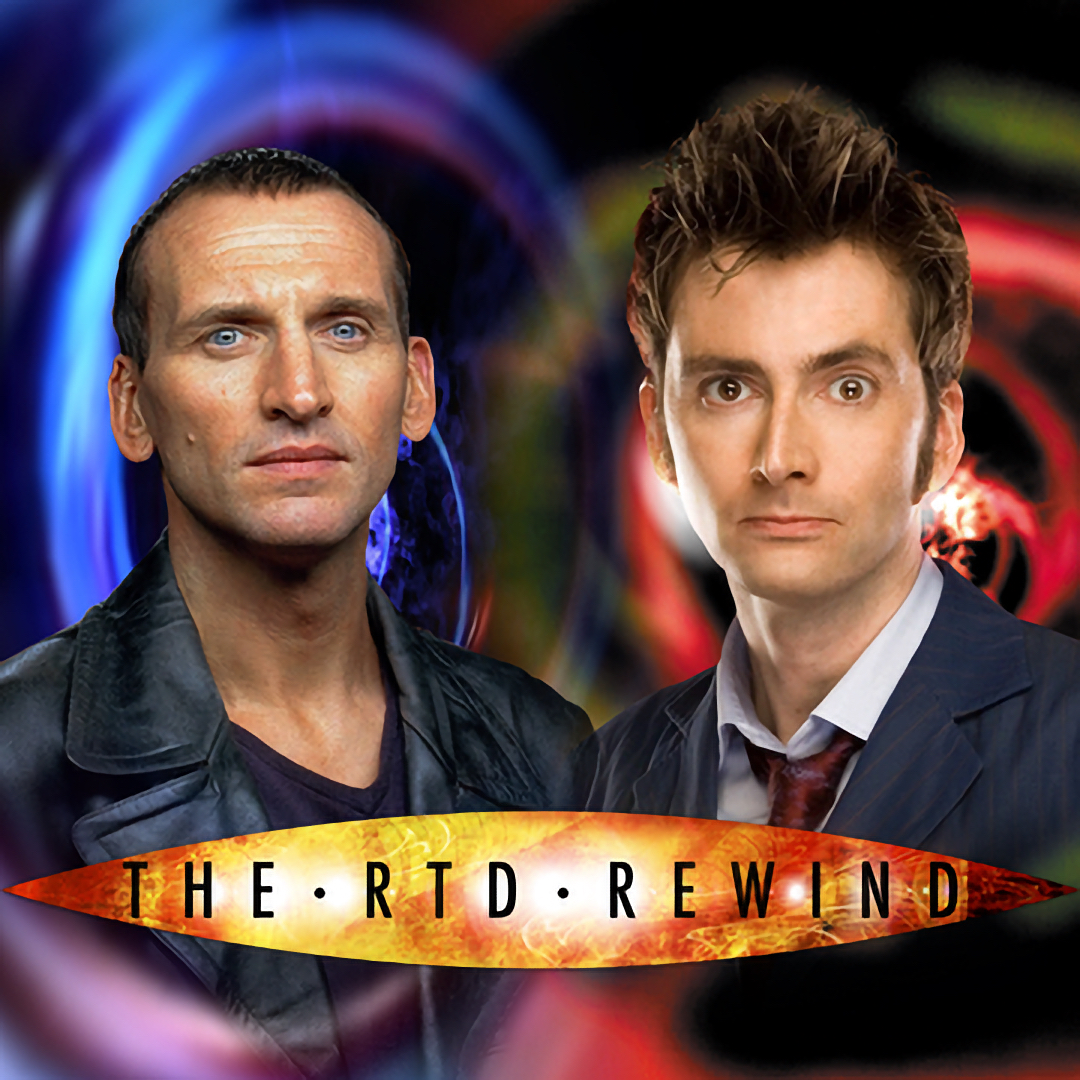
Watched in sequence, one thing that sticks out about Series 2 is how much of it is a sequel to series 1. Take this story, for example: it’s consciously set a few years after The End of the World, contains Cassandra as the villain, and even builds on the anti-capitalist themes of that story by focusing on the price of progress: in this case, using a farm of diseased humans to help build a medical miracle.
If this weren’t a season premiere, it might’ve even got more of a focus: I mean come on, anthro cats breeding humans to help them treat the people of New Earth is a plot that writes itself, like the world’s weirdest sequel to Survival. But alas, we don’t really get that, the story is too busy being Freaky Friday instead.
And to be fair, it’s not bad: I don’t like Cassandra very much as a character, but even I can enjoy the sight of Piper and Tennant each pitching their performances whenever they’re possessed, and the ending has some weight behind it, whether you take Cassandra as being trans or not.
But what I want to focus on is the other big theme of the episode, and indeed large parts of this season in general: the romantic relationship between the Doctor and Rose.
Ten is, literally, specifically meant to work best with Rose: a cut line of dialogue from Invasion would’ve established his younger appearance and Estuary accent as being influenced by her, and honestly it’s a shame it got cut, because it explains so much about their dynamic compared to series 1. That was more paternal, at least to an extent.
Indeed, practically everything about how these two interact is coded romantically, the montage sequence at the end of The Christmas Invasion (the Doctor picking out his new outfit intercut with scenes of the Tylers and Mickey sitting down to Christmas dinner) carries more than a whiff of Rose bringing her new beau around to meet the family. Even Mickey picks up on it, asking her at point blank: “You really love him, don’t you?”
On some level, cranking up the romance makes sense from an out-of-universe perspective. Eccleston was around 40 when Series 1 was being filmed, David Tennant was in his early thirties compared to Piper’s twenties. It was a lot easier for the audience to accept a romantic relationship between Tennant and Piper than when she’d been paired with Eccleston. Furthermore, Tennant (being the star of Davies’ Casanova) can certainly look and play the part of a romantic leading man with aplomb.
In fact, Tennant’s ability to convincingly portray a romantic lead is another reason why the love angle seems stronger in Series 2. The early Series 2 scripts were written for Eccleston, but as it was Tennant who delivers the lines, this had the effect of making the Doctor’s reaction to Cassandra stealing Rose’s body seem more like that of a pissed off boyfriend than an angry father.
The Ten/Rose dynamic was so strong that a certain contingent of Doctor Who fans have made writing fanfics featuring the characters something of a cottage industry, even as Series 2’s original broadcast drifts further and further away from us in time. The great irony is that, if Doctor Who were real, it’s highly unlikely the Doctor would have any interest in Rose whatsoever, partly because of the species difference, but also because of the age gap between a 19-year old human woman and a 900-and change Time Lord. She’s basically flirting with a mountain range.
On the face of it, there’s nothing inherently wrong with writing the Doctor as a romantic lead. Matthew Jacobs started it with the Eighth Doctor and Grace Holloway, and now here’s Davies doing the same thing ten years later, and Moffat revisiting the concept eight years after that. What matters is how you allow it to affect the show. Under Moffat, just the very idea of Doctor and companion as being more than friends was framed as something that would, eventually, destroy the universe, whereas under Davies, neither of the two leads seem to realize anything is wrong, as we’ll see next week. (That said, even this is better than Thasmin, a relationship dynamic that literally only existed because production staff decided to throw it in at the last minute and not because of, you know, actual fucking character development.)
The funny thing about this is that under Tennant, the Charismatic Romantic Lead Doctor becomes the standard operating procedure. David Tennant is a phenomenally compelling actor to watch, and he becomes even more of one as the Doctor, since he’s literally living his boyhood dream before TV cameras. You get a taste of it in the final 20 minutes of The Christmas Invasion, where he’s running around the Sycorax ship set babbling at a mile a minute and going from Happy Cheerful Madman to Dangerous Swordfighter in about a second. But in New Earth it goes to a whole other level.
It happens in two ways: first as the Doctor, and then as Cassandra in the Doctor’s body. As the Doctor he’s doing things like running his hands through his hair and enjoying himself in the decontamination shower, or, later on, his furious and loud tirade at the nuns when he and Rose find the stores of cloned humans. As Cassandra, he does a Zoë Wanamaker impression and does things the Doctor would never do (pushing Rose aside to jump onto the ladder) or can’t currently (operate the sonic). The entire ladder chase sequence is the best example of this, he changes from Cassandra’s exasperation to Ten’s frustration and back again at least twice in maybe 30 seconds, using facial expressions and body language to differentiate the two performances.
So, really, it’s no wonder this becomes the default mode under which the show operates. Tennant, like Tom Baker before him, has the ability to elevate a script just through sheer willpower and determination. He really is one of the best actors to have graced the show. But the true magic of his era is what happens when his Doctor is put on the back foot. There, he completely falls apart as all his usual tricks are turned against him. (For a good example of this, see Midnight.) And how he responds to that is also terrifically compelling. (David Tennant is physically incapable of not being compelling.)
As we’ll see next week though, there’s a sense that the center cannot hold here. The show now has two characters that are bigger than the stories that they’re in, and in order for this to be stabilized, a price must be paid. The season begins and ends with the Doctor losing Rose, first via possession and then through a parallel world. And he will keep losing her, over and over again, until the very end.


Leave a Reply