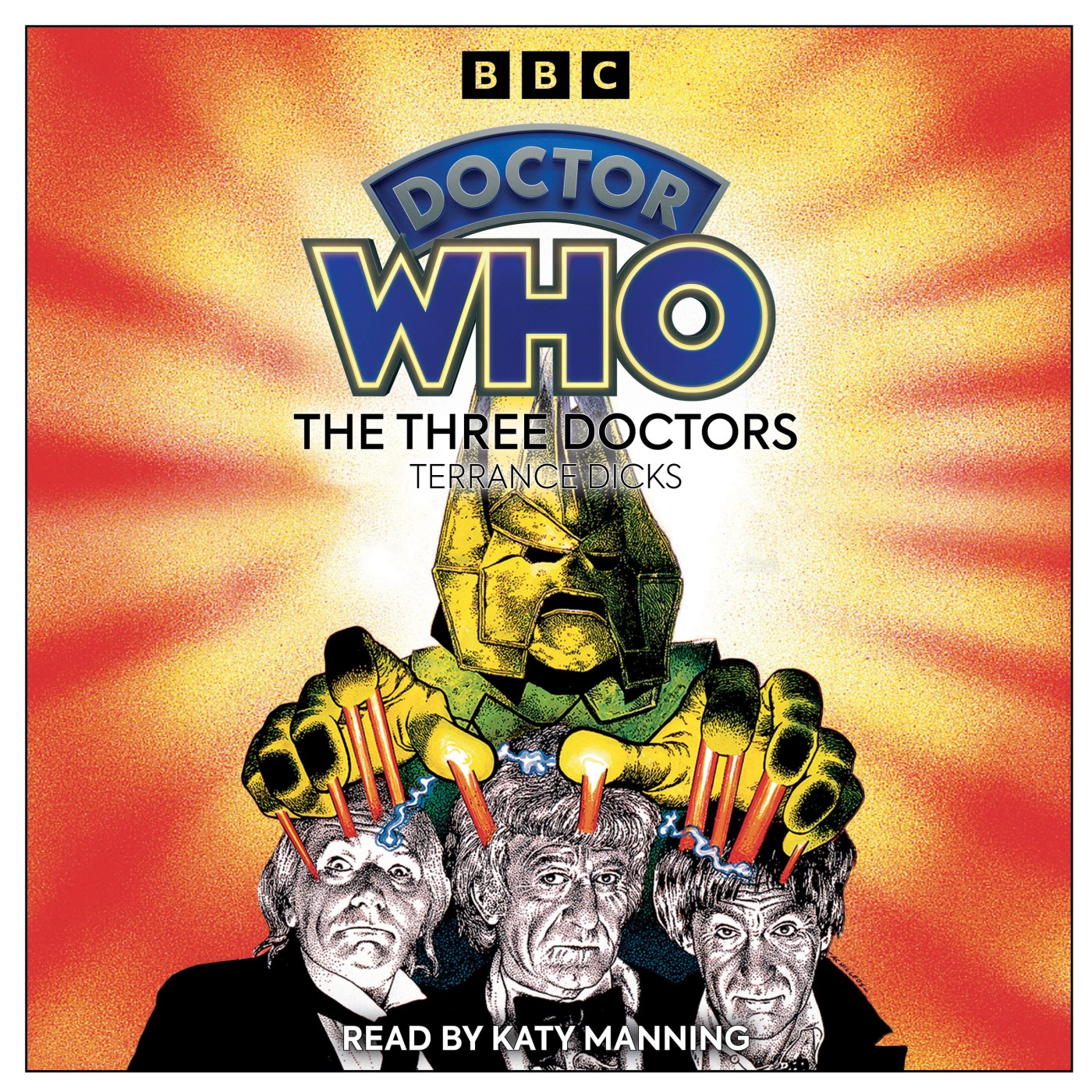
Anniversaries, being celebrations of things that occurred a very long time ago, are usually enjoyable affairs, especially if that thing is the start of the longest-running science fiction program ever. Doctor Who usually marks its big milestone birthdays (so, all the years ending in 3) with a great big anniversary special, uniting various incarnations and having them face some big problem. The current list is as follows:
- The Three Doctors (1973 – 10 years)
- The Five Doctors (1983 – 20 years)
- Dimensions In Time (1993 – 30 years)
- Zagreus (2003 – 40 years)
- The Day of the Doctor/The Light at the End (2013 – 50 years)
The above list isn’t all-inclusive; there are other stories made for smaller anniversaries (the 25th was celebrated with Silver Nemesis, the 35th with The Infinity Doctors) and stories that were either multi-Doctor stories but otherwise not anniversary related (The Two Doctors, Time Crash, Twice Upon A Time, various Titan Comics stories from 2014 to 2021, every other Big Finish multi-Doctor story except for Light and Zagreus, etc) or were made for an anniversary but not a multi-Doctor tale, as with Scream of the Shalka (40th), Destiny of the Doctors, and the various Puffin e-shorts, both of which (or at least the first eleven of the latter) were developed for the 50th and focused on one Doctor at a time.
In short, there’s a huge amount of anniversary stories and multi-Doctor ones, and while the two categories usually cross, they aren’t necessarily interchangeable. Limiting myself to the seven listed in bullets above, not all of them can be said to work: Five is too busy, since it has four Doctors (one of whom isn’t even played by the original actor) and an assortment of companions running around a Welsh landscape trying desperately to have a plot, Zagreus has Doctors five through eight together for maybe six minutes, Light was written by Nicholas Briggs, who cannot write as well as he can do monster voices, and Dimensions is just shit in general.
This leaves us with two of the above seven: The Three Doctors and The Day of the Doctor. The Three Doctors, being the first story of its kind, establishes the various tropes that most of the anniversary stories, to one to a degree or another, adhere to. Day was very heavily patterned on Three: both see the return of the most recent predecessor to the incumbent (Troughton and Tennant with Pertwee and Smith) along with an older incarnation who keeps the other two in line (Hartnell, albeit in a limited role due to his health, and John Hurt). Both feature UNIT headed up by a member of the Lethbridge-Stewarts (The Brigadier and Kate) and a dash of Gallifrey lore (all the stuff with Omega, the Doctor’s actions on the last day of the Time War). There’s also only one companion, in this case the one traveling with the incumbent: Jo and Clara. (Yes, I know, Billie Piper is credited as Rose, but she’s not actually Rose Tyler.) Oh yeah, and of course both sets of Doctors snark and argue when they’re initially brought together, but eventually start solving the problem at the prompting of their respective human friends.
In other words, if The Eleventh Hour is the gold standard for how to write a post-regeneration story, The Three Doctors is that for anniversaries: 3 incarnations, one companion, a few recurring characters for flavor, and a great big threatening enemy, in this case Omega, the legendary figure in Gallifreyan history credited with the discovery of time travel.
I kind of love Omega. He’s a hugely important figure responsible for putting the Time in Time Lord, but centuries of loneliness in the anti-matter universe have turned him into a vengeful, cruel person whose mood changes on a whim, and he has an ego the size of a fucking planet. Literally. He is basically Donald Trump when he was still president, only Omega can speak in complete sentences and doesn’t resemble an aged Oompa-Loompa. (Instead, he’s made of sheer force of will, with no corporeal body of his own.)
The TV version of The Three Doctors is already excellent, with standout performances from Jon Pertwee, Patrick Troughton, Katy Manning, Nicholas Courtney, and John Levene. More involvement had been planned for William Hartnell, but the arteriosclerosis he’d been affected with since his own era (and was the reason he left in the first place) was by this point affecting him so badly that his contribution to the TV story was limited to, essentially, staring at cue cards in his garden while Doctors Two and Three watch him on TV.
I’ll be honest: as wonderful as it is to have all three Doctors on screen at the same time, the sequences with Hartnell on the TARDIS scanner are very hard to watch. His stilted delivery and visibly unwell appearance make for incredibly awkward viewing, but good grief does he try anyway. His dialogue is absolutely delightful, and it only gets better in the book, when he points out that Jo has more sense than either the Dandy or the Clown!
Speaking of characterization, this is the one where the weight of all the batshit insanity he’s dealt with since 1968 finally breaks the Brig, and it’s absolutely tremendous to see. It’s a huge contrast to how he was in Web of Fear, but understandable given everything that’s happened to him. (Suddenly dealing with Pertwee’s ruder, paternalistic incarnation over Troughton’s cosmic space hobo probably doesn’t help.)
And then there’s Jo, who is pretty much, as I mentioned above, the Clara of this story. She tells the Doctors off when they’re getting too full of themselves, and even (in a sequence invented for the book) tries to help battle the goo monsters by joining in the firefight with the Brigadier and Benton, but a rifle’s recoil proves to be too much for her. Gotta give her credit though, right? Oh yes, and in the TV version, she gets the “I Am the Walrus” joke. Sadly, it isn’t in the book. (Probably because Apple Corps would’ve sued.)
And as ever, Terrance Dicks largely stays true to the televised story, but adds some new sections to add more depth to proceedings, such as the entire B-plot with the UNIT regulars and Dr. Tyler hanging around the transported UNIT building, his description of the anti-matter world as a place of tall sand dunes, sea, and purple skies, and the way he depicts the escape of the Doctors from Omega’s castle to the TARDIS, which happens in a thunderstorm thanks to Omega throwing a temper tantrum.
At the end of the day, The Three Doctors is a sublime story whether read or watched, and more than earns its status as one of the best Pertwee stories. And speaking of beginnings, come back next month when we take a look at the book of Genesis…


Leave a Reply