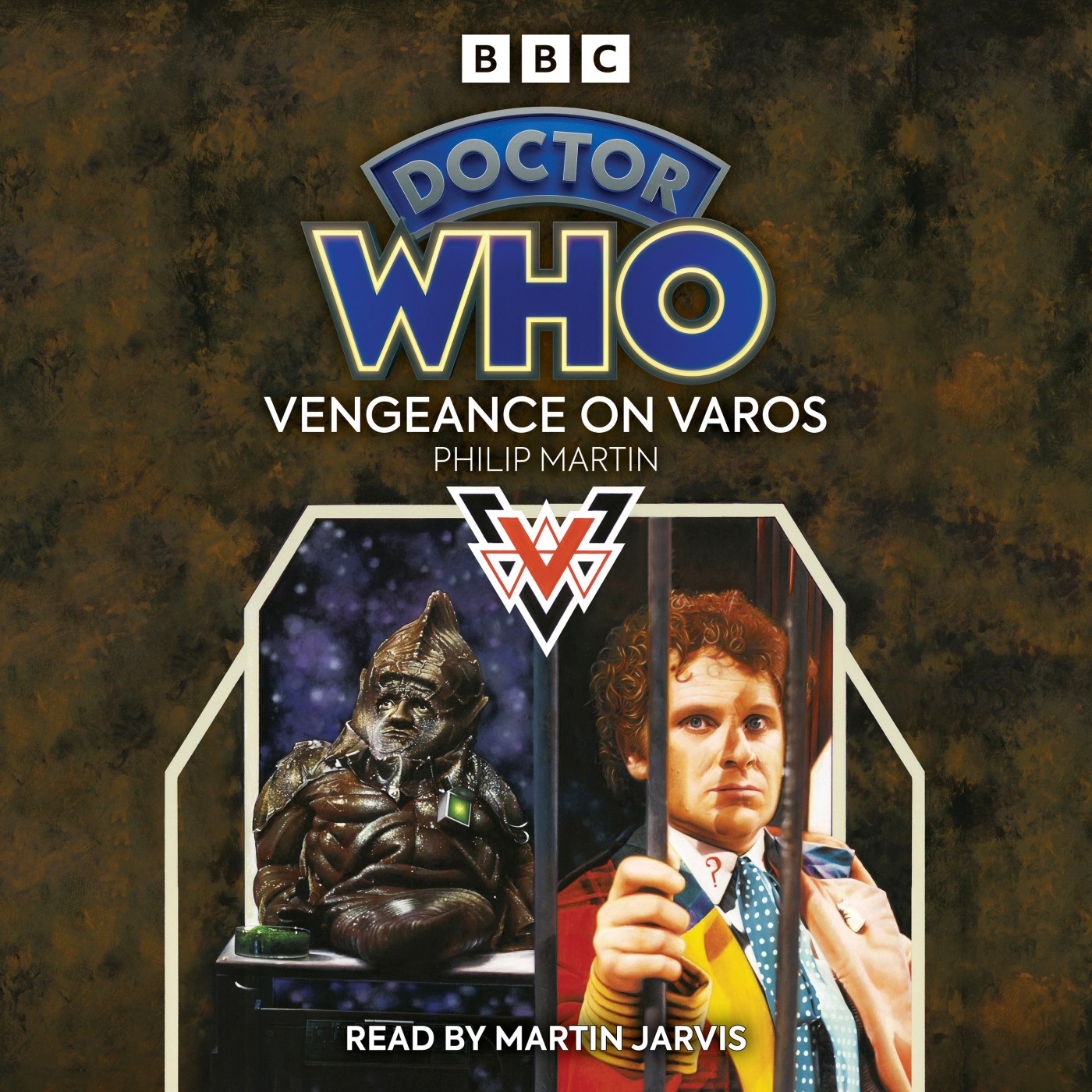
The Colin Baker era of Doctor Who is pretty much no one’s favorite era of the show. Not even Colin Baker himself is fond of it, if asked he will always point to his work with Big Finish Productions as the true highlights for his character, and he’s pretty much exactly right about that.
On television though, the situation was dire. Over the course of the early 80s, the series had plunged into sheer madness, producing increasingly graphic and violent storylines than had ever been dreamed of. Making matters worse was the writing for the Doctor: he’d become a violent and temperamental man, strangling his companion Peri in his first story, and appearing more willing to commit murder to save the day in subsequent ones. True, the idea of creating a character who was a deliberate contrast to the previous incumbent had merit, but the concept of Six as imagined by the production team wouldn’t be truly realized until Twelve, some 30 years later. (“Every six Doctors, they get it right,” Colin said once, during a Q&A at the Doctor Who Experience I attended.)
Even so, there are at least two stories considered by the fandom to be among this period’s best, or rather, least worst: this and Revelation of the Daleks, and given my distaste for Eric Saward, I’d have to say I’m leaning toward naming this one as the best of the televised era. (Though my personal favorite Sixth Doctor story in any medium is Whispers of Terror.)
Let’s start with the obvious: Doctor Who doing an extended satire about violence in popular entertainment and reality TV some 20 years before Russell T Davies does it in Bad Wolf/Parting of the Ways, but there’s more going on here than just that. What sticks out to me is the world of Varos itself, outside of the Hunger Games-esque TV programs.
As you may remember from my Series 5 book, one of my favorite Doctor Who stories is The Beast Below, in which the Doctor, Amy, and the future Queen of England Elizabeth X go investigating the corrupt government of Britain, a world where the citizens vote every few years on whether or not they should continue to live on the back of a captured star whale, or instead, terminate the program and have the ship disintegrate, sentencing everyone to a quick, and cold, death in the vacuum of space. It plays at being a democracy, but it’s anything but, if the only options are pain and suffering or death.
That’s the energy Varos is running on, and then some. If anything, the story is ahead of its time with all the stuff about allowing the viewers watching at home to vote on whether a rebel lives or dies, anticipating reality TV contest shows like Dancing With the Stars, Survivor, or Pop Idol. That’s the thread Davies picked up on when he wrote Bad Wolf, there’s no way he wasn’t aware of the similarities.
The voting thing, again, also ties in with democracy and the popular vote. Varos is a fascist state, similar to the alternate versions of, respectively, Britain and America in Nineteen Eighty-Four and Farenheit 451. The torture shows are broadcast to quash any dissent that might rise, and it seems to work: the native inhabitants are all too busy being glued to the TV to put any thought toward revolutions, violent or otherwise. If the Seventh Doctor and Ace had landed here instead of Terra Alpha, they might’ve had a harder time bringing the government down.
Additionally, there’s a huge critique of capitalism running through the story, or at least part of it: Varos is a shithole because the governor is trying, and failing, to negotiate a price on its Zeiton-7 mineral with Sil, and if he fails to do it, he dies. It’s an inadvertent one, but given the recent explosion of money in politics (at least in American elections) it’s quite apt. Gotta keep the donors happy, after all, and god help you if they close their pocketbooks.
There is one thing though: I’ve usually been of the belief that a good Target book can improve an otherwise unremarkable TV story, or at the very least make it more bearable to take in than watching it would. (See Doctor Who and the Daleks.) But in the case of Vengeance, being turned into a book robs the story of some of its more meta-fictional qualities. In the television version, we’re treated to scenes of characters watching television even as we the audience are also watching television, and on top of that, the Doctor and Peri aren’t just in their own TV show, but on a show within the story as well.
The first episode takes this repeated switching around levels of the fourth wall by ending with the Doctor seemingly dying in front of us, only for the scene to switch to a bank of monitors, where his death is being viewed by the Governor and some technicians. The Governor orders the shot to be cut when he’s sure the Doctor is dead… and as the word “there” leaves his mouth, we cut to credits.
Sadly, this was how that scene was portrayed in the book:
“What now, sir?’ Bax turned to the Governor.
‘Go in close, establish there is no flicker of life.’
‘Yes, sir.’ Bax shifted his cameras into a big close-up that brought the Doctor’s waxen face so close that it filled the screen. Not a muscle twitched nor was a tremor of breath evident.
‘He’s dead, sir.’
‘I agree.’ The Governor watched the Doctor for a moment more than snapped his fingers.
‘Cut it now, Bax,’ he ordered and watched the technician terminate the transmission by a flick of a switch that brought up the station ‘V’ logo and the mournful military march that always played as the evening’s entertainment from the Punishment Dome drew to a close.”
Aside from the fact that the Governor’s last line of dialogue would’ve been a perfect place to end that chapter, pay close attention to that last paragraph, and note the complete lack of punctuation between the closing quote mark and the period.
There are 46 words in that paragraph, and it’s an entire freaking run-on sentence. It’s the exact kind of grammatical mistake that my fifth grade teacher in elementary school accused me of making, and I was eleven. Mr. Martin was a professional writer, you think maybe he might’ve picked up not doing those at some point.
But aside from the length, it’s also spectacularly over-written, as was the case with the Saward book we looked at last time. Having a huge vocabulary doesn’t mean you’re automatically a good writer. (See: J.K. Rowling.) I will give him credit though for his take on the infamous acid bath scene: in the TV version, the two guys fall in and the Doctor quips, “Forgive me if I don’t join you.” The scene was supposed to be comedic, but was played for drama instead. The novelized version looks like this:
“Quite corrosive, I would have thought,’ the Doctor said conversationally.
‘Yeh. An’ you’re about to find out just how much!’ Az yelled and launched himself at the Doctor who, hoping for just this wild rush, stepped nimbly aside causing the attendant to crash into the side of the bath, teeter for a moment then overbalance with the force of his assault.
‘Aaaahh!’ The yell stopped abruptly then resumed as the frantic attendant flailed desperately to obtain a footing so as to clamber clear of the burning, scalding acid-bath.
‘Help me!’ he yelled, panic-stricken.
‘Hold on!’ his companion dashed to his partner’s rescue extending a helping hand that was grabbed with urgent haste exerting such force through blind panic that the unfortunate rescuer toppled on top of Az.
Both submerged under the surface of the very acid-bath into which they had lowered thousands of victims of the Punishment Dome.
‘Dear … dear …’ The Doctor shook his head sadly as he contemplated the effects of the painful immersion that the attendants had callously planned for him. An arm thrashed around. A head surfaced but soon the acid had done its work and the Doctor, realising that nothing could have been done to save the unfortunate Oza and Az let himself out into the corridor, determined to place some distance between himself and the mortuary where he was certain the cameras must have monitored his miraculous return to life.
Much better than the broadcast version, without a doubt. That aside however, this doesn’t change my general view of the story: Vengeance on Varos is a good television story, but a terrible book.


Leave a Reply