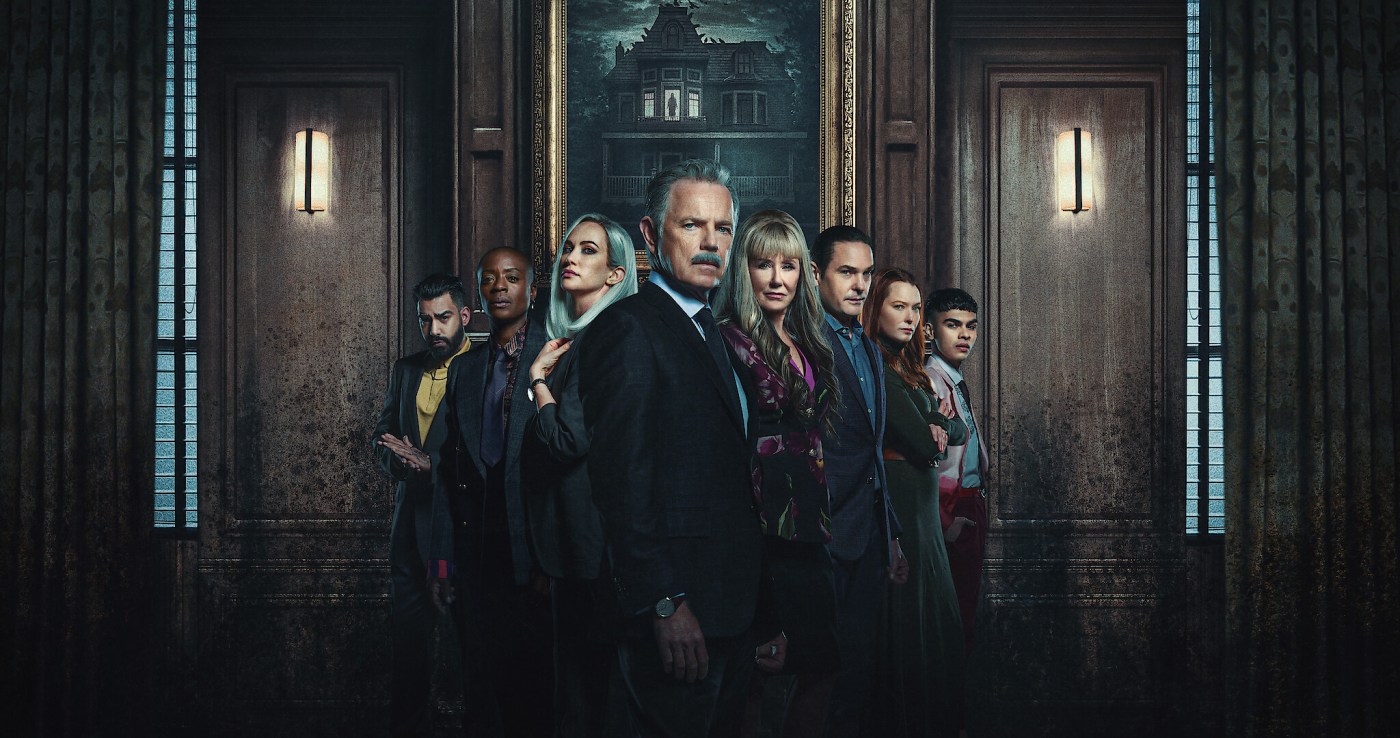
There is a moment, late in the final episode of The Fall of the House of Usher, that has stayed with me. Madeline is ranting to her brother about the current state of global affairs:
“We turn men into cսm fountains and women into factories, cranking out, what, an impoverished workforce, there for the labor and to spend what little they make consuming. And what do we teach them to want? Houses they can’t afford. Cars that poison the air. Single-serve plastics, clothes made by starving children in third world countries, and they want it so bad that they’re begging for it, they’re screaming for it, they’re insisting upon it.”
“And we’re the problem? These fսcking monsters, these fսcking consumers, these fսcking mouths. They point at you and me like we’re the problem. They fսcking invented us.”
It’s a moment that brings home what the entire show has been about: an angry, furious screed against how completely and utterly fucked the world has become, told through the systematic collapse of a family of Big Pharma kingpins. In a year that has seen the climate crisis accelerate still more with no apparent end in sight, this seems like stating the blatantly obvious… except sometimes, some anvils need to be dropped.
What makes Usher shine for me isn’t just the fact that it’s an Edgar Allan Poe love-fest, or a gothic take on Succession, but the fact that it is willing to stake its claim in favor of not just eating the rich, but murdering them in spectacularly horrifying ways. And it does so on Netflix, a platform that is still the biggest of the streaming services, and is still subject to an actor’s strike, even if the writer’s strike is over. The sense of “fuck you!” to not just the Roderick Ushers of the world, but also the Ted Sarandoses and Bob Igers of the world is palpable.
My good friend Christine Kelley, in her own review of the show, describes Usher as being “a Moffatian puzzle box, of course, but an exquisitely assembled one with a conscience and a goal.” I would add that it crackles with the sheer political rage of Russell T Davies at his best, this is like The Long Game turned up to eleven.
What animates this show is a sense of catharsis: finally, even through the medium of a fictional crime family, we get to see the ultra-rich get what’s coming to them. Flanagan, no doubt, knows as well as I do that there are entirely too many Ushers in the world, who do not have a spectral demoness in the form of Verna to dispatch them. Now, at least, we can savor this feeling of justice served.
Some might claim that the show’s political messages are too heavy-handed, but I disagree. Flanagan does with horror what Star Trek: Picard did with sci-fi allegories in its second season – this is a reflection of our world, and a grim warning of what we could become… or in the case of Usher, already are.
I will say that this is a very intense watch, and not really meant for binging. While I am not exactly a huge fan of horror, even I will admit to being exceptionally creeped out by two of the Usher deaths: specifically, Perry’s acidic shower at the end of episode two, and Vic stabbing herself in the heart after it’s revealed that she murdered her girlfriend following an argument.
That second one is why my girlfriend and I ultimately decided to hold our attempted binge to one more night, and I’d definitely suggest watching it slowly over a week than trying to burn through the lot in 8 hours.
Still, if there was ever a show meant for chilly autumn nights that feel more like winter, it’s this one. Bravo, Mr. Flanagan.


Leave a Reply