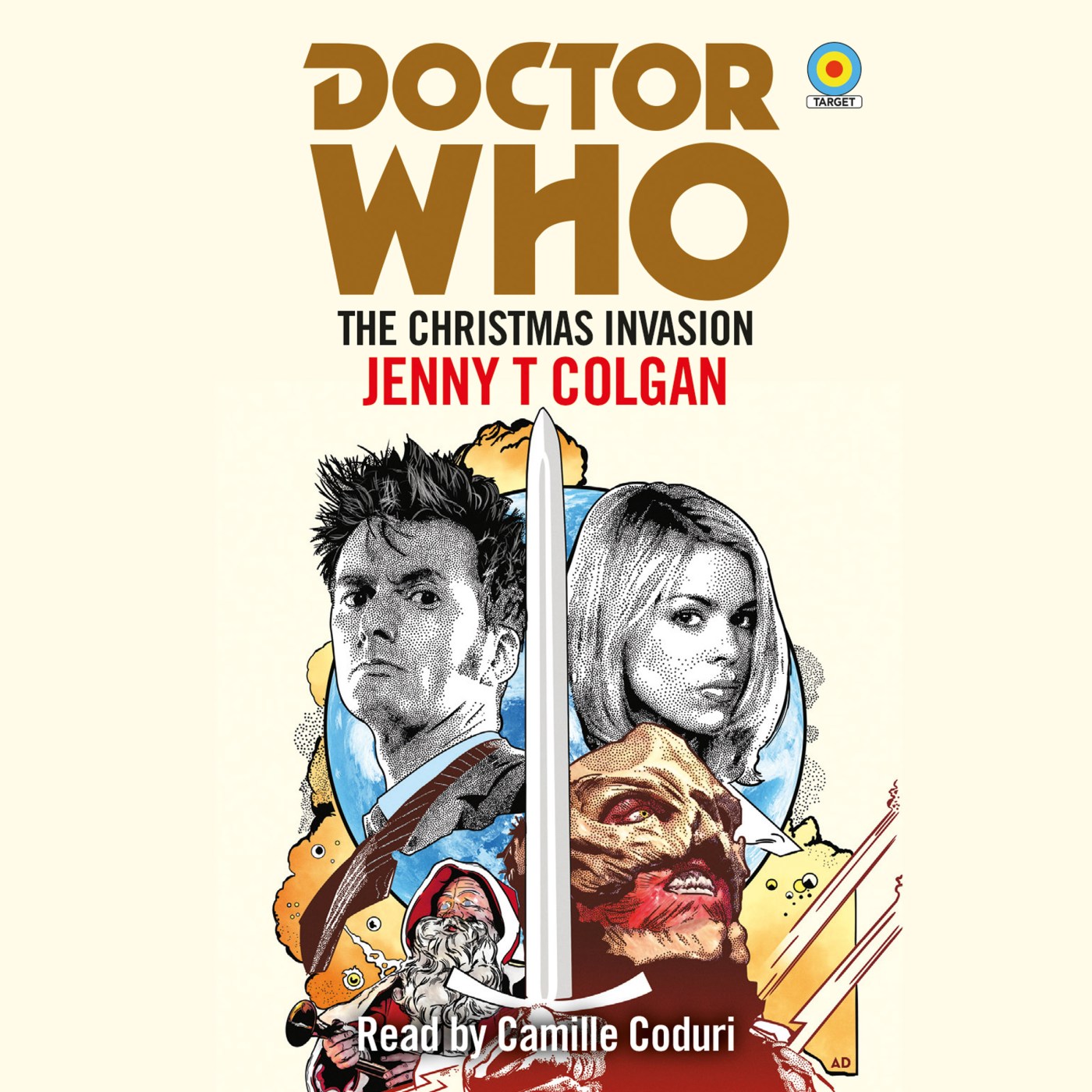
I have, it must be said, something of a complicated relationship with the Tenth Doctor. He was the first Doctor I ever saw on TV, and the first one I saw regenerate live. When I was first discovering the show, it was a small assortment of his stories I started with. I like him sometimes and hate him at others, which feels surreal given how the general fan opinion of him is that he was one of the best ever.
I’m not trying to knock David Tennant as an actor, by the way. He was fabulous in the role, and when I rewatched Series 2 a few years back for a now-abandoned blog project, I understood why he’s commonly thought of as the revival generation’s equivalent of Tom Baker: he so completely and utterly nails the part from the word go, and even the worst stories (Fear Her, The Idiot’s Lantern) are rendered watchable simply through his charisma. Listen to his Big Finish material and you get the same effect, even if (due to age) he can’t quite hit those higher vocal registers and he gets a bit more gravely in the lower ones, it doesn’t matter because the essence of him is still there.
When he’s written well, the Tenth Doctor is excellent, a swashbuckling action hero with a joke to make and a sonic screwdriver to point. Colgan herself writes very, very good Ten (check out In the Blood, a Series 4-set book from 2016, for more) as does Steven Moffat, particularly in The Day of the Doctor when he punctures all of that incarnation’s darkness by having him deliver a Voyage of the Damned badassery monologue to a rabbit.
But when he goes into Lonely God ruthless mode, which starts at the end of this story when he kills the Sycorax leader with a satsuma, that’s when he becomes more of an anti-hero like Christian Bale’s Batman, Walter White, or Daniel Craig’s James Bond than the Doctor, who (in my opinion) doesn’t really belong in those kinds of stories unless they’re there to twist things around.
But in the end, that’s something of a minor quibble where this book is concerned, since the Doctor (as in the TV story) spends large chunks of it out of action. Colgan leans hard into depicting a world without the Doctor there to stop an alien invasion, shifting the focus repeatedly between the Powell estate and UNIT HQ, and it’s a very grim place, with Harriet Jones deciding to call in Torchwood as a backup plan rather than keep waiting on the Doctor to come to the rescue.
But what I like best about it, and what sets it apart from the TV story, is how it opens: not with Rose freaking out at seeing a newly-regenerated Doctor, but with the crew of the Guinevere probe celebrating their achievement as it approaches Mars. We stay with them especially in the scene where Daniel Llewellyn, the only TV character in that group, (he’s the guy who makes me think of a younger Richard Schiff circa The West Wing) shares a quiet moment on a rooftop with Sally Jacobs, just before the blood control is activated. Fleshing Llewellyn out a bit just makes his murder via Sycorax electro-whip sting that much harder.
The Christmas Invasion, as a book, is not exactly a dramatic reinvention of the source material like The Day of the Doctor and Dalek were, but that’s okay: it falls in the Terrance Dicks bucket of a faithful recapturing of a favorite story, and her love for the Tenth Doctor shines brilliantly through her prose.
As a story, Invasion is a tougher nut to crack. I did come away enjoying the TV version when I watched it a couple years ago, and while the decision to hide the Doctor away for most of the story could’ve been a disaster in other hands, Davies made it work, simply because he knew how good Tennant was going to be in the role. And when the Doctor does show up, of course the mood changes: he walks out of the TARDIS and proceeds to wipe the floor with the Sycorax, proving beyond a doubt that he is still the Doctor, no matter what face he wears.
Amusingly, some of my favorite bits of the book involve technology, namely Mickey having to plug his computer into Jackie’s phone line to get on the internet, and said computer possessing a whopping 512 megabytes of RAM. Megabytes! True, it was good for the time (Apple used to sell an iBook with the same amount of memory on it) but compared to, say, the MacBook Air I’m writing this post on with its 8 GB of memory, it’s laughably tiny.
If I have any hopes for the continuing line of modern-series novelizations, it’s that I want the Tenth Doctor to have a proper adventure on his own, since he only appears in this and The Day of the Doctor, where he shares the spotlight with Eleven and War. He hasn’t yet had a book to himself yet, as the Doctor we all remember, but I’m sure one will come along eventually. He might not be my Doctor, but I’m still looking forward to the adventure.


Leave a Reply