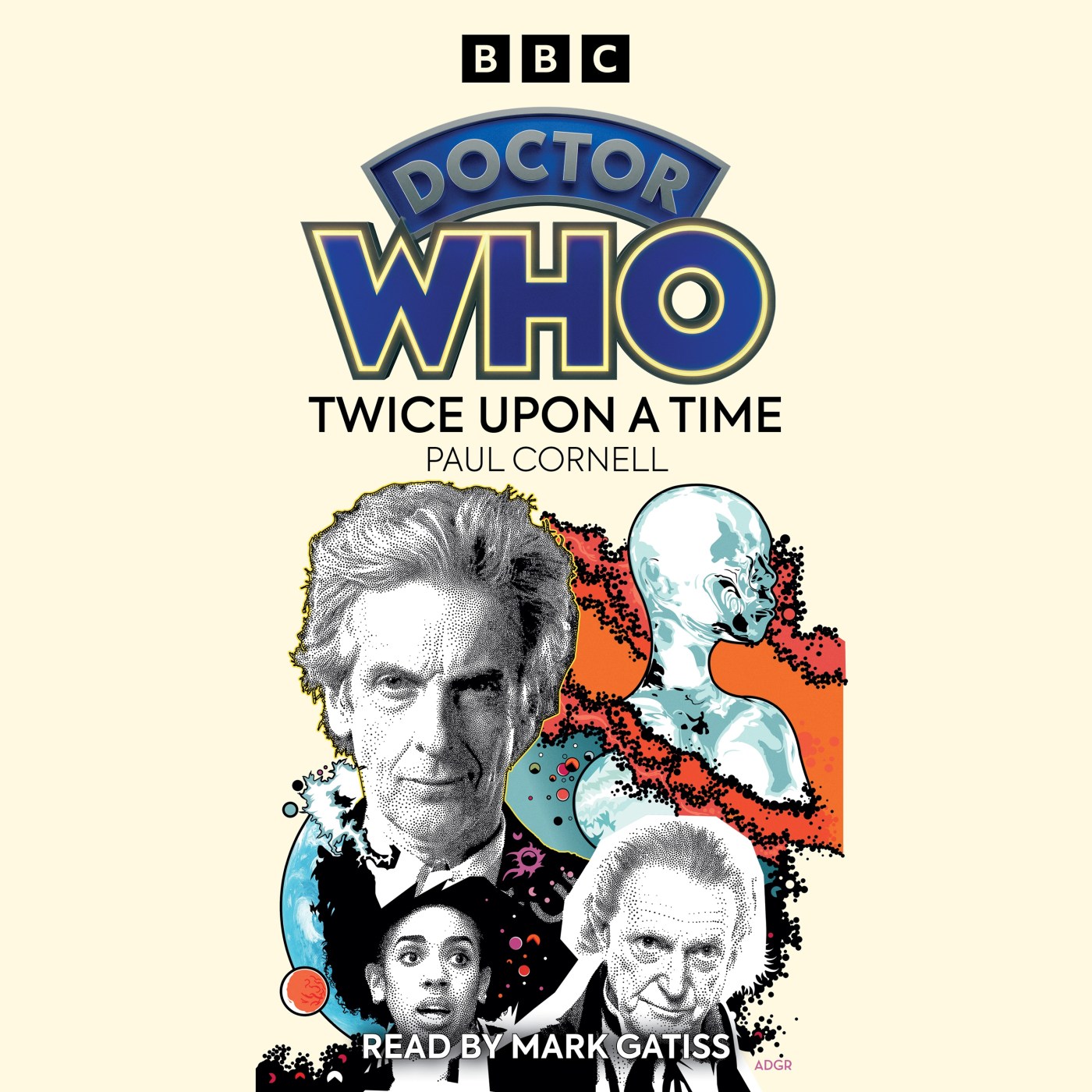
Twice Upon A Time, by some distance, is one of the most controversial stories Steven Moffat ever wrote. I have yet to meet anyone who would cite it as a story they even like, let alone call a favorite: some people say the portrayal of the First Doctor is all wrong, since he’s rooted not in how the character was portrayed on screen from 1963 to 1966 but in making him a stand-in for all the flaws and foibles of the Sixties, the sexism in particular. (Some people cite the “smacked bottom” line as being the worst example of this, but uh… it’s right there in the first episode of The Dalek Invasion of Earth.)
There are people who don’t like the regeneration speech, particularly the part about only children being able to hear the Doctor’s name, which Moffat threw in after hearing Peter Capaldi talk about it at a convention. Even Elizabeth Sandifer, whose opinions on Who are pretty similar to mine, came down cold on this story in her TARDIS Eruditorum post on it, though how much of that was born out of a genuine dislike of it versus the era that followed, and even the headspace she was in when she wrote it, is up for the reader to decide.
It’s not a very good story, I’ll grant you. The plot is rail thin, mostly consisting of two Doctors (well, one Doctor and a stand-in) plus Bill and an ancestor of the Brigadier all essentially killing time before they all go off to face the inevitable: Bill into whatever happens to her after leaving the TARDIS with Heather, the Doctors regenerate into their second incarnations of their respective regeneration cycles, Captain Lethbridge-Stewart at least gets to live a bit longer following the 1914 Christmas truce (which I first heard about in a Royal Guardsmen song) but eventually, even he will probably die by German bullet.
Add in the sexism that rather subverts everything I’ve been saying about Moffat and his feminist instincts over the past two years, and… well. Small wonder I spent my entire first watch of the episode impatiently waiting for the Doctor to die so he can turn into Jodie Whittaker. (What happened on the second viewing… well, I’ll tell you in 2027.)
You can imagine, then, that I was pretty surprised when I heard it’d be representing the Twelfth Doctor’s era in that first wave of New Series novelizations. Now, on the one paw, I can see why they chose it: at the time it was the most-recently broadcast episode of the series, it had the new incumbent Doctor in it, and as we established in the Dalek post, the new Targets are very specifically aimed at collectors. They’ll not only know who Paul Cornell is, they’ll know his very long history with the franchise, stretching all the way back to Timewyrm: Revelation in 1991. So, good pedigree, and like Moffat, Cornell was coming to the end of his tether with Who. “Doctor, I let you go,” indeed.
But on the other paw… fucking why? Listen would’ve been a better choice, if we wanted a laid back story that was light on action and heavy in character work. If we wanted a multi-Doctor story, I’d pick Flatline. And if we wanted a Series 10 story, Oxygen or The Pilot were right there. Or Thin Ice! Cornell could’ve done great work with any and all of those! But instead we got TUAT.
Luckily, and this was not something that really registered when I first read it in April 2018 shortly after release, Paul Cornell is an excellent writer, and Twice is very much improved with his work on it. As with his Shalka book, Cornell opts to go with a neo-Terrance Dicks mode for his prose, staying true to the story as presented on screen, but with some extra flourishes: in this case he includes all of the scripted material that got cut for the TV version, at least as it concerns 12. (No Tenth Planet stuff here, unfortunately.) He also writes the First Doctor as Hartnell’s Doctor, rather than David Bradley’s imitation, so if you close your eyes and focus very hard, you can read all of One’s dialogue in his voice.
What saves the story for me, and my favorite part of the book, is the regeneration scene itself. Here’s how Cornell depicts it, complete with even more The Power of the Daleks references, and a deliciously Dicks-ian description of Thirteen:
“And there the new Doctor was: standing in clothes that were far too big, in uncomfortable boots, looking at the steaming mess that the regeneration process had made of the console. The wedding ring fell from the Doctor’s finger. It made a small noise as it fell to the floor of the TARDIS.
Okay, focus on one thing. One thing. Here was the monitor, which was buzzing with static, the image on it flickering. What was it to be this time? There was something different about this body, wasn’t there? Facing her was a young woman with a swish of blond hair, astonished eyes and a pleasing, goofy, grin. She stared at her reflection.
‘Oh,’ she said, ‘brilliant!”
No matter how difficult and frustrating I might find her actual era to be, the Thirteenth Doctor’s first scene is still one of the best in the history of the series, and Chris Chibnall pulled it off with aplomb. Her regeneration story, when it lands later this year, will no doubt be handled just as skillfully. And, speaking as a transfemme enby wolf: looking in a mirror to see a girl looking back is one of the coolest feelings in the world, and I love that it happened to the Doctor.
So, that’s Twice Upon A Time: On TV, it’s a difficult mess of a story. There are some good bits, of course, and I admit the way the Doctors cheat the Testimony by dropping Captain Lethbridge-Stewart off just as the Christmas truce begins is beautiful, coupled with the Twelfth Doctor describing his life as a battlefield. Even in his worst moments, Moffat can still pull out something good.
And the novelization? Honestly, I’d say it’s even better than the show. In a word, it’s brilliant.
And with that, we reach the end of the penultimate Target Practice entry. Penultimate, of course, means next-to-last. I learned that word in 2005 when Lemony Snicket used it in the title of the twelfth book in A Series of Unfortunate Events, and here I am using it for the final Twelfth Doctor story. Join us next time for the grand finale, as the Thirteenth Doctor herself has an adventure in 17th century Lancashire: It’s The Witchfinders.


Leave a Reply