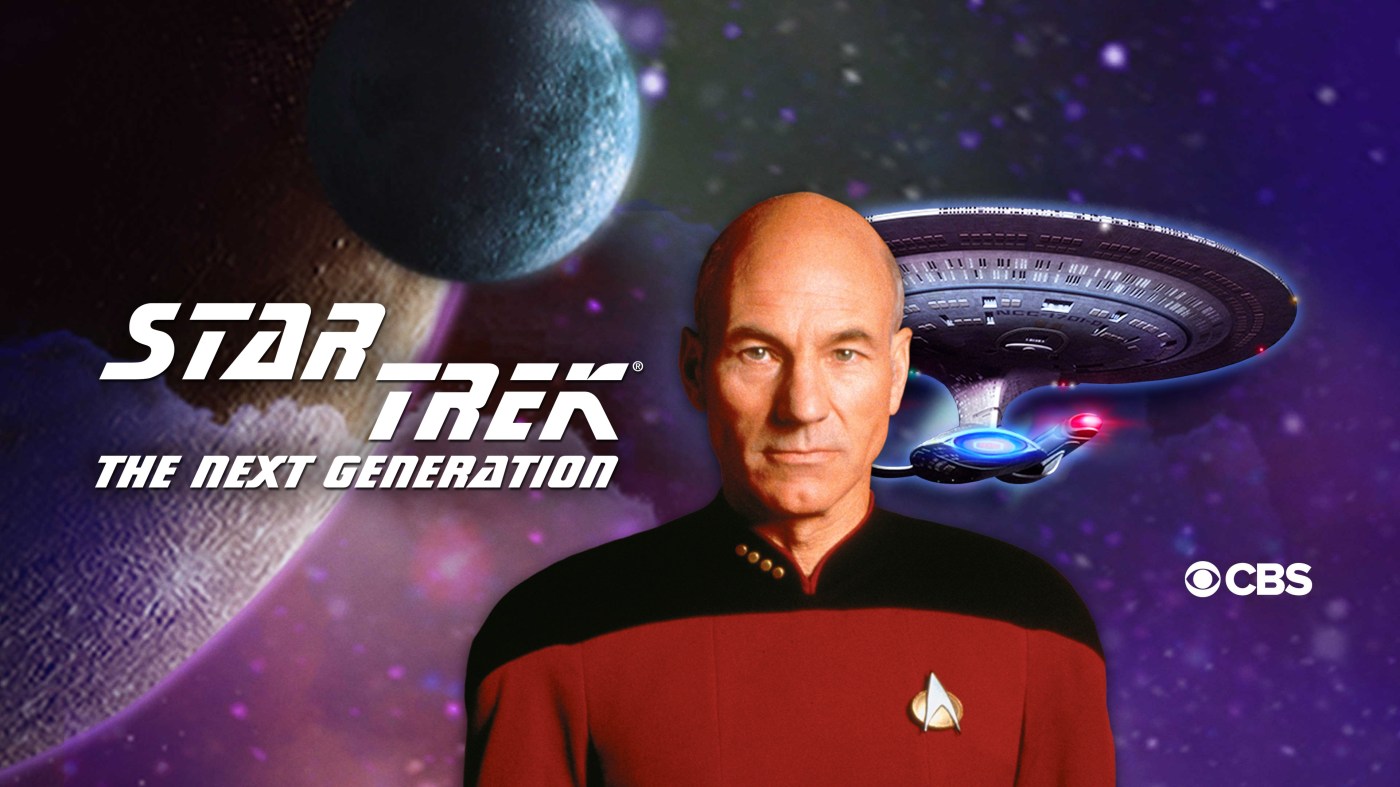
This post is dedicated to the writer of this episode, Tracy Tormé, who passed away this month. He was 64.
Captain’s log, stardate 79042.2: Captain Picard decides to try out the new holodeck enhancements in the form of a Dixon Hill detective story. However, when an alien probe causes malfunctions, Picard and his team find themselves in a real life and death struggle.
It’s funny to watch this episode in light of the recent writer and actors strikes – a particular point of contention between the studios and the unions was about the use of AI, be it AI-generated scripts for writers, or AI-generated performers for actors. As the strikes went on, it became increasingly clear that the studios want AI-generated everything, presumably because it would allow them to “cut costs,” since they wouldn’t have to pay writer or actor salaries, among other things.
As no less an authority than Jeri Ryan, of Voyager and Picard fame, put it in early November:
“They want their few A-listers that they can use and then everything else will be AI. They don’t have to deal with hair and makeup. They don’t have any craft services. They don’t have to deal with crews, they don’t have to deal with any of the rest of it. So they don’t need camera operators. They don’t need lighting. They don’t need costumes. They don’t need props. If it’s all AI, this entire industry is gone. There are no drivers driving people around. There are no trucks, there are no sets to build.”
It’s one thing if, for example, some random person on YouTube uses something like ElevenLabs to generate clips of various American presidents playing poker together – no one is harmed by a silly 2 minute YouTube video meant to generate laughs.
Hell, I use ElevenLabs to generate audiobook readings of my fanfics, so my girlfriend can more easily enjoy them. I’m not earning money off of anything, this is literally just me being concerned about accessibility, and wanting to do right by my girlfriend.
Where AI becomes really sketchy is when people use it to take shortcuts. I’m talking about AI generated artwork rather than commissioning real artists to make a bespoke piece, or as in some of the more horrifying studio proposals during the strike, using AI generated replicas in place of actual actors… including after the deaths of the original performer.
I’m sorry, but the very idea of an AI-generated “performance” by a replica of Patrick Stewart as Picard is fucking horrifying. It’ll never happen, partly because of new AI protections that SAG-AFTRA gained, and also because people would riot if Stewart’s likeness was used without his permission, but still – the very idea is spine-tingling, and not in a good way.
The holodeck, and its ability to generate places, situations, and people based entirely on user prompts, once seemed impossible in the late 1980s. Now, in 2024, it’s closer to reality than it used to be. Two modern Trek series, Discovery and Strange New Worlds, used AR walls to generate realistic-looking alien planets, kind of like how the holodeck was able to generate a realistic version of 1940s San Francisco.
But of course, in fiction, anything is possible. The holodeck can do things we in the 21st century can only dream of – just look at “Elementary, Dear Data” from season 2 for an example of what I mean. No contemporary AI could even begin to create something like James Moriarty as featured in the show – an artificial intelligence in the truest sense of the word. Even Cyrus Redblock, a forerunner of Moriarty if ever there was one, would beyond ChatGPT’s capability.
For starters, AI can’t even write a half-decent murder mystery story. Just look at what my old pal Audrey Armstrong experimented with back in May, when she tried to determine whether or not ChatGPT could eventually replace flesh-and-blood writers.
Spoiler alert: No, it can’t. The only people who think this is possible, as Audrey says, are tech bros who wouldn’t know a Monet from the Mona Lisa, or a Charles Dickens from a children’s book by Sean Spicer. (Yes, really, Trump’s former propaganda minister. It’s called The Parrots Go Bananas, and it’s $23. According to the Brave Books website, the book “reveals the dangers of spreading lies.” As Dave Barry used to say, I am not making this up.)
Now granted, the holodeck in the show was working with pre-established characters (in this case the world of Dixon Hill) and crafting a story based from that, but the holodeck is also more or less magical with a technological explanation behind it. And besides, it’s the 24th century. If they can build a sentient android, they can build an extremely sophisticated AI that doesn’t do things like, to return to Audrey’s example, produce this gem of a quote from the first ChatGPT story: “As she examined it more closely, she noticed faint traces of blood on one of the remaining shards. The blood didn’t match the victim’s DNA.”
Because apparently, ChatGPT believes fictional super sleuths can see DNA. Boy, that would’ve made the Hardy Boys books a hell of a lot shorter.
At the end of the day, you need actual humans to write stories, not computers. The studio executives may want to outsource everything they can and turn it all into AI-generated slop, but it won’t work. Only a human could write something as affecting as “The Inner Light,” (Picard lives and dies a completely different person) or as frightening as “Night Terrors,” (the crew are affected by terrible dreams) or as just plain goddamn weird as “Genesis,” the one where Barclay devolves into a spider.
As long as sentient life continues on this planet, we will tell stories. That’s just how we’re wired. Computers will never be able to exactly replicate that need to tell stories, because as my seventh grade math teacher used to say, “A calculator is only as smart as the user.”
Which explains why my best grade in any traditional math class I ever took was a C.


Leave a Reply