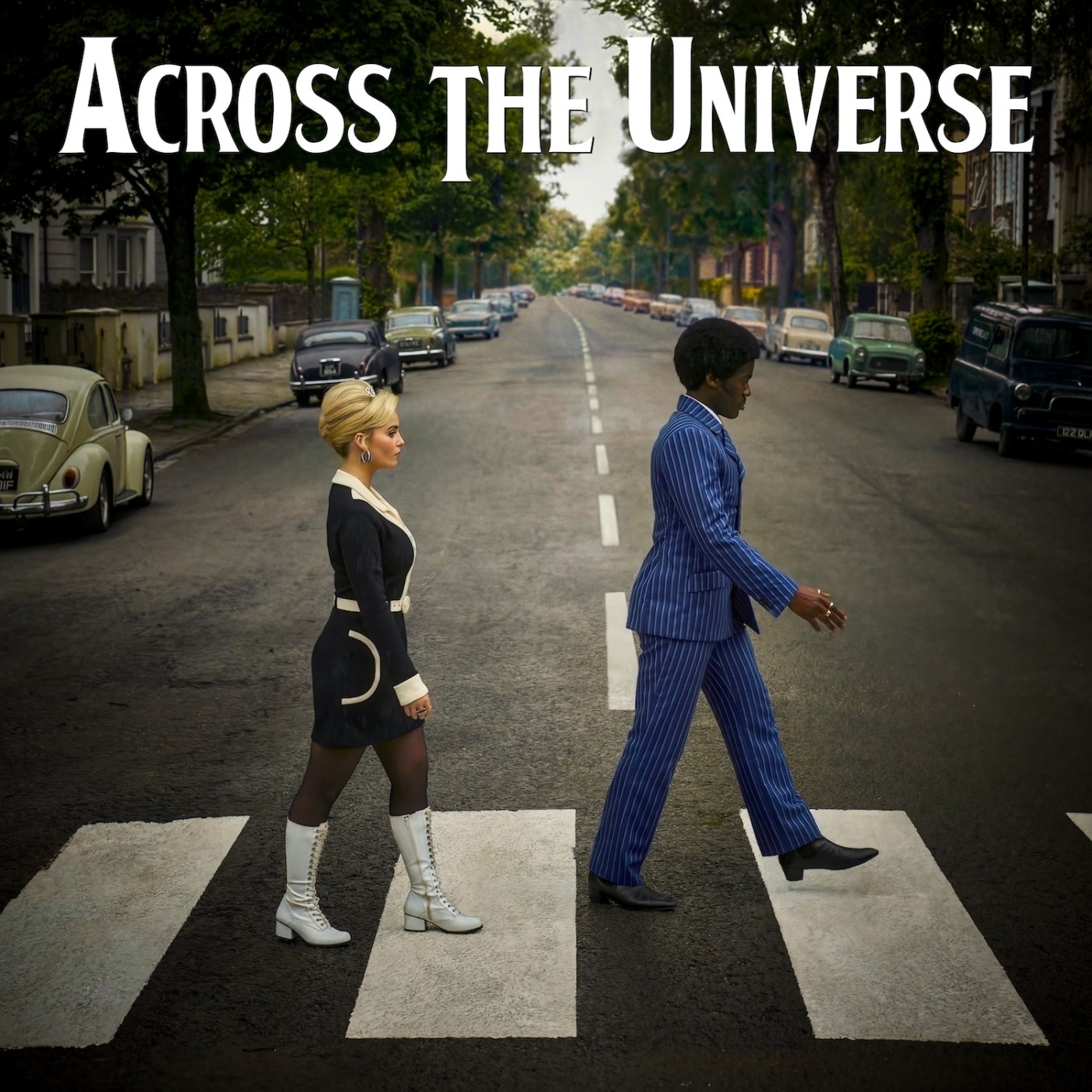
I’m going to come out and say it: this was the best post-regeneration story since The Eleventh Hour.
This is not a statement I make lightly. To be as good as that glorious introduction to the Eleventh Doctor, you have to do a lot of things right. For starters, the Doctor has to own the role pretty much immediately, with none of the usual bullshit about a post-regenerative crisis.
RTD is already very good at doing this. Rose was a tour-de-force for Eccleston’s Doctor, and while The Christmas Invasion kept David Tennant at something of a remove for a good chunk of the story, he still completely owns the part when he does show up at the climax.
Likewise, Smith is the Doctor from “Can I have an apple?” onward, whereas Capaldi and Whittaker’s performances, good as they are, still got weighed down by “the Doctor has just changed faces for the millionth time and they’re not quite altogether yet,” which isn’t what you want when you’re trying to reassure people that the Doctor is still… well, the Doctor.
This is where the bi-generation from The Giggle comes in handy. Because Gatwa literally springs into the scene fully formed, you warm to him immediately. Ruby Roadthen has more room to let Gatwa establish his take on the Doctor, which it does brilliantly.
If the pictures on his Instagram weren’t enough of an indication, Gatwa is a big Doctor Who fan. He peppers his performance with elements of his predecessors in such a way that you can, in fact, get that this man once looked like Christopher Eccleston. The way he says “Who sees a ladder and just hops on?” feels very Nine, but where Nine used sarcasm to mask his deep post-Time War trauma, Fifteen’s snark is warmer, which fits with his performance in general.
Fifteen is a very warm Doctor. To be fair, Fourteen was as well: he felt like a version of the Tenth Doctor who remembered being Twelve, and more to the point, remembered the phrase, “Always try to be nice, but never fail to be kind.” Gatwa is the same – there is a warmth and openness about him that his predecessors never had, at least since the BBC Wales era began.
That’s not to say that Gatwa’s Doctor isn’t weightless. The way he delivers the line about just learning that he’d been adopted as a child (a very veiled reference to Series 13 and that portion of the Flux plot line) indicates that everything he experienced in that part of his life still haunts him to one degree or another, but it’s not a weight that defines his character as it might’ve been for the earlier Doctors.
This is a Doctor who, as Eleven put it, is not running away from things, he is running to them. The exuberance, the joy, the curiosity, the mischievousness… these are all things that haven’t been part of the Doctor for a very long time, and I am beyond thrilled to see them again. After so many years (almost 20?!) of the Doctor being a mythic, god-like figure, it’s very nice to just have him be… well, an ordinary traveler, just passing by.
Moving away from the Doctor for a bit, let’s look at Ruby Sunday. In many regards, Ruby feels like a deliberate attempt by RTD to break away from how he typically came up with companions in his previous era. There’s a very Moffatian quality about Ruby: her name has the same number of syllables as “Clara Oswald,” while there’s a fairytale-like vibe to it as well, like “Amelia Pond.”
Then there’s her background. She’s a Northerner like Clara and is living in London due to family reasons rather than by choice, much like Amy. Like Bill, she’s got an adopted mom, though her relationship with Carla is much warmer than what Bill got landed with. Add in the fact that Millie Gibson kind of resembles a younger version of Jenna Coleman with blonde hair, and… well. You can see the parallels now, can’t you?
The Moffat vibes are all over this episode, quite frankly. The plot is surprisingly small-scale for a Davies story: for once the world isn’t in imminent danger, everything is entirely isolated to one small group – in this case, Ruby and her family. Of all things, it seems to be evoking The Big Bang in that laser focus.
Then there’s the fairytale aspect. That theme hasn’t been this loud in Doctor Who since early Matt Smith, when the Doctor was literally young Amy’s imaginary friend, and he was always defined in terms of faerie stories like Peter Pan. In this case, we get rock and roll goblins, and that leads us into the biggest bit of Moffatian plagiarism. Once again, time can be rewritten.
You can almost see it coming: Carla muses briefly about what she might be like without Ruby around, and within five minutes, this is exactly what happens. A crack appears in the wall again and Ruby is taken out of the picture, vanishing offscreen while the Doctor’s down in the kitchen.
When he returns to the house, he finds that it’s now much colder and emptier, from the darker lighting of the set, the lack of Christmas decorations, and even Carla’s very personality: she’s more selfish now, referring to Lulubelle as a brat, and her job as something she only does when she needs the cash.
But even in this changed timeline, Carla knows something is terribly wrong. “Why are you crying?” asks the Doctor, spotting the thread immediately. Someone is supposed to be here and she’s not – time has been rewritten, and only the Doctor (being a Time Lord and all) can fix it.
Which brings us back to the cold open. In the subtlest example of a bootstrap paradox ever, the opening of the episode is a preview of the resolution, the only thing missing is the surrounding context. And just to further the Moffatian parallels one more time, the story opens with the Doctor narrating over the visuals, just like in Heaven Sent… and the story begins with “Once upon a time,” just like a fairytale.
Ruby Sunday is left behind and taken in by the church, because the Doctor made sure that she was. We’re all stories in the end, after all.
As I said at the top, Ruby Road is the best post-regeneration story since The Eleventh Hour. It’s Davies doing an extended Moffat pastiche, which I deeply appreciate. Ncuti Gatwa and Millie Gibson have exceptional chemistry, and I’ve gotta say, coming after the very busy TARDISes of Whittaker and late Capaldi, a return to the old two regulars approach is very welcome. I cannot wait to see more.
Spring 2024 can’t get here fast enough.


Leave a Reply