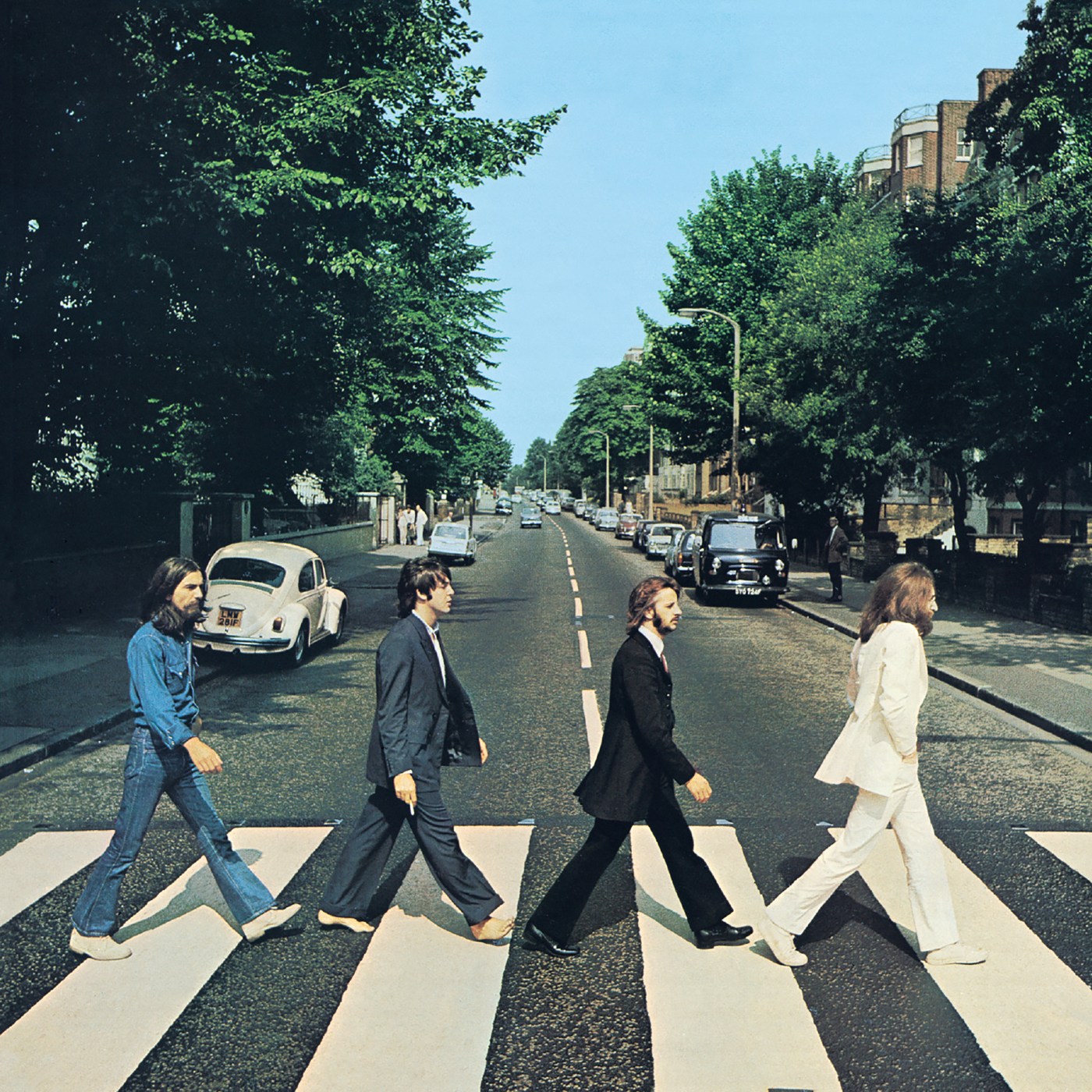
I write this post on the 60th anniversary of the Beatles’ first appearance on the Ed Sullivan Show, and it’s very hard to believe that only five years separate that first American TV appearance from this, their final album to be recorded. They’ve made a dramatic shift over that five years, as just looking at the front covers of the Red and Blue albums will tell you. (Note: this is not the final post in the series. I’m only just getting started!)
Let’s set the scene. The Get Back/Let It Be project was a mess and everyone knew it, so Paul calls up George Martin and says, “We’d like to do another album, the way we used to.” Martin agrees to produce it the way he used to, and so, in February of 1969, the band go back to good old EMI to record, put the bullshit behind them, and focus on making a really good album.
Everyone is on the top of their game here. John, Paul, and George write some of the best Beatles songs they’ve ever done, Ringo writes the only song that could possibly top Yellow Submarine.
Technologically, things are shifting too: the use of the Moog synthesizer gives the record a completely different sound, and since they recorded this album on a solid state mixing desk rather than a vacuum tube model, that gives the whole album a softer, warmer sound than previous ones had. This last shift was so huge that it inspired the title of a book: Solid State by Kenneth Womack.
Abbey Road is brilliant. It serves as a musical capstone to everything they did, a far more fitting memorial to this band and what it was than Let It Be could’ve been. They’re going out at the absolute top of their game, and even they seemed to know it. This is an album like no other, and it deserves to be looked at in close detail:
Come Together: While based on a Chuck Berry line, this song by John quickly goes in its own direction, despite what Berry’s lawyers thought. The drum part in this song is one of Ringo’s best, and that riff! God, it’s brilliant. A fine start to an amazing album, if you ask me.
Something: If there was ever any doubt that George Harrison had grown by leaps and bounds during his Beatles days, this should put those doubts to rest. Abbey Road was his happiest album, perhaps because he suspected that this part of his life was over. “Something,” as a love song, is one of the best ballads anyone ever did, and I appreciate it even more now that I’m dating Lykos.
Maxwell’s Silver Hammer: The other three Beatles really hated this song, but Paul refused to let it go, so it got made. Personally, I think it’s hilarious – a cheerful story song about a serial killer! But what I really like about it is the synth parts – the first song we’ve had yet to use a Moog. It really adds something to the piece, I think.
Oh! Darling: Inspired by Fats Domino and New Orleans rhythm and blues, this is a great Paul song, with traces of his old “Little Richard” voice – but only traces, because his voice had changed so much by then. (Remember how deep it was on “Get Back?”)
Octopus’s Garden: Written by Ringo while taking a vacation, George helped him out with some of the chord changes. It’s a successor to “Yellow Submarine,” sharing the same watery theme – it’s even got bubble sound effects! It’s still a rock song though: the guitar solo is great, and I fucking adore the backing vocals. As this is the last Ringo song on a Beatles album, I’m glad it’s one of his own pieces. Goes to show how far he’s come, the best drummer in the world.
I Want You (She’s So Heavy): In which John Lennon basically invents doom metal. A song of pure sexual desire on John’s part toward Yoko, it’s the longest song they ever did, and features Billy Preston back again, on Hammond organ this time. According the session tapes from the super deluxe version of Abbey Road, the boys got hit with a noise complaint while they were making this! Not hard to see why: that guitar part, the endless loop that seemingly goes on forever, would definitely attract attention. And then it just stops, bringing the first half of the album to an unexpected end.
Here Comes the Sun: Starting off side two is George again, with the happiest Beatles song he ever wrote. I only wish I knew why they decided to move his vocal to the right, rather than putting it in the middle. (Fortunately, we have the 2019 remix to fix that little issue.) The song has only gotten more popular in recent years, and in fact, it was the first Beatles track to reach a billion streams on Spotify. Given the anxious times in which we live, a little burst of Harrison’s sunny optimism is exactly what we all need.
Because: Inspired by Beethoven and driven by the electric harpsichord, this song is beautiful even in an instrumental take, but once you add the vocals? Pure sonic bliss. The last example we have of the Lennon-McCartney-Harrison 3-part harmony that goes back as far as “This Boy,” and it’s by far their best. There’s never been anything like those three voices before, and never will be again. Extracts from this track were even used on “Now and Then,” last year’s final Beatle song.
You Never Give Me Your Money: The medley begins, with a song that is at least partially about Allen Klein, who was managing the band by this point, much to Paul’s distaste. (Again with the weird vocal panning decisions?!) You get to hear Paul hit all his vocal registers on this song, which is one of the reasons I like it.
Sun King: A dreamy song by John that discusses an imaginary figure called the Sun King, notable for its guitar parts and John’s slow, languid delivery of the vocals. Kind of conjures the image of relaxing on a beach for me, during those warm summer afternoons where everything seems great.
Mean Mr. Mustard: Now we’re cooking with gas! That acoustic demo from the Esher recordings finally hits it stride, and it’s even better now. And until 2022, the lyrics about royalty were still current!
Polythene Pam: Is Polythene Pam trans? A crossdresser? I have no idea. Musically, it’s nice to hear the trio of “yeahs” again – a bookend if there ever was one.
She Came In Through the Bathroom Window: If you’ve seen the Get Back documentary, then you can hear Paul working on this one in episode 1 with John ad-libbing – I think it’s the last one they play before George leaves at the end. Written in response to some of the Apple Scruffs breaking into his house, the finished song is pretty great by itself, enlivened by vocal harmonies and a really great guitar part.
Golden Slumbers: The medley enters its final stage with this song, a lullaby by Paul based on a tune from a music book owned by a relative of his. But since he can’t read music, he came up with his own tune instead, and this was the end result. It’s very wistful, almost a meditation on the impending end of the group.
Carry That Weight: In which all four of them sing together, with bits of “You Never Give Me Your Money” as well, heading into the last piece of the medley. I love how, out of all of them, Ringo is loudest when they sing. But they did, indeed, carry the weight of the Beatles a long time. They’ve never really stopped.
The End: This is it. Everyone gets a solo – for Ringo, it’s about the only one he ever did, and it’s fucking phenomenal. Then you get to the guitars, with John, Paul and George shredding like nobody’s business, and everything builds to a crescendo like A Day in the Life… and then it ends, with Paul contributing the last line of the last song on the last album: “And in the end… the love you take… is equal to the love you make.”
Her Majesty: Nothing much here, just Paul goofing around and singing about how he wants to romance the queen. It was supposed to be part of the medley, but it got cut and moved to the end instead, because Kurlander couldn’t bear the thought of throwing away anything the Beatles had recorded… even if a Beatle told him to. It was such a surprise that original pressings of the album didn’t list it as a track! So, “The End” isn’t technically the last song, just like Abbey Road isn’t technically the last album… but it’s spiritually the last.
Abbey Road, musically, is a triumph. Listening to it on the occasion of its 50th anniversary a few years ago, I can remember sitting on a park bench, and when I got to “The End,” I cried. It just hit me in that moment, like it never has before, and hasn’t really since. For all the rumors and whispers that the boys wanted to do another album after this one, it’s just as well that they never did, Let It Be notwithstanding. You can’t top this exquisite goodbye – a final effort, named for the street where they recorded (almost) all their music, with them walking away from the studio to go in their own directions.
Of course, Abbey Road is not the end of the story anymore. There’ve been a dizzying number of post-breakup Beatles projects released over the years, some obscure and some not. Greatest hits albums, the Anthology reunion project, remixes, a couple of live albums, and more besides. The Beatles, even after the break-up, have only gotten huger. They’re the world’s favorite thing, as Rob Sheffield says in Dreaming The Beatles. We can’t let them go, no matter how hard we try, because they mean so much to us.
So, with the end of the band as a cohesive unit, what comes next? First, an overview of the American Beatles albums, (since it’s been 60 years and all) and once we get through those?
The Beatles’ afterlife, from 1970 to the present.
Next time though: we rewind to January 1964, and the release of their first LP on Capitol Records. Get ready to Meet The Beatles, again.


Leave a Reply