“Well, we’re the Unified Intelligence Taskforce, created to investigate the extraterrestrial and, more and more, the supernatural,” says Kate Stewart, roughly halfway through this episode. “Things seem to be turning that way these days.”
Aside from this being RTD yelling “WE’RE A FANTASY SHOW NOW” at the top of his voice, the new engagement with magic and related topics really clicks with me. Not just because it evokes early Smith (though it does) but also because of something that happened in the time between The Devil’s Chord and this episode.
In that two-week span, I became a practicing Wiccan.
I haven’t been practicing witchcraft for very long, but I’ve done enough magic, and learned enough about Wicca, to know that it’s the spiritual path I want to follow. It just feels right, in a way that Christianity and atheism never did.
I was so certain of this that I literally the night before this episode aired, I performed a self-initiation ritual. I’m a proper witch now, and I’m only beginning to understand how my powers work, and what I can do.
So, of course Doctor Who then airs an episode that engages, at least a little bit, with the Craft. And it’s set in Wales, the home country of my goddess, Cerridwen – the deity of poetry and creativity. Between this, the Moffat episode last week, the Beatles episode, and the Star Trek references in Space Babies, you really do get the impression that this season of Who was made to appeal to me specifically. (It wasn’t, but it feels like it.)
So let’s talk about fairy circles, shall we? According to Spells8, my go-to source for all things Wicca, “It is said that fairies dance in circles after the sun sets. In their wake, they leave behind fairy rings. These are mysterious circles formed by mushrooms or wildflowers. While fairy rings are incredibly beautiful and mesmerizing, it’s important to remember two things: never to step into one and never to pick a flower or mushroom from one. Doing say can cause you to be carried off to the Fairy realm!”
And lo, that’s exactly what happens to poor Ruby, the instant the Doctor disappears from her side. The Fae drop her in an alternate timeline that’s almost exactly like our own, but with a trick: she becomes anathema to anyone who speaks to the old woman that’s 73 yards away. We never find out exactly what it was the woman said to Josh, or Ruby’s mom, or Kate Stewart, but in my reading? She probably said something like, “She broke the fairy circle.”
This is a timeline that runs on the logic of magic, and if there’s one thing I can tell you, it’s that you do not mess with the Fae.
For example: According to Wilderness Ireland, “Fairy forts are essentially the remains of Iron Age/early medieval ring-forts, of which there are thousands still remaining in Ireland today. Farmers and landowners often plough and mow around them so as to not incur the wrath of the little people.”
See what I mean? These aren’t the cutesy little winged humanoids from Disney movies. The real Fae are way different, and all the more dangerous. Like, I realize the people in the tavern were messing around at least to some extent, but when you’ve read up on magic lore as much as I have, you know there’s at least a grain of truth to it, no matter how small.
“The clifftops are a boundary between the land and the sea,” says the woman in the red beret. “A liminal space, neither here nor there, where rules are suspended.” A little later on we get this ominous warning: “I think whatever spell was cast in this circle is now broken.”
These two statements are related. When a witch does a magical ritual, she often starts with a sacred circle spell to give her room to work. It’s a way to purify the area of any negative energies, so they can’t affect the spells we cast. If you choose to invite deities in, such as the Triple Goddess and the Horned God, the circle then becomes a liminal space, where our world and the spirit realm meet. And that creates very powerful magic indeed.
After we’re done, it’s considered good form to take down the circle, releasing the energies we’ve raised back into the universe. I’ve been known to take down my circles with the words, “The circle is open, but never broken.” Break a circle, and the next thing you know, chaos descends.
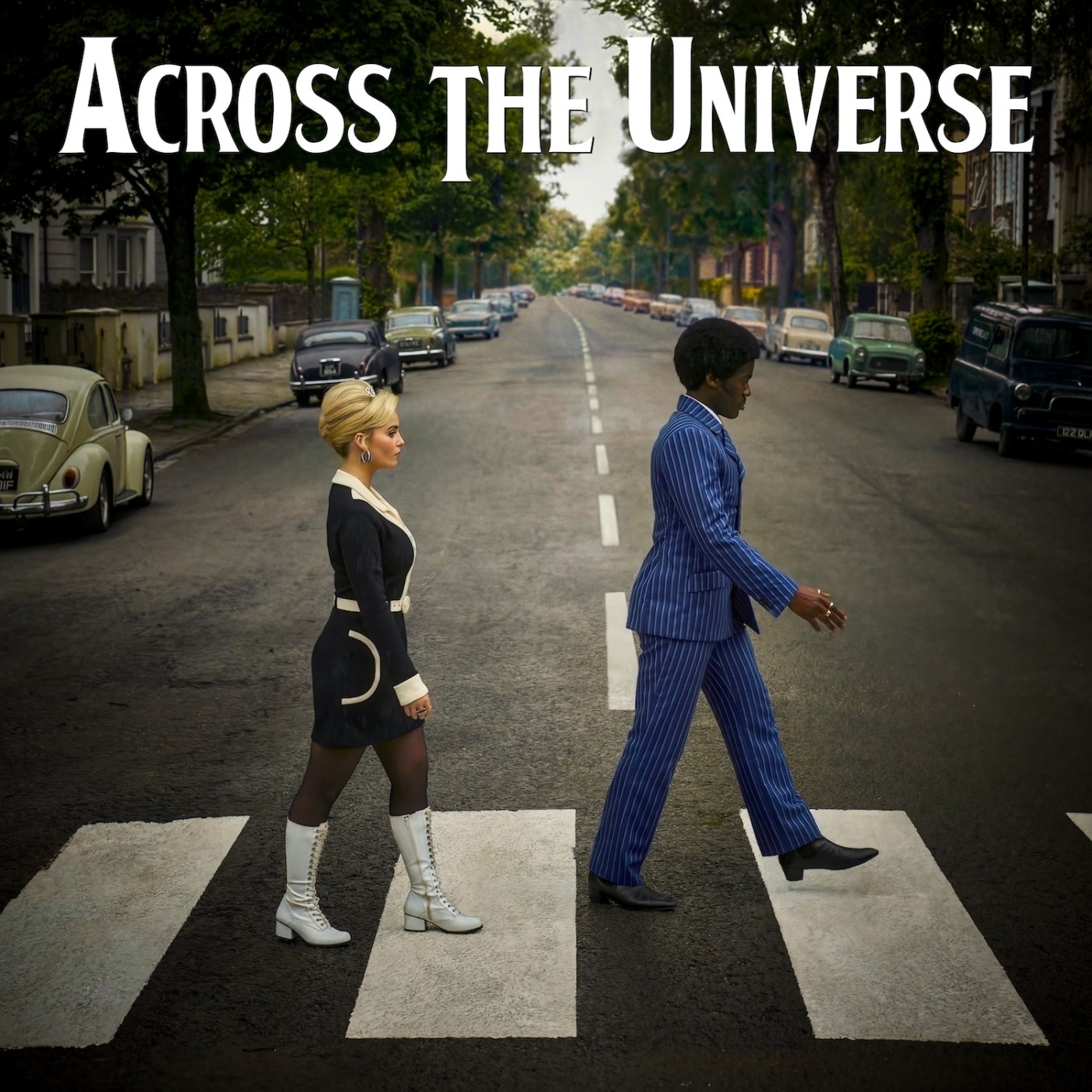
Chaos like, say, a Welshman with a thing for nukes being elected prime minister of Britain. Or the words of a mysterious woman causing everyone who talks to her to run away from you, damning you to a lifetime of being alone. Ruby becomes the Doctor Who equivalent of Eleanor Rigby, the character from her eponymous song on the Revolver album.
Only by somehow going back in time, and convincing her younger self to stop the Doctor from breaking the circle (and disrupting the magical energies contained within) was the older, Fae-verse Ruby able to avert her own fate.
I get that people are frustrated with the way Davies refused to explain much of anything that happened in the episode, but I think I get it now. As my old pal Freezing Inferno put it, “A bunch of mysterious and horrible shit happens to Ruby over these 45 minutes, and none of it is given any explicit explanation. […] Shit happens, it all gets cancelled out at the end due to some sort of loop, and we move on without ever knowing the specifics of what or why.”
It’s magic, people. I don’t claim to be an expert in the field (I’m still pretty new at this) but I’ve learned enough to know when the show is deliberately playing with it. We can cast spells, and put our intent out there for the universe or the Goddess and the God to see, but there are aspects of magic that even mere mortals like ourselves aren’t privy to.
Now that I think of it, maybe that’s 73 Yards all along, in the end – a 45 minute magical ritual.
So mote it be.


Leave a Reply