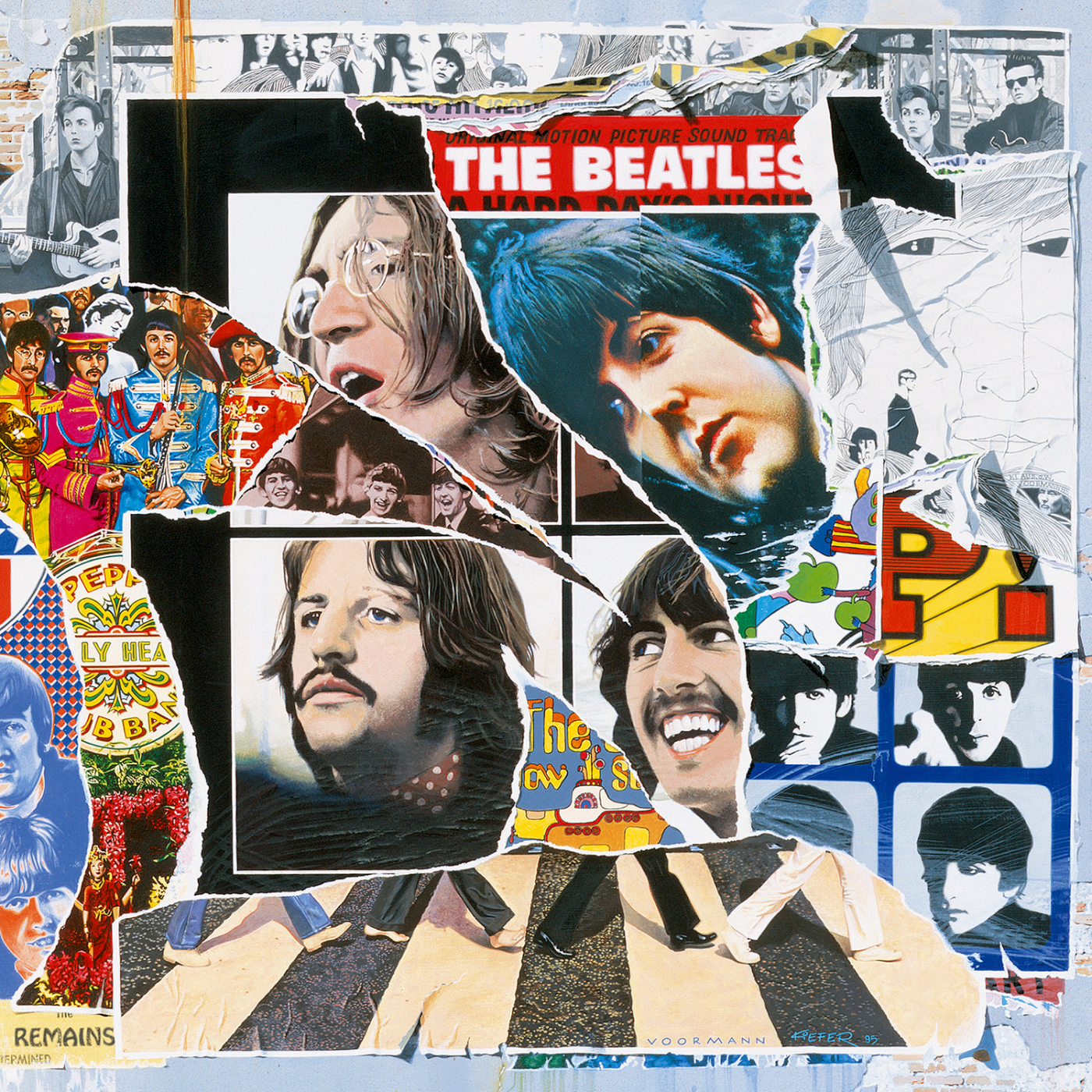
Like Anthologies 1 and 2, 3 was meant to open with a new Beatles song created from a John Lennon demo tape. This would’ve been “Now and Then,” and while recordings were made of George’s guitar work for that song, further attempts were abandoned not long after – the tape was in too poor condition to be used, and 1990s recording tech couldn’t do much with it. It wouldn’t be until 2023 that the song came out, by which time, it had been 30 years since those 1994 sessions – about as distant as the Anthology project had been in relation to the band’s 1960s work.
Released in October 1996, Anthology 3 is the third and final album of the Anthology series. It covers the band in the final two years of their existence, stretching from the White Album sessions to the Abbey Road era. It also contains selections from the famous rooftop concert in January 1969, the first time anything from that show had been made officially available since the Let It Be film in 1970.
Disc 1
Tracks 1-27
All of the tracks here date back to the White Album sessions, including several tracks from the legendary Esher demo tapes. Those tapes would later be released in full in 2018, to commemorate the 50th anniversary.
‘A Beginning’: An orchestral piece by George Martin that was meant to serve as a lead-in to “Don’t Pass Me By.” Instead, it got used as the replacement for “Now and Then.”
‘Happiness Is A Warm Gun’: One of the rare John songs to be composed from bits of three separate ones, this version of the song is lacking the “she’s not a girl who misses much” section, and consists largely of the “mother superior” section on a loop, since the lyrics aren’t done yet. John also swears at the start of this track, which doesn’t appear on the recording from the White Album box set. Why that is, I can’t imagine. Otherwise, it’s largely identical, except presented in mono.
‘Helter Skelter’: A much slower version of the dirtiest rock song the Beatles ever came out with – an abridged version of take 2, in fact, cut down from the full twelve minute version. While this one is in mono, the Super Deluxe White Album mix is the full 12 minute version, and in stereo.
‘Mean Mr Mustard’: We all know this song best as one of the pieces for the famous medley on side 2 of Abbey Road, but this demo was where it began, and I really like it. It was also the basis for an amazing fan-made remix.
‘Polythene Pam’: Another Abbey Road song, and the only version of it that could be described as complete, since “Bathroom Window” hasn’t been written yet. It rocks right along, acoustic guitars aside.
‘Glass Onion’: My personal favorite song on the White Album, the demo version here was first released in 1996 on Anthology 3. This version is slightly longer and in stereo, and illustrates that John has most of the first verse written, along with the chorus, but that’s about as far as he’s gotten. It’s still pretty great though.
‘Junk’: A Paul McCartney ballad, describing the contents of a junk shop. He tried to include it on White and Abbey Road, only for it to eventually land on McCartney, his first solo album. This version isn’t too different from the final, save for the occasional squeaks of microphone feedback.
‘Piggies’: George’s first attempt at political commentary, which just gets even funnier in light of the rumors about David Cameron fucking a pig. The lyrics are largely the same as the album version, save for a change in what the pigs eat: pork chops here, rather than bacon.
‘Honey Pie’: I’ve never really liked Honey Pie much. It sounds a bit too much like something the British equivalent of Freddy Nagel would sing. But it means something to Paul, and this acoustic version isn’t bad.
‘Don’t Pass Me By’: A variation of the album mix, according to the liner notes – no fiddle here, but on the plus side, you get to hear Ringo’s drum part. In stereo, even! It sounds fucking *awesome.* (Of course it does, it’s Ringo.)
‘Ob-La-Di, Ob-La-Da’: Take 5 of the song that only Paul liked, and it’s completely different from the album version. I really like this take, honestly, but the Beatles didn’t – the remake they worked on became the final master.
‘Good Night’: This early version of the song begins with just piano and Ringo’s vocal, which then fades into the album mix because this take broke down. (I like it better with piano, personally.)
‘Cry Baby Cry’: An acoustic version of John’s last song on the White Album. John’s vocal has been treated with a bit of slap-back tape echo, as it was on “A Day in the Life.”
‘Blackbird’: It isn’t quite the album version, but it sounds pretty similar. The best version, for my money, is the one performed by Beyoncé on her most recent album. It got Paul’s approval, and if it’s good enough for Paul, it’s good enough for me!
‘Sexy Sadie’: Take 6 of this song is considerably slower than the album version, and I honestly prefer it. The sound of John’s voice here, both in terms of how close he was to the mic and the way it sounds, remind me a lot of his early solo work. His voice has noticeably shifted since the moptop days, it’s just a little harder to notice than with Paul.
‘While My Guitar Gently Weeps’: A beautiful acoustic performance of probably my favorite White Album song of George’s, along with an organ part played by Paul. In 2006, this version of the song was the basis for its Love remix, which added a string section orchestrated by George Martin – the very last contribution he would make to a Beatles recording.
‘Hey Jude’: Just when you thought the Beatles never recorded anything live in the room anymore, here’s an early run-through of the ultimate crowd song to prove you wrong. Live piano, live drums, live vocals and guitars, it’s got everything except a bass part!
‘Not Guilty’: Not fully recorded until George’s eponymous solo album in 1979, the Beatles version performed here is straight late-sixties rock and roll, with a really crunchy guitar part and George singing in a higher register than usual. It’s great!
‘Mother Nature’s Son’: If you think this sounds familiar, it does! This is take 2 of the White Album track, featuring just Paul and his acoustic guitar. It’s much nicer without all the extra stuff overdubbed on top.
‘Glass Onion’: While largely similar to the album, it includes sound effects not present on the final recording – John Lennon added those himself. George Martin, when he came back from vacation, instead wrote a string arrangement and we got that instead.
‘Rocky Raccoon’: Take 8 of Paul’s American song, complete with Paul doing his best American accent during an opening spoken-word section. While it starts out as being largely identical to the final mix, this doesn’t last – by the time we get to “schminking of gin,” it’s all over, and everything collapses into silliness.
‘What’s The New Mary Jane’: John’s first idea for an avant garde piece, featuring just John, George, Yoko, and Mal Evans. According to the liner notes, it was almost on the White Album but was ultimately unissued until 1996, on this very album. And if I’m honest, I really wish they’d used this instead of “Revolution 9.”
‘Step Inside Love’/‘Los Paranoias’: Nothing much to say here, just John, Paul, and Ringo screwing around and jamming. It’s silly and not meant to be taken remotely seriously.
‘I’m So Tired’: This version is an amalgamation of takes 3, 6, and 9, allowing us to more clearly hear John’s insult toward Sir Walter Raleigh. The track was performed entirely live, because for the first time, the boys are using 8-track tape rather than 4.
‘I Will’: Not the master (that’s take 67) but it’s pretty close. It’s a very simple mix, just Paul and his guitar with John and Ringo doing percussion.
‘Why Don’t We Do It In The Road?’: Believe it or not, this was an acoustic number at first, with none of the harder edges that appear in the finished recording. The only constant is Paul alternating vocal styles, from soft and gentle to the louder, deeper voice he developed around this time.
‘Julia’: We end our White Album sessions with an almost entirely instrumental second take of John’s touching ballad to his late mother. Since the vocals were overdubbed, this means you get to really enjoy the fingerpicking playing style he learned from Donovan in India.
Disc 2
Tracks 1-23
These songs come from the recording sessions for what will become Let It Be, including the third rooftop take of “Get Back” – this would be the one where George’s amp gets turned off by the cop at the start of the first verse, and it doesn’t come back until the chorus. Also included here are various Abbey Road-era demos, and a recoding of “I Me Mine,” the last Beatles track to be recorded in John’s lifetime, though the man himself had left the group by then.
‘I’ve Got A Feeling’: We begin with this rousing performance of one Paul’s best late-period rockers, putting that lower register of his to work. Also listen for Billy Preston on keyboards, the fifth Beatles of early 1969. If you’ve been listening along to these albums with me, then you’ll recognize the performance – this is the same version of the track as on the Get Back disc from the Let it Be box, only not mixed yet.
‘She Came In Through The Bathroom Window’: A slower, more laid-back take of this song that will later appear on Abbey Road, but no less enjoyable – about as close we’ll get to hearing this song on its own, rather than being part of the famous medley.
‘Dig A Pony’: One of John’s last intentionally nonsensical songs, “Dig A Pony” has always been one of my favorite late-period Beatles songs, ever since I first heard it on Let It Be Naked, all the way back in 2003.
‘Two Of Us’: Written by Paul but sung in a duet with John, “Two of Us” will go down in history as one of the last (if not the last) collaborations between these two men before the sundering of their friendship in 1970-71. Though it did eventually get repaired, the two of them wouldn’t collaborate again until 1995, posthumously on John’s part. This song is the loosest performance we’ve heard yet, but no less enjoyable.
‘For You Blue’: A lovely performance of George’s cheerful 12-bar blues song, featuring plenty of slide guitar and honky-tonk piano.
‘Teddy Boy’: This song was never seriously meant for inclusion on a Beatles record, though it does appear on the previously-unissued Get Back album, as released in the Let It Be set. A different performance appears on McCartney, Paul’s first solo album.
‘Rip It Up’/‘Shake, Rattle And Roll’/‘Blue Suede Shoes’: Nothing much to report here, just the Beatles (with Billy Preston) rocking out to a bunch of 1950s songs by folks including Carl Perkins, whom the Beatles have paid tribute to previously.
‘The Long And Winding Road’: As on Get Back, this is the same take of the song Phil Spector used for his infamous overdub session in 1970, but unmixed, which means you get to hear more of John’s bass playing, and Paul’s vocal is nice and dry compared to the Get Back mix, where it was soaked in reverb.
‘Oh! Darling’: An early demo recording, though more of a jam, of Paul’s new song – not yet the blistering rock number it would become. But it does have Billy Preston on keyboards, with John and Paul singing together in places. Also listen for John’s entirely improvised verse, sung after sharing the news of Yoko’s divorce from her first husband being finalized.
‘All Things Must Pass’: In February 1969, on the occasion of his 26th birthday, George recorded the first demo of the song that will go on to become the title track of his first post-Beatles solo album, almost as if he sensed his Beatles days were rapidly coming to an end.
‘Mailman, Bring Me No More Blues’: Another Beatles jam session, this time around an obscure Buddy Holly song. For whatever reason, their performance reminds me quite a bit of “Revolution 1” from the White Album – maybe it’s the identical chord progression, the similar guitar parts, and John’s lethargic vocal delivery.
‘Get Back’: The very last Beatles song played live by the band, featuring John and George’s amps being turned off for most of the first verse. Also listen for Paul improvising some new lyrics for the coda, poking fun at himself performing on the roof and getting arrested by the police. The full rooftop performance now exists as an album, released to promote Peter Jackson’s Get Back docuseries.
‘Old Brown Shoe’: Another demo from George’s February solo session, with vocals (treated with some slap-back echo) and lots of overdubs: Piano and two guitar parts.
‘Octopus’s Garden’: From the Abbey Road tapes, a joyful early take of Ringo’s second-ever song, with guide vocals, guitars, bass, and of course drums, sounding as good as they ever have. No one, and I mean no one, can drum like Ringo, and this track proves it.
‘Maxwell’s Silver Hammer’: All the other Beatles might’ve hated it, but I’ve always kind of liked this song, as I said on the Abbey Road post. This is take 5, with none of the overdubs we remember. Just the band, doing their best at hammering this one into shape.
‘Something’: The final demo from George’s solo session – a heartfelt version of not just his best song, but one of the prettiest love songs the Beatles ever released, all the more meaningful given how rarely they wrote about love in the late 60s. This version is just George and his guitar, though the version on the Abbey Road set reveals a piano track too. Personally, I prefer this version.
‘Come Together’: Take 1 of John’s leadoff track from Abbey Road, featuring a more raucous lead vocal from him than would be heard on the final master – I unironically enjoy this version of the track, entirely because of that vocal.
‘Come And Get It’: Paul’s demo of the Badfinger hit single, which would later turn out to become the theme from Ringo’s movie The Magic Christian. This is all Paul, surprisingly enough, even though it has that magic Beatles vibe. Not even his 3 McCartney albums sound like them!
‘Ain’t She Sweet’: We go back to where we began, sort of, as the Beatles jam to a song they last played with Tony Sheridan in 1961, at the very start of their career. John has lead vocals on both songs, though his singing here is more relaxed than in the Sheridan version.
‘Because’: Those beautiful three-part harmonies from “This Boy” return for one last go, duplicated twice over for a total of nine voices. Here, they’re presented a cappella, in a mix that will become the lead-off track from Love in 2006.
‘Let It Be’: Back to the Get Back sessions we go for the first take of what will become yet another signature Paul song, written mainly about his mother, Mary McCartney. He doesn’t have all the words yet, but the grandeur and majesty is there. (For a good time, listen to Dolly Parton’s version, featuring Paul on backing vocals and Ringo on drums – you will never hear this song the same way again. I love it so much, I’m ensuring that it gets played at my wedding.)
‘I Me Mine’: John had left the band by this time, per George’s joking announcement. What we have here is take 16 of the song, the final master, bereft of Phil Spector’s mush (and also his extension. For the best version of the song, check out Let It Be Naked.) All the same, this is the last song to be recorded by the band until “Free As a Bird,” “Real Love,” and “Now and Then.”
‘The End’: Because what else would the Anthology series conclude with but this, a specially-made remix of the “final” song from the “final” Beatles album, featuring way more of Paul, George, and John duking it out on electric guitars. It ends with the final chord from “A Day in the Life” being played backward, then forward again, bringing an end to this series.
And now, at long last, the wrap-up. (Because I decided to wait until I finished the Anthology 3 breakdown before writing it.)
Anthology, as a project, is big. It is probably the biggest thing the Beatles ever released, since it consisted of a documentary series, a book, and this 3-album series of outtakes, rarities, live performance excerpts, etc. What the Anthology project does, aside from letting the band tell their story for the first time ever, is humanize this legendary band.
Even during the Sixties, it became clear to pretty much everyone that the Beatles were a phenomenon unto themselves. No one, before or since, has managed to achieve the level of fame that they have, both during their years together, and apart. As Rob Sheffield has observed, this band just keeps on getting bigger and bigger. They remain relevant, even 54 years after the break-up. For crying out loud, they had a 28th number one single last year! How many other bands from the 1960s can say that?
The Anthology series lifts that veil of big-ness – we get to see them grow from humble beginnings, screwing up, making mistakes, and trying things that don’t quite work. It’s remarkable, and you can feel that same humanizing spirit in the increasingly large number of sessions discs available on recent remix albums.
And speaking of remixes, get ready, because next time we say goodbye to the 20th century with the Yellow Submarine Songtrack, known for being the very first time Beatles songs were remixed for the modern era, rather than being simply remastered.


Leave a Reply