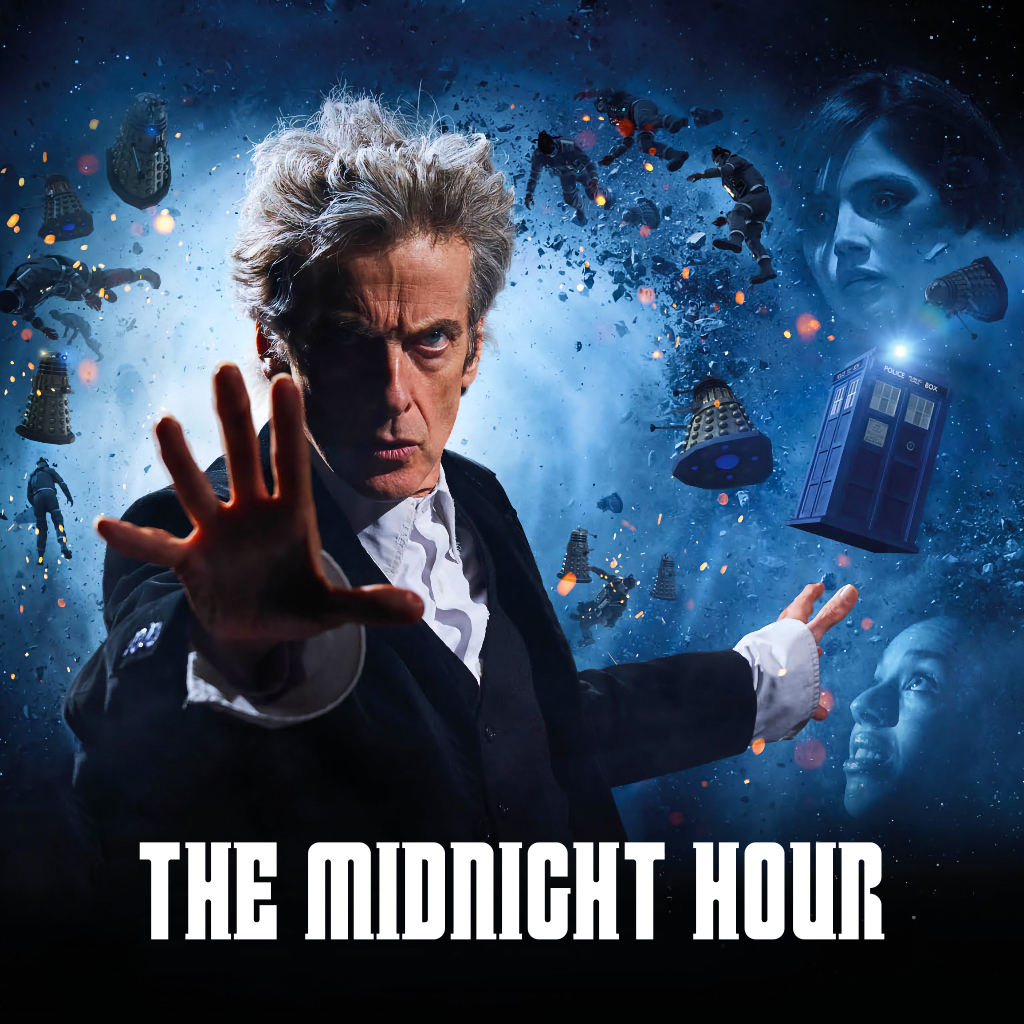
Steven Moffat has something of a mixed success rate when it comes to Christmas specials. A Christmas Carol from 2010 was, of course, an instant hit – I’ve watched it almost every year since it came out, and for me it remains the gold standard by which other festive episodes of Doctor Who are measured.
Wardrobe, as I noted in the series 6 book of Back to the Eleventh Hour, has pretty much never been popular with fandom, even though I think there’s a lot more that’s good about it than most people are willing to admit. The Snowmen is easily my second favorite of the Moffat Christmas specials, mainly because of Victorian Clara getting to do Doctor stuff so as to break the actual Doctor out of his funk.
Also, the line “I understand you’re the previous governess. I regret to inform you the position is taken. Goodnight,” followed by the smallest smirk there ever was as she ascends up the ladder, was basically where my most-enduring original character was born. (Those of you who have played Werewolf with me will know exactly who I mean.)
If I’m being honest, there is only one Moffat Christmas special that I straightforwardly don’t like: 2013’s The Time of the Doctor, because it killed off Eleven rather than doing something sensible and having him bigenerate into Peter Capaldi instead. And so, I cry literally every time I watch it, including earlier this year when I watched it for the series 7 book.
Funnily enough, Moffat’s first Christmas special for the Capaldi era carries some interesting echoes (or mirrors) with A Christmas Carol. The surrounding trappings are very different, (loose adaptation of Charles Dickens’ famous novella vs remake of Alien with Santa Claus) but even so, there are resonances.
Let’s start, obviously, with the line that gave this special its title: “Do you know why people get together at Christmas? Because every time they do, it might be the last time. Every Christmas is last Christmas, and this is ours.”
In context, it’s the deceased Danny Pink convincing Clara to wake up from her dream about a perfect Christmas with him, but when I read the line by itself, I am reminded of the emotional core of A Christmas Carol: Kazran Sardick’s relationship with Abigail.
Initially, of course, he has no idea who this woman is or why he should care about her, but the Doctor’s manipulation of Kazran’s timeline changes that. By the end of the first act, Young Kazran has broken Abigail out of her cryogenic storage unit and traveled with both her and the Doctor. Over the next decade or so, in relative time, Kazran ages and eventually falls for Abigail… who tells him that she has only one more Christmas left to live.
And that moment forms the emotional thrust for the last third of the episode, as Old Kazran turns on the Doctor. He’s just as bitter and cynical and angry as he was before, but whereas before he was heartless, he now has something to lose, and he’s angry because he doesn’t like it. (Crucially, out of all of Moffat’s characters to have their timelines altered, he’s the only one who seems to be aware of it.)
His tense exchange with Amy is absolutely marvelous: “I could release her any time I want, and she would live a single day. So tell me, Ghost of Christmas Present, how do I choose which day?”
Every Christmas is last Christmas, and Kazran finds himself in the unique position of being able to choose which one Abigail’s is.
Clara, of course, didn’t get to control when her last Christmas with Danny was, but she does get to choose when her own last Christmas with the Doctor is. And she decides, no, she isn’t going to die an old spinster, she’s going to live, and resume her travels with the Doctor. It’s a decision that will go on to define the rest of her life… all nine episodes of it.
But what a fine collection of episodes those are. Because in my opinion, given the considerable inadequacies of the Chibnall era, and the… shall we say, divisiveness of the second Davies era, there can be no doubt that the seven years in which Steven Moffat was in charge of Doctor Who simply were the best seven years the show had ever seen. The man was the showrunner equivalent of Tom Baker in terms of longevity, and somewhere in between Robert Holmes and David Whitaker in terms of sheer inventiveness.
The way I look at it is this: Russell T Davies’ first four seasons are kind of like the first two of Star Trek: The Next Generation, proving that a ropey old sci-fi series from the 1960s could work in The Modern Era, but it isn’t until you get to TNG’s third season, or modern Who’s fifth one, that the show becomes the cultural behemoth worthy of legendary status.
(Which, actually, makes me think that the Who revival would not have happened without TNG becoming huge. Sure, Buffy the Vampire Slayer was the show’s immediate antecedent, but the science fiction renaissance we’re living in started with TNG, just as movies like The Craft and Practical Magic, and TV shows like Charmed, kicked off the supernatural boom.)
But getting back to Steven Moffat. His six seasons in charge see him grow and push the boundaries of not only what the show can do, but what he himself can do. Series 9 in particular finds him at the absolute height of his powers, returning to the things he first experimented with during the Smith era, and refining them into perfection.
There can be no comprehensive analysis of this man or his work on the show without discussing both halves of the era. The existence of one half informs the other. Sure, his Smith era work is messier and, in places, executed with a bit less panache, but even undercooked Moffat still has ideas that are brushed off in seconds that other writers would spend whole episodes focusing on.
We’re about to take a deep dive into what is, in my opinion, the best season of the Capaldi years, and the third best season of modern Who, after series 5 and series 1.
So, for old times’ sake…
Geronimo.


Leave a Reply