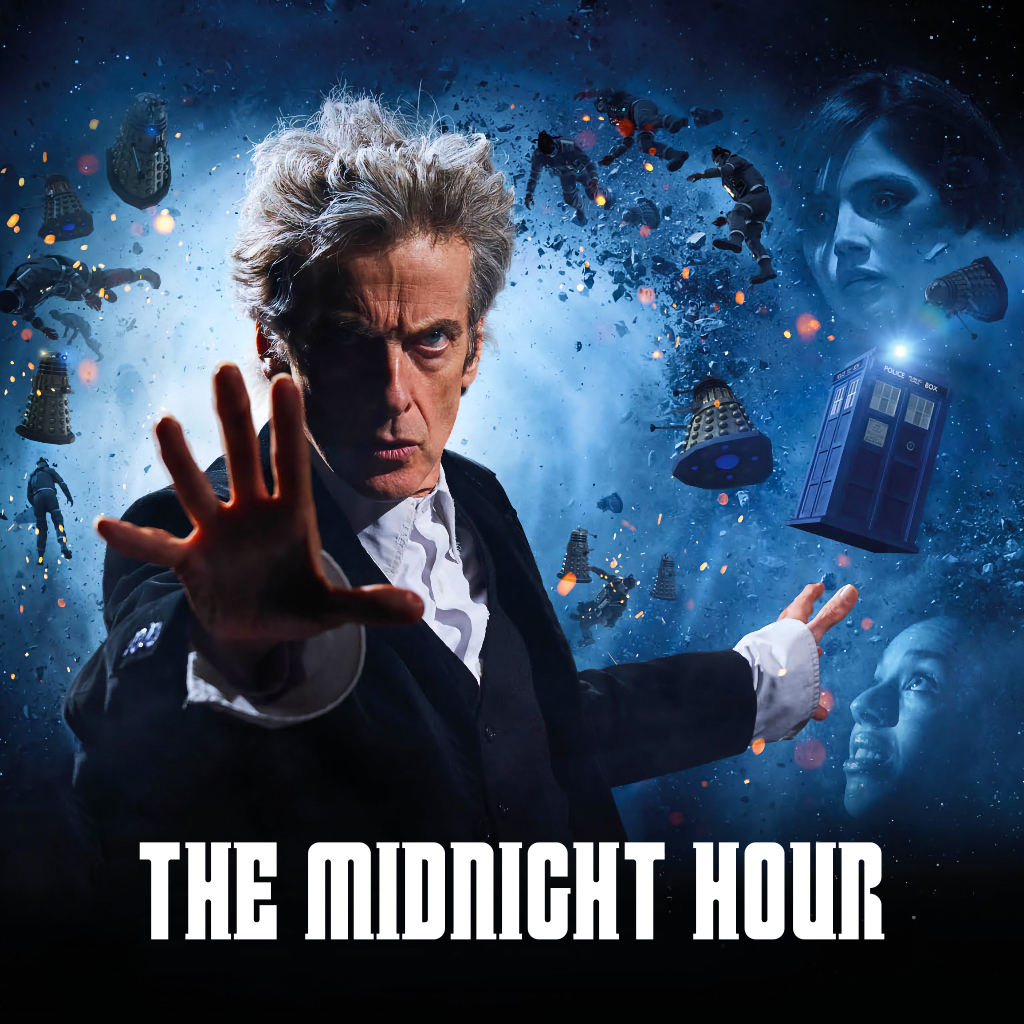
What this story functionally is, in essence, is Moffat and Capaldi reaching the spiritual end of their respective tenures as showrunner and Doctor. They do this in a dazzling display of egotism and sheer brilliance, in much the same way Sgt. Pepper’s Lonely Hearts Club Band got made, expensive cover art and all, because The Beatles were the biggest band on the face of the earth in 1967 and absolutely nobody was going to tell them no.
Heaven Sent is the Capaldi-Moffat equivalent of Sgt. Pepper. Which, to extend this metaphor, means Hell Bent is The White Album from 1968 – every bit of a masterpiece as its predecessor, it’s just that fewer people wanted to realize it, so it became “divisive.” Because it was 2015 and Moffat Hate was still all the rage back then on Tumblr. (Fortunately, we have Jeje now.)
Ostensibly, this one is also the Grief Episode. Certainly, that’s the mood of the story – Clara’s death weighs very heavily on the Doctor in this, and as noted on the episode’s TVTropes page, “Because his grief over Clara’s death is so fresh and raw and he is trapped in a deadly place with no-one to help him handle it, the Doctor becomes emotionally trapped in a cycle between Anger and Depression.”
But whenever I watch it, what I focus on is the Doctor’s determination. To do as Clara orders him to as the despair gets to be too much, and he wants to give up: “Get up, off your arse, and win!” To break out of the confession dial, to show the Time Lords who’s boss, to keep punching that diamond wall until one day he finally breaks free and stands in the open air again.
Can I ever relate.
Because I’m going to let you all in on a little secret: The Midnight Hour will be my final Doctor Who analysis project. Across the Universe will keep going until Ncuti Gatwa regenerates, since it premiered before this, but otherwise? I’m not doing anything else. I’ll keep watching the show, but aside from that?
This is the end of the line.
Let me explain why.
This series has been around in my notes since 2021, when I was still working on the second Eleventh Hour book, riding high on the confidence instilled in me by the success of the first one. At one stage I wanted it to be a book project too, as part of a general move away from blogging. Eleventh Hour had been a success, so maybe I could a Capaldi series and a Tennant book and a who-knows-what-comes-next book.
For a bit I had concepts for an Eccleston book that was called Revolution Nine, with chapter titles named for Beatles songs. It would’ve covered not just his one season of TV, but the Titan Comics 10th anniversary run and the first season or two of his Big Finishes. (This ultimately just became The RTD Rewind, but I did get to use the Beatles titling conceit for the Gatwa project, Across the Universe.)
And then life happened.
Needless to say, it took a while for me to get the gumption to write the rest of Eleventh Hour 3. But when I did, I realized something: I didn’t have the heart to do this anymore. Not media criticism in general, just about Doctor Who specifically. It felt like a chore now, whereas once upon a time, it had been something I loved doing.
And that’s why I’m ending it here, with The Midnight Hour. I’ve been shotgunning through these posts across the autumn of 2024, just to get it all wrapped up as quickly as possible. I have lots of other projects I want to focus on, about subjects that I care about as deeply and as passionately as I once did for Doctor Who.
But more importantly, these other topics are things that are mine, and mine alone. Right now, I am the Doctor, tearing himself to shreds, burning up one incarnation and making a new one over and over again until eventually I can breathe fresh air again. When the Twice Upon A Time post goes up, the first second of eternity will have passed.
Honestly, what I am going through right now is not unlike what Moffat went through when he made this episode in the first place, at least in Elizabeth Sandifer’s telling: “In this regard, it’s worth noting the content of Heaven Sent: a middle aged Scottish man is forced to do the same thing over and over again in an endless and nightmarish loop. This is certainly not the only thing going on in the script, but it’s clearly the case that the story can be read as a metaphor for television production and the sense of writing the same thing over and over again.”
Swap the phrases ‘middle-aged Scottish man’ for ’30 year old trans woman’ and ‘television production’ for ‘media criticism,’” and you have a pretty good idea of what it’s like to be me, writing this right now. But where Moffat’s departure was delayed on account of Chris Chibnall not being ready yet, I don’t have that problem. I know the end is in sight, and I’m running toward it as fast as my paws will carry me.
So, with that in mind, here’s my response to Peter Capaldi and Steven Moffat reaching the spiritual end of their Doctor Who tethers:
Honestly, same.


Leave a Reply