In 1966, when they were making Revolver, the Beatles were as tight as any band could be. But just a few months later in November of that year, they were starting to go in separate directions, both professionally and otherwise. Tensions mounted across the last 4 years of the 1960s, and as the ‘70s began, it was all over. News of the break-up traveled swiftly, and Phil Spector’s Let It Be served as the band’s final chronological release. (Though for me, Abbey Road is their real last album.)
The Beatles were no more. Now, it was just John Lennon, Paul McCartney, George Harrison, and Ringo Starr pursuing their own paths, both in life and in music. We’ll travel down those paths individually, watching how each ex-Beatle developed. The successes, the flops, it’ll all be covered.
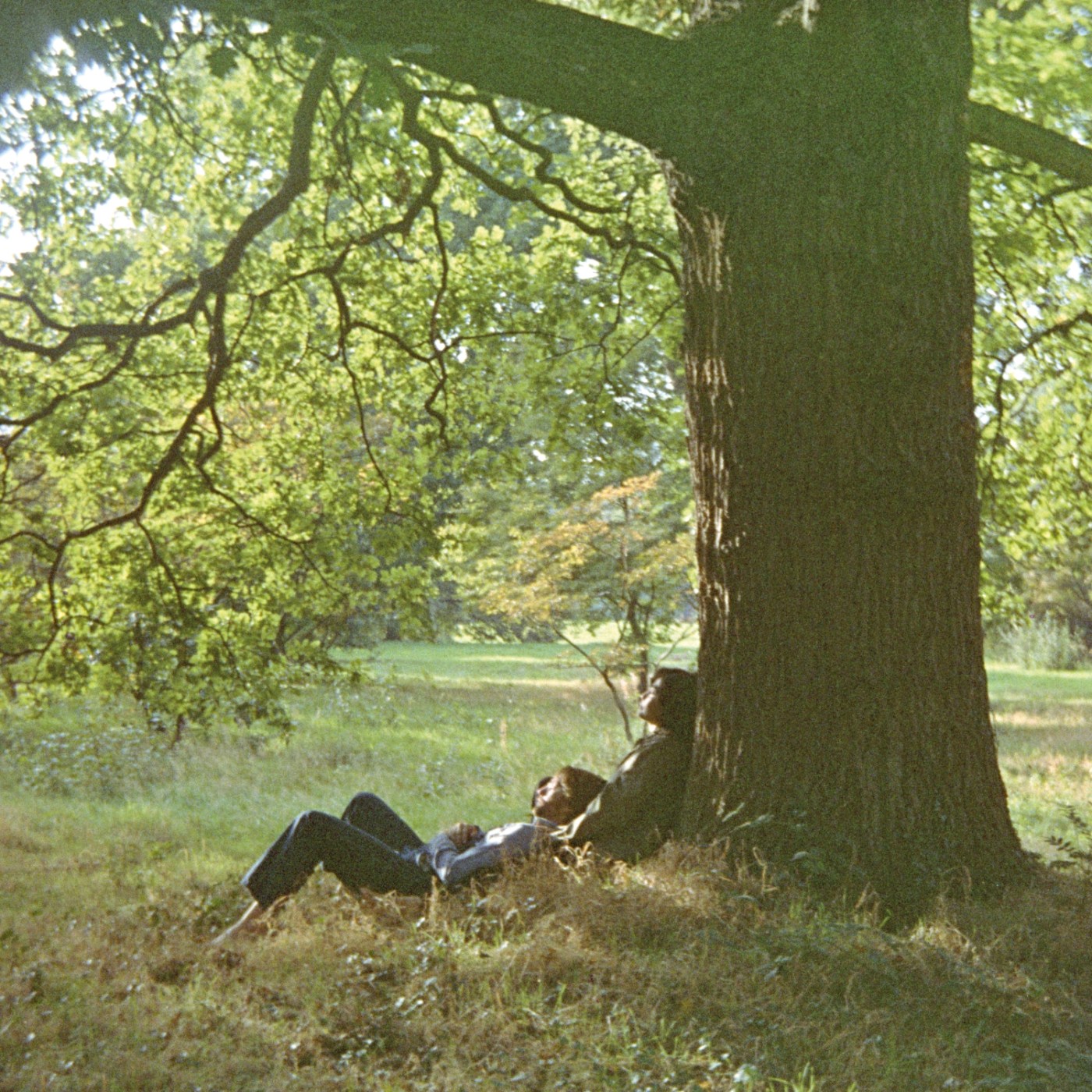
We start, naturally, with John Lennon. His first solo album, Plastic Ono Band, was released at the tail end of 1970, and serves as a musical exorcism of all the pain, difficulty, and strife that he’d been dealing with since his teen years. And as well, it allowed him to put his own stamp on music. He was no longer the Walrus… just plain John.
As with any relationship, the break-up process can be hard. And when the thing breaking up is the most beloved band on Earth… the aftershocks were felt for years afterwards. I found Plastic Ono Band in my late teens, and it seemed to fit the mood I was in – angry at the world, fed up with the way the system functioned, but unable to do anything about it. POB is an amazing album to play in a mood like that – cathartic, really.
Because here’s the thing: John Lennon has always been my favorite Beatle. Only Paul comes close, and the reasons why I like Paul are entirely different from the reasons why I like John. Yes, I know about the domestic abuse. And I will not brush that under the rug. it was awful and horrible, and everyone who calls him out on that should keep doing it… but that’s not the end of the story.
Throughout the 1970s, John made a concerted effort to become a better man. Becoming Yoko Ono’s husband was one part of that journey. Taking five years off from the music industry to raise Sean was another. And John, being the kind of guy who’d always used music to confess his sins, told us about that journey he was going through… while also inviting us to be a part of it.
John Lennon understood, better than anyone, that music is inherently communal. And even when he was at his angriest, he still found ways to let people in. He was never about shutting people out. Most of Plastic Ono Band is furiously angry, but there’s moments of tenderness too – genuine love and warmth, the kind of thing that made Beatles songs so special.
So with all that said, let’s dive in:
Mother: “Mother” opens with the sound of tolling funeral bells, setting the tone for the rest of the track, and the album in general. If you’re coming to this song after his Beatles work, “Mother” is nothing less than an angry, much-deserved howl of frustration, as he finally lets loose with all the accumulated 30 years of rage at how both of his parents abandoned him. Thank goodness Ringo is there to provide support, both at the drum kit and emotionally.
The 2021 remix includes a version of the song that is just John’s isolated vocal, and it is simply the most haunting thing I’ve ever heard. It has the same larynx-shredding quality as his performance on “Twist and Shout,” but this ain’t a rock and roll number.
Hold On: At the other end of the emotional scale entirely is this cheerful ditty about staying positive in the face of catastrophe. In that infamous interview with Rolling Stone from 1970, John said of this track, “I’d been thinking about it up in the hills in India. And I still had this ‘God will save us’ feeling about it. ‘It’s going to be alright.” Given the various catastrophes that are troubling our modern-day world, I could use some optimism right now.
I Found Out: Nobody did pure scathing fury quite like John Lennon, and this song is a perfect example of that mode. Per Wikipedia, “The song expresses Lennon’s disillusionment with a world dominated by what he saw as false religion and idols, and warns against being taken in by such beliefs.” And there’s a not-very-subtle jab at Paul, well ahead from the 1970s diss track that is “How Do You Sleep.”
Working Class Hero: For such a simple song, it took John about a hundred tries to get this one right, and even on the final master take he still had to do some splicing. The resulting edit is far from clean, but who cares? What matters is the message.
In this song, John tears down the worlds of family and school that forced the young into conformity, attacks the way the ruling classes keep the underclasses busy with bread and circuses while they get to mooch off the after-effects, and even finds time to go after the meritocracy, which he believes is preceded by a trail of blood.
Like all of John’s best work during his solo years, it pulls no punches, and I feel the struggle related in the lyrics more and more strongly with every passing decade. My paternal grandma is rich, and so is my future mother-in-law. Meanwhile, my fiancee and I struggle to make ends meet. We can only afford groceries because we’re on the SNAP program, and even that isn’t particularly generous.
For all that the line “If you want to be a hero well just follow me” was meant ironically, I feel pretty safe in saying that a lot of listeners, both in the 1970s and ever since, took him literally. Because in John’s music, particularly his political songs, we can find the tools that we need to take back control from the fat cats that have been ruling our lives.
As the media critic Jessie Gender wrote about the 2024 election, “People aren’t just apathetic; they’re fed up. They’re tired of a system that demands so much and gives so little back, a system that keeps spinning its wheels in the same old ruts of inequality, exclusion, and power games. That exhaustion, that refusal to play along? It’s a sign that they’re ready for something different. They just don’t see it yet.”
Trump may have garnered more votes in the popular vote than Kamala Harris did, but most estimates at this point (I’m writing in November 2024) have him at less than 50% anyway. Those who didn’t vote, or who pulled the lever for the only other available option, saw that what Harris ended up offering was the same fucking Republican-lite administration that Democrats have been offering since 1992. Even Barack “Change” Obama wound up giving us more of the same.
Jessie Gender expresses a hope that the nebulous Left will take the opportunity provided by Trump being Bad At Governing to show the people who didn’t vote that something else is possible. “This is our moment to build something new, something that doesn’t just feel like a rebrand of the same old broken system. Grassroots movements, mutual aid, community-driven change-these are the seeds we can plant to show people that they don’t have to accept the world as it is. That together, we can create one that feels like home for everyone.”
Power to the people. I hope, for all our sakes, that she’s right.
Isolation: A song in which John tears down the various illusions that have been written about him and Yoko, stripping the two of them down to their bare essentials. They’re just trying to make the best of things in a society that seems set against them. Even just living life is hard to do in this harum-scarum world, whether you’re an ex-Beatle or an ex-Who fan like me.
Remember: Primarily a meditation on his difficult childhood and unstable family life, “Remember” is still one of the more optimistic songs on the album, by dint of its driving backbeat and the choruses, where John implores the listener not to feel sorry about things that aren’t in their control in the first place. And then it ends with a Guy Fawkes joke and an explosion, because John thought that would be funny.
Love: This is one of John’s loveliest ballads. The close-miked, ADT-treated vocals, acoustic guitar, and Phil Spector’s gentle piano give it an almost lullaby-like quality – which might explain why Kenny Loggins did a version of it on his album Return to Pooh Corner, which I listened to obsessively as a kid. It has since become a staple of mine and Sophie’s various couples mixes.
Well Well Well: In which John discusses women’s liberation, his daily life with Yoko, and the guilt they feel at having the luxury of being able to choose whether to take action or not. And he does all this while screaming the title phrase, over a backing track of his electric guitar paired with the thumping toughness of Ringo’s drums and Klaus Voorman’s bass guitar. I fucking love this track, it’s so wondrously angry. It’s John inventing punk rock… again. (See also “Yer Blues” from the White Album.)
Look At Me: In which John questions his very sense of self, among other musings. If it sounds like it could’ve come from the White Album era, that’s because it did: the track was written in 1968 during the Beatles’ visit to India in the first half of the year, but unlike other songs from that period, it never even popped up on the Esher demo recordings.
Between this background, the final master’s double-tracked vocal and John’s finger-picking style of guitar playing, it’s probably the most Beatles-y song on the album… which is ironic, given how “God” ends.
God: In which John comprehensively rejects everything from magic to tarot, the Bible, Jesus, Buddha, Bob Dylan, divinity in general, and of course, the Beatles. The way he spits out his former band’s name as if it were an insult remains attention-grabbing, and when paired with his gentle, though blunt, statement that he’s only himself now, it’s very effective.
When I heard this song for the first time as a teenager, I felt its views on God more or less matched my own. I was 17 and had become atheist more or less by default. Though I’d been raised Irish Catholic, living in an area that was deeply conservative Christian, and having friends who felt the same way, meant that I felt deeply uncomfortable with religious faith of any sort.
So. as I grew up, I identified very heavily with the “God is a concept by which we measure our pain” portion of the song lyrics. (Less so with some of the “I don’t believe” lines, but some of them hit me in the right way.) Things have changed a bit since then, but we’ll talk about that when we get to Mind Games.
My Mummy’s Dead: We end where we began with this song, a mono lo-fi recording of John playing electric guitar, meditating once again on the theme of his mother’s death in 1958. But where “Mother” was an extended howl of grief, this is more like numb, mournful acceptance, along with an acknowledgement of the reality that he couldn’t process his grief publicly. (Until now, anyway.)
While the album as released in 1970 ended with “My Mummy’s Dead,” the 2021 remix adds some contemporaneous singles to the tracklist, bringing the total number of songs to 14:
Give Peace A Chance: John’s very first solo single, written and recorded in 1969 during a break in the recording sessions for the Abbey Road album. The happiest anti-war song ever recorded, it’s just John on acoustic guitar, encouraging the group around him to join in his demand for peace instead of endless war. Originally meant to protest against the Nixon administration’s involvement in the Vietnam war, the song has remained relevant even in today’s world.
According to Wikipedia, “On 4 March 2022 at 08:45 (CET), 150 European public radio stations broadcast this song for peace and against the 2022 Russian invasion of Ukraine and on 8 March at 12:00 (CET), 200 European private radio stations did the same.”
One hopes that people will listen.
Cold Turkey: A song about John and Yoko each deciding to quit heroin… well, cold turkey. It has nothing to do with a cold Thanksgiving turkey, though that didn’t stop UMG from releasing a digital EP in November 2020 based around Lennon songs to play during the Thanksgiving holiday. (Pandemic days are weird, aren’t they?)
Anyway, John’s first idea was to release this song as a Beatles single, which was vehemently refused. So John decided to release it himself instead. The resulting track, much like Plastic Ono Band itself, is as raw as any other song on the album. Having it be appended to the album it sonically resembles is a natural place for it.
Instant Karma! (We All Shine On): This one has always been one of my favorite solo-Lennon songs, it was even my ringtone for years when I was in high school. Per Wikipedia, “focus on a concept in which the consequences of one’s actions are immediate rather than borne out over a lifetime,” and I have to say, I understand this concept way better now as a practicing Wiccan. (Look up the Threefold Law for more information.)
Though released as a single, it actually works really well as an album closer, in the tradition of “Twist and Shout” from Please Please Me. Some people might think the addition of these three songs detract from what Plastic Ono Band was about, but not me. Taken together, they present a clearer picture of the kind of person John Lennon actually was, rather than who the internet has made him out to be. It’s his self-portrait, and I’m glad to have it.
Having heard all of his solo work, I have to say that Plastic Ono Band is my favorite of John’s discography. Imagine is the crowd-pleaser, but for me, nothing hits in quite the same way POB does. It’s raw, unflinching, honest, and at times a deeply ugly listen… but then again, that’s the point. It’s John stripping himself bare of all the various masks he’s worn, to spellbinding effect.
Considering the various traumas that he experienced as a kid, and the equally traumatic experience of the Beatles breaking up, it’s an album that needed to exist. It’s the first step in a process of self-development that John continues to take over the course of the 1970s – just listen to the bells that open this album and Double Fantasy from 1980. He goes from funeral bells to bells that are light and soft. An entire decade’s worth of growth in one simple sound effect.
For me personally, this album has additional resonance. When I first heard it I was 17 and angry at everything, like you are when you’re a teenager, and John seemed like the only person in the world who understood the feelings I was experiencing. Listening to it now at the age of 30, the same age he was when he recorded this album, the anger and frustration that I felt was still there…just enhanced. Because unlike when I was a teen, I know exactly why the world is so supremely fucked up, and I am still at a loss about what to do to fix it.
Because let’s be clear. These are very dark times. When the election returns came in on November 5th and 6th, I remember feeling like a great weight was pressing down on me. That feeling has only increased as I’ve heard about everything from Trump’s cabinet appointments to what he intends to do with the second term he’s been given, and will already be doing by the time this post goes up on WordPress.
I’m fucking terrified. I live in a blue state, with a Democratic governor and legislature, and our state AG has already promised to defend our population to the best of her ability, no matter what the federal government tries to do. But that’s going to be an uphill battle, because the guardrails that constrained Trump last time have been bent almost entirely to his will. The court system is his. Senate and House Republicans are all ready to do his bidding. And pretty soon, and it may already be happening by the time this post goes up, he’ll control the rest of the federal government as well.
And yet, despite the pitch-black yawning chasm of darkness that I’m seeing advancing toward me, like the worst thunderstorm ever, I still have hope. Not that institutions will protect me – I am pretty well beyond believing in electoral politics as a solution to problem solving. Harm reduction, sure, but harm reduction only works if everyone else votes the same way, and as we just saw, there’s a Not Insignificant amount of people out there who want more harm, not less.
Who am I supposed to call on to defend me? The national Democratic Party? As if. They’re too busy pointing fingers and threatening to throw trans people under the bus because they think that might get them into power again in two or four years, if we still have elections by then.
We keep us safe. We, the people. Organizing in your local community, mutual aid, even just housing someone who’s trying to flee from the grasp of the Trump regime… these are all things that we can do to fight back against a government that wants us all to die. And we must.
No one really knows when, or even if, Trump will be out of power again – they’re already talking about giving him a third term based on some bullshit reading of the 22nd amendment. So, unless and until he is finally kicked out of office and the fascist Republican party is destroyed, we are the only people capable of fighting against injustice.
That’s why I have hope. I believe in myself, in my partners, and in the community I’ve surrounded myself with. We have all the tools we need to stand up and say no.
After all… a working class hero is something to be.
Let’s get to work.


Leave a Reply