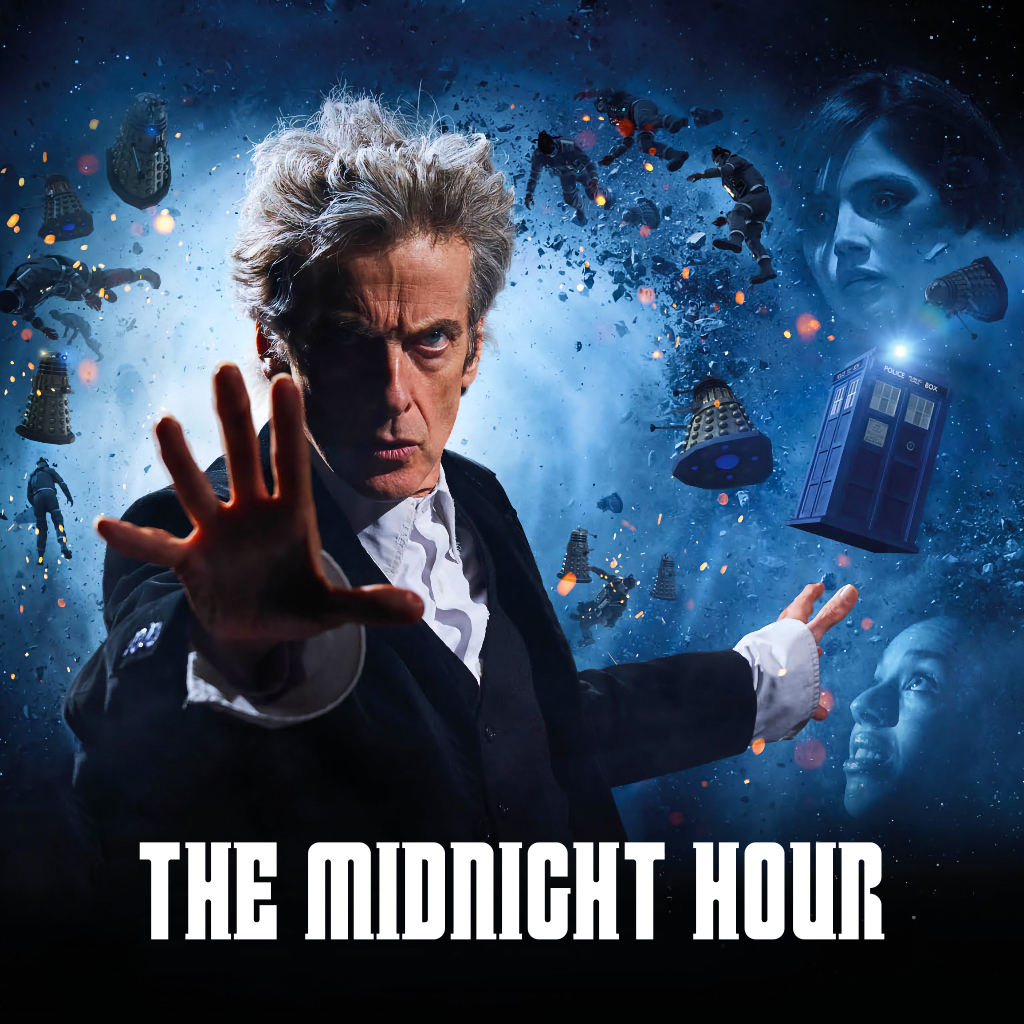
One of the things that I really love about the Moffat years is the absurdly deep exploration into what “being the Doctor” actually entails. Our first glimpse comes in the climax of The Beast Below, when the Doctor is discussing his plan to brutally murder the Star Whale as painlessly as he can.
He finishes his little rant with the line, “And then I find a new name because I won’t be the Doctor anymore,” and I love that, because it’s the first moment of Moffat consciously trying to decouple the name “Doctor” from the Time Lord who goes by it. Which leads his entire era in several interesting directions.
What we are faced with is a question of identity. How much do our names reflect the kind of people we are? After all, not everyone chooses their name. Some people out there stay with the names they’re given for their whole lives, or only change them a little when they get married. But I know that when I chose my name, I did it because I wanted it to better reflect the kind of person that I want to be.
As my girlfriend put it, “Fair. Clear-Sighted. Passionate. You never love someone or something haphazardly. You’re like an early autumn night with the slightest comforting bite to the air…” I love that description, and not just because it’s the perfect name for a girl who does witchcraft. It describes the person I try to be, every single day. Sometimes I fall short, like we all do. But I always try to make amends, and become that better person again, just like the Doctor does.
That was the basic premise behind the Eighth Doctor regenerating into the War Doctor. in Moffat’s conception, War was a man who refused to call himself the Doctor, because he was forced to do things that his other selves, past and future, would find shameful, making him unworthy of the name. But in The Day of the Doctor, he realizes he was the Doctor more than anybody else, as Ten put it.
In the Capaldi years, we move away from names to actions. “Doctor” becomes a verb, rather than just a noun. Clara is forced to take on the mantle in Flatline, and does such a superb job of it that she begins to take on more and more risks, right up until Face the Raven, where she becomes the Doctor to such a degree, that she pays for it with her life. But it’s a price she’s willing to pay, and she orders the Doctor not to go off the deep end because of it.
And then what happens is he goes off the deep end, and the last time we see her, she puts him back on the path of righteousness by wiping (most of) his memories of her, before flying away in a TARDIS of her own as a quasi-immortal, with an actual immortal as her traveling companion. Having taken the name, she inherits the trappings, and becomes far more of a female Doctor than the actual holder of that title ever managed.
In the case of Extremis, we are given this gem of a line toward the end of the episode, as the Matrix Doctor faces off with the Monks in the Matrix Oval Office: “Oh, you don’t have to be real to be the Doctor. Long as you never give up.”
I adore that line. It’s meta commentary, just like a similar line in Robot of Sherwood:
DOCTOR: I’m not a hero.
ROBIN: Well, neither am I. But if we both keep pretending to be. Ha-ha! Perhaps others will be heroes in our name. Perhaps we will both be stories. And may those stories never end.
“You don’t have to be real to be the Doctor” is a thematic inverse of “Perhaps others will be heroes in our name.” Put the two concepts together, and you have something that I last touched on in my Sherwood post: The characters we create, or watch, or read about, are not real in the sense of being actual people we can visit, but they are real in our imaginations. And we, as people, can use them as inspiration as we move through the world.
Lemme tell you about a character of mine. Her name is Gemini Shadow, and she primarily exists these days as a Starfleet officer – the first ever Equestrian pony to serve as a captain, in fact. I’ve always described her as being somewhere between Jean-Luc Picard and Kathryn Janeway: she shares Picard’s general vibe of well read upper-class Englishman of a different actual nationality, his principles, and his idealism.
From Janeway Gem gets her familial closeness with her crews, her willingness to let her mane down in front of the officers she trusts most, (Tuvok for Janeway, and either Raven Sable or Michelle Lykos for Gem) a willingness to think way outside the box and even break a few rules for the sake of the mission, and an absolutely rock-solid core of steel when confronting an antagonist on her bridge.
And in so many ways, Gem is the kind of person I’d like to be when I grow up. I can never be exactly like her, (after all, she’s from the 25th century in command of a powerful Nebula class starship, and I’m just a writer from Ithaca) but I can at least take the lessons that she’s taught me, in the decade or so I’ve written for her, and try to be a person she would be proud of.
And I think, when you get down to it, that’s what “You don’t have to be real to be the Doctor” really means. It’s a lesson I’ve internalized from watching and writing about this show for as long as I have, and it’s a lesson I’ll carry with me into the future, as I move on to other projects and other fictional realms. And it’s a lesson the Doctor will internalize as well, once he becomes Fourteen and then Fifteen.
We’re all stories in the end… and our stories give us power.


Leave a Reply