As we all know, the mid-1990s was a huge time for Beatles fans. 1994 saw the band reunite at long last to record two new songs, “Free As A Bird” and “Real Love,” based on two of John’s unfinished demos. Those songs formed a part of the multi-platform extravaganza The Beatles Anthology, which told the story of the band and its members from 1940 to 1970, when the break-up happened.
But that’s not the end of the story.
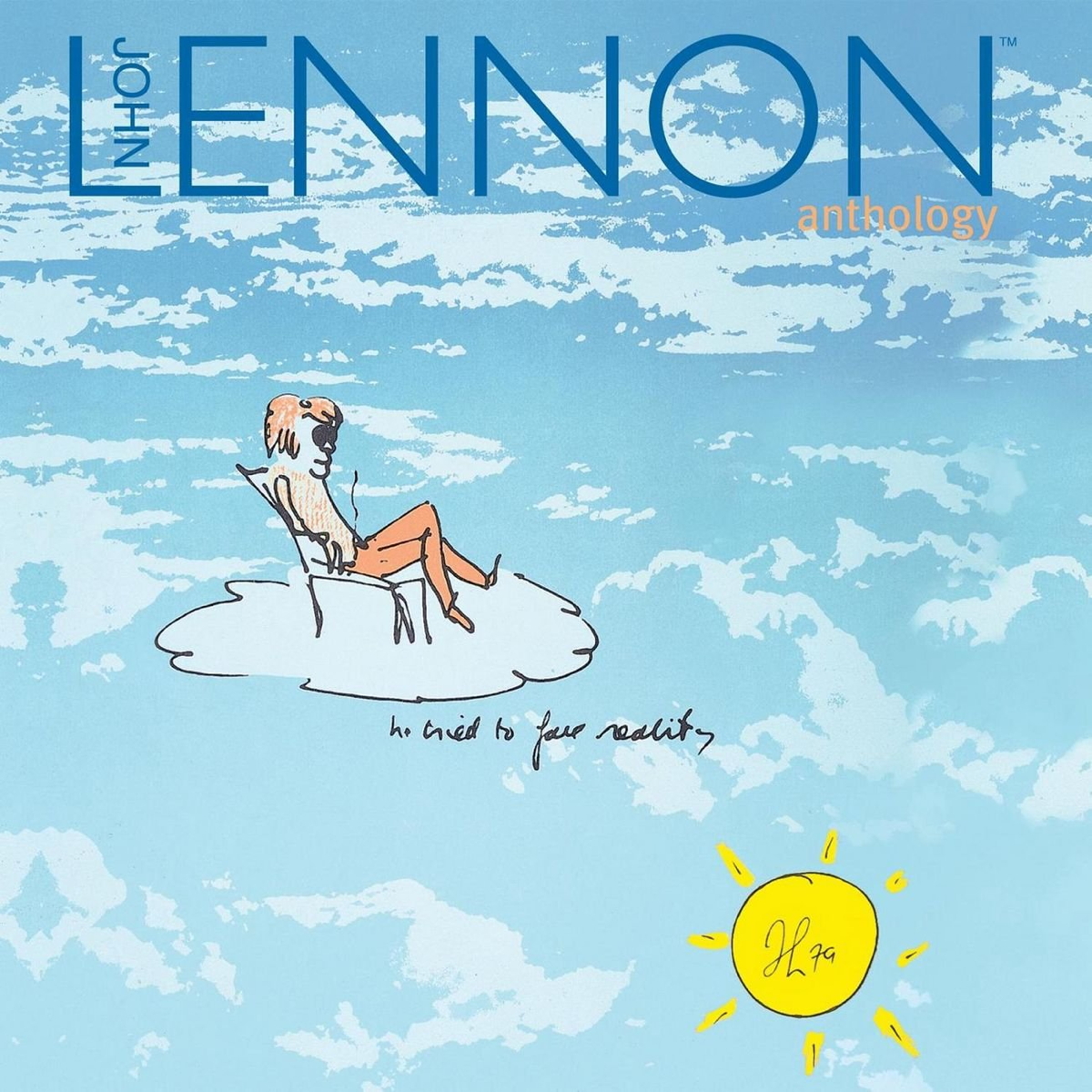
In 1998, the Lennon estate (under the direction of Yoko) released a four-disc box set called the John Lennon Anthology. Much like the Beatles project, JLA features home demos, alternate takes of songs, live recordings, and even snatches of studio chat and, on the last disc, some adorable outtakes featuring a young Sean Lennon.
Each disc covers a different phase of John’s career: Disc 1, of course, covered the Plastic Ono Band/Imagine period, while Disc 2 tackles Some Time In New York City and Mind Games. Disc 3 covers Walls and Bridges and Rock ’n’ Roll, while disc 4 gives us an inside look at John’s househusband era, as he works on the songs that will appear on Double Fantasy and Milk and Honey.
While not quite as exhaustive as the Beatles project, (94 songs vs 155, because Yoko and Rob Stevens had to cut a lot of stuff out) the end result is still a fascinating glimpse into John’s creative process as his solo era unfolded. Let’s jump in:
Disc 1: Ascot
‘Working Class Hero’: Take 1 of one of my favorite early Lennon songs, featuring Yoko on the talkback mic, John tuning his guitar at the start, and his voice cracking on the word “hero” at 3:43. This version of the song will go on to appear two more times in the posthumous Lennon discography: on 2004’s Acoustic collection, and on the 2021 remix of Plastic Ono Band.
‘God’: A guitar-driven version of John’s famous deconstruction of his entire belief system, featuring Klaus Voormann on bass guitar and Ringo on drums. It feels more like a campfire song without the stabbing piano chords, albeit a very dark one. There’s some slapback echo on his voice here as well, in the fashion of “A Day in the Life.”
‘I Found Out’: More of John on guitar with this early demo take of “I Found Out.” He’s still working out the lyric it sounds like, though the dig at Paul is still here. And if anything, it’s more venomous here than on the album version! The whole track has a much more loose feeling than the final master on POB.
‘Hold On’: More of a jam than a true take of the song, going by the long fadeout. It’s also really short – about 40 seconds.
‘Isolation’: This take of the song fades in toward the end of the first verse leading into the bridge, which then breaks down into studio chat as John tries to figure out what went wrong with the take, featuring a cameo appearance from Ringo and Yoko. The song then resumes from the beginning, sounding pretty close to the final take, minus John’s double-tracked vocals during the aforementioned bridge.
‘Love’: A truly gorgeous acoustic guitar version of one of John’s best ballads, marred only slightly by him playing a wrong note at the beginning. The same performance, minus the mistake, also appears on Acoustic, but with a flange effect applied to make it faux stereo. (Goddess knows why, I much prefer it in mono.)
‘Mother’: We return to the POB studio sessions for this take of the opening track. Once again there’s no piano here, just John playing guitar while Klaus and Ringo hold down the rhythm section.
‘Remember’: At last, piano! The take begins with the trio playing the song much faster than on the album version, much to his evident amusement as the take breaks down. The resulting main take is actually slower than the final master, though undoubtedly easier to play. John is clearly enjoying himself, which is an absolute delight given how heavy the main album is.
‘Imagine’: We jump ahead to 1971 for this early take of John’s signature song, featuring piano, a different drum part, bass guitar, and what sounds like either harmonium or a Moog synth. (I’m leaning toward Moog, personally.)
“Fortunately”: Not much here, just John and Yoko talking and being cute.
‘Well (Baby Please Don’t Go)’: A cover of a song from 1958 by The Olympics, recorded for Yoko’s birthday in February 1971, during the Imagine album sessions. This is the studio version, a live take features on the second disc of Some Time in New York City.
‘Oh My Love’: Another ballad, featuring John singing single-tracked with the rest of the band. His vocal is a little louder than on the final version and his voice cracks in places, suggesting this is more of a guide vocal. The album will, of course, have him go into his lower register rather than his higher one, to much better effect.
‘Jealous Guy’: A completely different version of this song than one we all know, with what sounds like a honky-tonk piano and much greater prominence of acoustic guitar, drums, and bass than the final version has. And while on the final version John whistles during the solo, here he just hums it instead.
‘Maggie Mae’: Surprise! John performs this old Liverpudlian folk number solo this time, though we Beatle fans know it better as a duet between John and Paul on Let It Be. Not much here, but I like it.
‘How Do You Sleep?’: An early take of what is probably the most controversial song on Imagine, and that’s saying something, given how much abuse the title track has taken over the last 50-odd years. There’s way more George on this version, and John’s delivery of the lyrics, which still need some tweaking in the choruses, are largely lacking the venom he deploys in the album take.
‘God Save Oz’/‘Do The Oz’: These three songs, combined, came about as a request for help to John by the publishers of Oz, a British humor magazine. In 1970 the Oz offices were raided, and the three publishers arrested. They were then brought up on obscenity charges. This is the early take with John’s guide vocal, also featured on the 2018 remix of Imagine. “Do the Oz” is the B-side, featuring John and Yoko singing together.
‘I Don’t Want To Be A Soldier’: The track begins in mid-song, but then the take breaks down. As the song starts over again, it’s clear that this version is more of a straight rock and roll version in the vein of “Yer Blues” and other late-period electric Beatles songs. I like this take quite a bit, the final version is a bit crowded. (That’s Phil Spector’s “Wall of Sound” for ya.)
‘Give Peace A Chance’: Back to 1969 for a rehearsal of John’s big peace anthem – just before they recorded the version that was released as a single. This take is notable for including John’s instructions to the crowd, asking them to play an off-beat in time with his singing.
‘Look At Me’: Not just an acoustic version of the song from POB, but one where John actually strums his guitar rather than doing the “Julia”-style fingerpicking he learned from Donovan in 1968. It changes the vibe of the track entirely, but that’s not a bad thing – I’m always down for John sounding close-miked and playing guitar on his own.
‘Long Lost John’: An outtake recorded during the John Lennon/Plastic Ono Band album, ‘Long Lost John’ was a cover version of Lonnie Donegan’s 1956 single ‘Lost John’, and I’m sure I don’t have to explain how big Lonnie Donegan and his train songs loomed in the Beatle legend. This version, recorded during to POB sessions, features Klaus and Ringo as usual.
Disc 2: New York City
‘New York City’: A very early acoustic guitar demo of what will go on to become one of John’s best rock numbers. He’s still working out the lyrics for the first verse, but the “que pass New York” refrain is here.
‘Attica State’ (live)/‘Imagine’ (live): In December 1971, John and Yoko performed live at the Apollo Theater in New York to benefit the families of those who were killed during the Attica State prison riots the previous September. Two of the three songs are heard here, including a wonderful acoustic version of “Imagine” that might just be my favorite version of the song ever. The Apollo show caps off a year which saw John play his first American concerts since the Beatles’ final US tour in 1966.
‘Bring On The Lucie (Freeda Peeple)’: A demo from the Mind Games session here, of one of the few political songs on that album. It’s a nice and spirited take here, and sounds not too far off from the final version.
‘Woman Is The N—-r Of The World’: A mercifully short demo of John’s feminist anthem, played on acoustic guitar.
‘Woman Is The N—-r Of The World’ (live)/‘It’s So Hard’ (live)/‘Come Together’ (live): Not counting the speech track from Geraldo Rivera, (who hadn’t yet become a Fox News fascist) these three songs are excerpts from John’s second (and last) live album: 1986’s Live in New York City, which presented recordings from two performances at Madison Square Garden in 1972.
Of note is John’s line “This is the one that I can never remember but you get the message anyway” during the first song, as well as a rollicking performance of “Come Together” in which John, as is traditional, gets some of the words wrong. (Interestingly, it’s also played in a higher key relative to the studio version from Abbey Road.) This is the afternoon version, the evening performance of the song later came out on the compilation album Working Class Hero.
‘Happy Xmas (War Is Over)’: John’s one and only Christmas song, and the first one to be recorded by a Beatle since “Christmastime Is Here Again” in 1967. Like “Give Peace a Chance” before it, the goal of the song is to promote an end to war and strife, and optimism for the coming new year. It has since become a holiday standard, right up there with Paul McCartney’s own Yuletide track, “Wonderful Christmastime.” This version of the song is primarily John, Yoko, and their backing band – the Harlem choir don’t appear until the end.
‘The Luck Of The Irish’ (live)/‘John Sinclair’ (live): Two songs from John’s performance at the John Sinclair Freedom Rally in Ann Arbor, Michigan, on Dec. 10th 1971. Film of the second song was shown in the 2006 documentary The U.S. vs John Lennon.
The David Frost Show: John speaking to David Frost, explaining the situation behind the writing of “John Sinclair.” He announces that Sinclair had been freed, much to the applause of the studio audience.
I Promise/Make Love, Not War: Two home recordings of John working on the song that will become “Mind Games,” the title track from his fourth album.
One Day At A Time: If you ever wanted to hear a version of this song without the female backing vocals, now’s your chance. John hasn’t quite nailed down his vocal yet, but it’s a good start. The prominence of electric piano makes it all sound extremely early 1970s.
‘I Know (I Know)’: An acoustic version of this “I’ve Got A Feeling”-adjacent track from Mind Games, because we haven’t had enough of John and his acoustic guitar yet. (That’s not sarcasm, I could listen to this stuff all day.)
‘I’m The Greatest’/‘Goodnight Vienna’: These two songs were later released as Ringo songs, written for him by John. The versions featured here, naturally, have John lead vocal, and he even throws in a reference to Billy Shears, Ringo’s Sgt Pepper alter ego, while the end of the song kind of sounds like the ending strings from “Glass Onion.”
“I’m the Greatest” was released on 1973’s Ringo, the only pre-Anthology project to which all four Beatles contributed following their breakup… but never all at the same time. “Goodnight Vienna” became the title song from Ringo’s 1974 album, for which John narrated the commercials. (And Ringo, in turn, did the same for John’s Walls and Bridges.)
Jerry Lewis Telethon: A recording of John’s performance on a Jerry Lewis Telethon in which Mr. Lewis tries and fails to get the studio audience to chant Yoko’s name as well as John’s. But from all the screaming, you’d think all four Beatles were on stage! But alas, it was not to be.
“A Kiss Is Just A Kiss”: John and Yoko being cute.
‘Real Love’: This is one you’ll recognize: a recording of “Real Love” that dates from 1979, during John’s househusband era. (Quite why it was placed here and not on disc 4, I have no idea.) Note, though, that this isn’t the take that Paul, George, and Ringo used in 1995. It’s in a different key and quite a bit slower from the final Beatles version, but just as beautiful.
‘You Are Here’: An early take of this song from Mind Games, featuring lyrics that don’t appear in the final version. It’s still very pretty, though.
Disc 3: The Lost Weekend
‘What You Got’: A quiet demo of one of John’s best late-period rockers, strummed on what sounds like an unamplified electric guitar.
‘Nobody Loves You (When You’re Down And Out)’: An alternate take of the closing song from Walls and Bridge, featuring maybe a vibraphone playing the part that went to the brass in the album version. (I’m not completely sure, but I like it.)
‘Whatever Gets You Thru The Night’ (home)/‘Whatever Gets You Thru The Night’ (studio): Two versions of John’s big collaboration with the other John, AKA Elton. The first take is a simple home demo, while the other one is a studio take from the sessions. Neither of them feature Elton at all, so we get a chance to hear John (Lennon) sing this track solo.
‘Yesterday’ (parody): A second take of “Whatever Gets You Thru the Night” breaks down and turns into John goofing around with Paul’s famous Beatles number.
‘Be-Bop-A-Lula’/Rip It Up/Ready Teddy: Two songs from the NYC sessions for Rock ’n’ Roll. They sound pretty similar to the final versions, since John preferred to play live the band rather than overdubbing everything like he used to in the Beatle days. On the “Rip It Up” medley, you can hear John play this song without slapback echo on his voice.
‘Scared’: A version of this song from Walls and Bridges that is lacking in overdubs like the wolf howl, or the howl-esque guitar parts. The lyrics are just as haunting, and John’s vocal is just as passionate as it will be on the final master. Also look out for piano glissandos!
‘Steel And Glass’: A nice early version of John’s Allen Klein diss track from Walls and Bridges, with all the venom and anger of the final master. No brass though, so the resemblance to “How Do You Sleep” is lessened somewhat. According to Wikipedia, this is take 8 – take 9 was used for the album.
‘Surprise Surprise (Sweet Bird Of Paradox)’: An early take of the love song John wrote for May Pang, featuring studio chatter before the main song starts. I’ve always kind of liked this song, it warms my heart to hear John so happy during such a difficult period in his life.
‘Bless You’: An alternate take of a wonderful ballad from Walls and Bridges, directed at Yoko and, indirectly, David Spinozza. Let it never be said that John couldn’t be graceful, because he could be. John Higgs, in his book Love and Let Die, suggests that John and Yoko’s relationship was in some fashion performance art, rather than genuine love.
Frankly, I call bullshit. He may have loved May Pang enough to write her a love song (as big a compliment as it gets, having a Beatle write a song about you) but Yoko was his soulmate. Anyone with eyes can see that. I resent Higgs’s discrediting of the last 5 years of John’s life as the “official” story that John “recited” in interviews.
‘Going Down On Love’: A take on the song breaks down, and John gives instructions to his backing band, telling them not to do any extra shit on their guitars. Gods, I love that Liverpudlian drawl of his.
‘Move Over Ms L’: This is a song that we haven’t talked about yet, so I might as well talk about it now. ‘Move Over Ms. L’ is a rock number by John directed toward Yoko, intended to be released on Walls and Bridges before getting left off the tracklist. It was instead released in 1975 as the B-side to “Stand By Me.” Its first album release was in 1982 on The John Lennon Collection.
‘Ain’t She Sweet’: Because it’s not a Beatle-related anthology project until John does a version of this song. The legend of this track in Beatle lore goes back to 1961, when they played it in Germany as part of their first-ever professional recording session, again with John on lead vocals. He sings it again on Anthology 3 during the Abbey Road sessions, and now here, in what is probably the silliest version he ever did.
‘Slippin’ And Slidin”/‘Peggy Sue’/Bring It On Home To Me/Send Me Some Lovin’: Yet more songs from the NYC sessions for Rock ’n’ Roll, featuring John engaging in his ‘loud fifties rock’ voice, which will be very familiar to those of us who’ve been listening to stuff like the Beatles versions of various Larry Williams numbers.
“Dynamics with tension, fun and laughter for all” he says before doing his best Buddy Holly impression, and I have to agree. It works! (Also, not for nothing, but the rhythm of ‘Bring It On Home to Me’ kind of reminds me of the slow version of “Revolution” from the White Album. I half expect some shoop-be-do-wa’s.)
Phil And John 1/Phil And John 2/Phil And John 3/“When In Doubt, F**k It”: Four dialogue tracks from the abortive LA sessions for Rock ’n’ Roll, concluding with John giving us some life advice. John sounds drunk, and Phil sounds like… well, what you expect a future convicted murderer and well-known madman to sound like. No wonder John didn’t get anything done until he went back to New York.
‘Be My Baby’: A song from the LA Rock ’n’ Roll sessions that hasn’t been released until now. John’s version of a Ronettes number, the song that inadvertently made it possible for the recording studio to become an instrument. Without that, we wouldn’t have… well, pretty much every Beatles album from Rubber Soul onwards.
Sadly, John’s version of this song sucks. I can see why it got left off, because he just sounds like he’s singing from the bottom of the bottle, if you get my drift.
Stranger’s Room: A very early piano demo from 1980 of what will become “I’m Losing You” from Double Fantasy. The piano sounds not unlike that of the leaked “Now and Then” demo that floated around the internet for a while before the official Beatles version was released in 2023. John’s vocal sounds nice and clear, though it’s obviously not studio quality singing.
‘Old Dirt Road’: We end with an early take of this song from Walls and Bridges, which John co-wrote with Harry Nilsson. It sounds pretty similar to the final version from the album, and if the song appeals to you (like it does to me) then there’s really not much else to say about it. Just a nice, lazy late afternoon John song.
Disc 4: Dakota
‘I’m Losing You’: A proper version of “I’m Losing You” now, performed with the members of Cheap Trick acting as John’s vocal backing. I have to say I much prefer this version to the final one on Double Fantasy – it sounds a little like a 1980 version of “Yer Blues” from the White Album.
Sean’s ‘Little Help’: Sean Lennon singing along to “With A Little Help From My Friends,” with his dad explaining who sang what. Sean’s probably about four or five here, and it’s absolutely adorable.
‘Serve Yourself’: Strumming his acoustic guitar and singing in a preposterously overdone Northern accent, (as only someone from the north of England can do) John tackles religion once again, inspired by Bob Dylan’s conversion to Christianity, as depicted in 1979’s Slow Train Coming. The first track on that album, “Gotta Serve Somebody,” has Dylan insist that all his listeners have to serve someone, be it the Lord or the Devil, regardless of who you are.
John’s response is to present a quasi-atheist perspective: you can’t rely on external forces to save yourself – you have to be the one to do it. Being religious does not absolve you of your earthly duties to yourself and others. It’s a return to the theme of personal accountability, last visited in songs like “I Found Out” and “God” from Plastic Ono Band.
I dearly, dearly wish he’d been able to finish this song, because it would’ve provided an important counterpoint to the wave of conversions to Christianity that was sweeping through the rock world in the late 1970s, and specifically evangelical Christianity, like what Dylan was getting into at that time. In tours, he refused to play any of his old secular songs, so steeped in evangelical Christianity was he.
The insistence on conversion and the militant rhetoric employed by evangelical Christians was something that also got under John’s skin, as revealed in a wide-ranging 1980 interview with Playboy. He said, “Still, the whole religion business does suffer from the ‘Onward Christian Soldiers’ bit. There’s too much talk about soldiers and marching and converting. I’m not pushing Buddhism, because I’m no more a Buddhist than I am a Christian, but there’s one thing I admire about the religion: there is no proselytizing.”
It’s funny, looking at this song in 2024. Evangelical Christianity has been waging a holy war of their own for the last 45 years, from the election of Ronald Reagan to now. And now they are poised to have immense power over the spiritual lives of all Americans. Their central message: “You will follow our rules, and believe like we do, or else.”
Truly, John Lennon was ahead of his time.
My Life: An acoustic number of John’s that will, eventually, become “Just Like Starting Over.” It’s really cute, and I can see it being played at weddings.
‘Nobody Told Me’: A song from Milk and Honey now, though evidently an earlier take than the version that got released in 1984. I love this song, and this one might actually be better than the original! It’s sort of somewhere between “Instant Karma” and “Just Like Starting Over,” which might explain why I like it so much. It’s just so joyful!
‘Life Begins At 40’: Per Beatles Bible: “‘Life Begins At 40’ was a joint birthday present for Starr and Lennon, who passed the milestone age in July and October 1980 respectively.” This was meant to be a song for Ringo to sing on his album Stop and Smell the Roses, though Ringo never recorded it, due to John’s murder in December.
‘I Don’t Wanna Face It’: Sometime in 1980, John heard “Coming Up” by Paul McCartney and decided it was “a good piece of work.” (Which is putting it mildly, the song was absolutely huge on both sides of the Atlantic.) And so, just as Paul’s “Let Me Roll It” sounded like him doing a John song, this track sounds like John doing his own version of “Coming Up.” (Allegedly he was going to give it to Ringo, but it never ended up being recorded.)
‘Woman’: A touching acoustic guitar version of what was described by the writer as a grown-up version of “Girl” from Rubber Soul, down to the title. “Woman” is nothing less than a joyful exclamation of love and appreciation for, as he calls us, “the other half of the sky.” It’s a song that exemplifies how refreshed and happy he was feeling in 1980, entering his 40s, ready to take on the world. This version also features a drum machine.
‘Dear Yoko’: In case you though “Oh Yoko” was the happiest solo song John ever wrote, here he is in 1980 sounding absolutely beside himself with joy at being married to her. There’s a home video of his floating around online where he rehearses the song on acoustic guitar, and by the Goddess, I honestly believe he would’ve loved YouTube if he’d lived long enough to see it happen.
‘Watching The Wheels’: An utterly delightful acoustic version of one of my favorite late-period John songs, describing his contentment with just letting life go by rather than chasing the next big fad or capitalizing on his existing fame. For me, this is the grown-up version of “I’m Only Sleeping” from Revolver, only from a healthier perspective than the drug-induced stupor he was in during 1966.
‘I’m Stepping Out’: In which John, newly enthused after a visit to a nightclub in Bermuda. It was one of the first songs recorded for Double Fantasy, and the take included here has John doing a guide vocal, which presumably would’ve been replaced with an overdub later. This version is slower than the final mix, and lacks the opening spoken word section.
‘Borrowed Time’: This song came about after John heard a Bob Marley song while in Bermuda, though its direct inspiration was the maritime adventure he had sailing during a thunderstorm. As he explained in an interview, “I was there driving the boat for six hours, keeping it on course. I was buried under water. I was smashed in the face by waves for six solid hours. It won’t go away. You can’t change your mind. It’s like being on stage; once you’re on there’s no gettin’ off.” I’ll note that his guitar here seems ever so slightly out of tune, giving the performance a slightly discordant feel.
‘The Rishi Kesh Song’: A song inspired by, and reflecting on, John’s visit to India in 1968 with the rest of the Beatles, and the lingering disillusionment John felt with regard to transcendental meditation specifically and organized religion in general, as some of the lyrics were reused on “Serve Yourself.”
Sean’s ‘Loud’: More of Sean being cute and about four years old. Ah, the innocence of childhood! This time, he cheers while John plays electric guitar.
‘Beautiful Boy (Darling Boy)’: John’s touching ballad to his son Sean, dating from 1980. It’s an absolutely gorgeous song, and the imagery and instrumentation carries echoes of John’s restorative visit to Bermuda in 1980, a trip which re-awakened his musical muse. (It’s also Paul’s favorite solo Lennon song, per a 1982 appearance on Desert Island Discs.)
‘Mr Hyde’s Gone (Don’t Be Afraid)’: John at the piano again, recording a song that (according to Beatles Bible) feels like Harry Nilsson crossed with Robert Louis Stevenson. Danu only knows what he might’ve intended to do with it, since he never recorded it in the studio.
‘Only You’: A cover version of The Platters’ song ‘Only You (And You Alone)’, which John intended for Ringo to sing. It was recorded in 1974. John’s vocal here is a guide vocal, which was found only two days before JLA was due to be mastered. A mix was made, and the end result is included here.
‘Grow Old With Me’: One of John’s final recordings, the song is a beautiful, touching love song to Yoko, recorded in November 1980 at The Dakota. John and Yoko hoped this song would be played at weddings – I think it’s a pretty safe bet I’m playing it at mine. This version features strings overdubbed by George Martin, with his son Giles on bass guitar, in lieu of instruments and vocals by the other three Beatles. (The Ultimate Mix from 2020 is sonically superior though.)
‘Dear John’: The 1980 successor to 1970’s “Hold On,” as John expresses contentment with how his life has turned out, and his newfound contentment away from the spotlight. It’s just him and his acoustic guitar here.
The Great Wok: A spoken word piece which seems to be “a reflection on the human condition, our struggle to comprehend the vastness of existence, and the tension between materialism and simplicity. The song encourages a deeper examination of the self and a willingness to confront the complexities of life, even if they are difficult to grasp fully,” according to LyricsMeanings.
‘Mucho Mungo’: Per Beatles Bible: “John Lennon wrote an early version of ‘Mucho Mungo’ with Phil Spector during the first sessions for Rock ‘N’ Roll in late 1973. It was first recorded by Harry Nilsson, and one of Lennon’s demos was eventually issued on the 1998 box set John Lennon Anthology.” This one is just John and acoustic guitar, with Sean crying in the background.
Satire 1/Satire 2/Satire 3: Not much to say here, just John screwing around with an acoustic guitar and doing a Bob Dylan impression. (Evidently, Slow Train Coming was still weighing on his mind.) On the second one, he even throws out a dig at George: “Sometimes I wish I was just George Harrison, you know. All the answers.” Which is really funny, given that I’ll be writing about him next.
Sean’s ‘In The Sky’: Sean Lennon once again, having a conversation with his mom and dad about the circumstances surrounding his birth. I love this stuff. ❤
‘It’s Real’: We end as we began, with John strumming his acoustic guitar and whistling. It’s a nice, peaceful way to send us off, I think.
The John Lennon Anthology is an interesting piece of work. Whereas the Beatles one was a huge extravaganza that formed its own little era within the wider Beatles story, this box set seems to have been left behind, forgotten… or has it?
While the box set itself is long out of print, (I bought my copy on eBay back in 2022) I think its spirit still remains. The compilers of the various Ultimate Mix collections are clearly unafraid to dive into the Lennon tapes, to an even greater extent than what we have on this four-disc set. And that’s a good thing.
Because here’s the value of these archival releases: we are used to thinking of John Lennon as a titan of the music world. For a while he was marketed as a virtual saint, with his various pen and ink sketches adorning baby clothes, and box sets like this, festooned with cloud imagery.
But once you dig into the box and explore what it has to offer, you realize that John was neither sinner nor saint in his entirety. He was a complex, complicated human being full of contradictions, and his life was cruelly cut short, just when it looked like he’d finally found the inner peace he spent his life looking for.
At least with this, we can follow him on the journey, going down roads less traveled. And that makes all the difference.


Leave a Reply