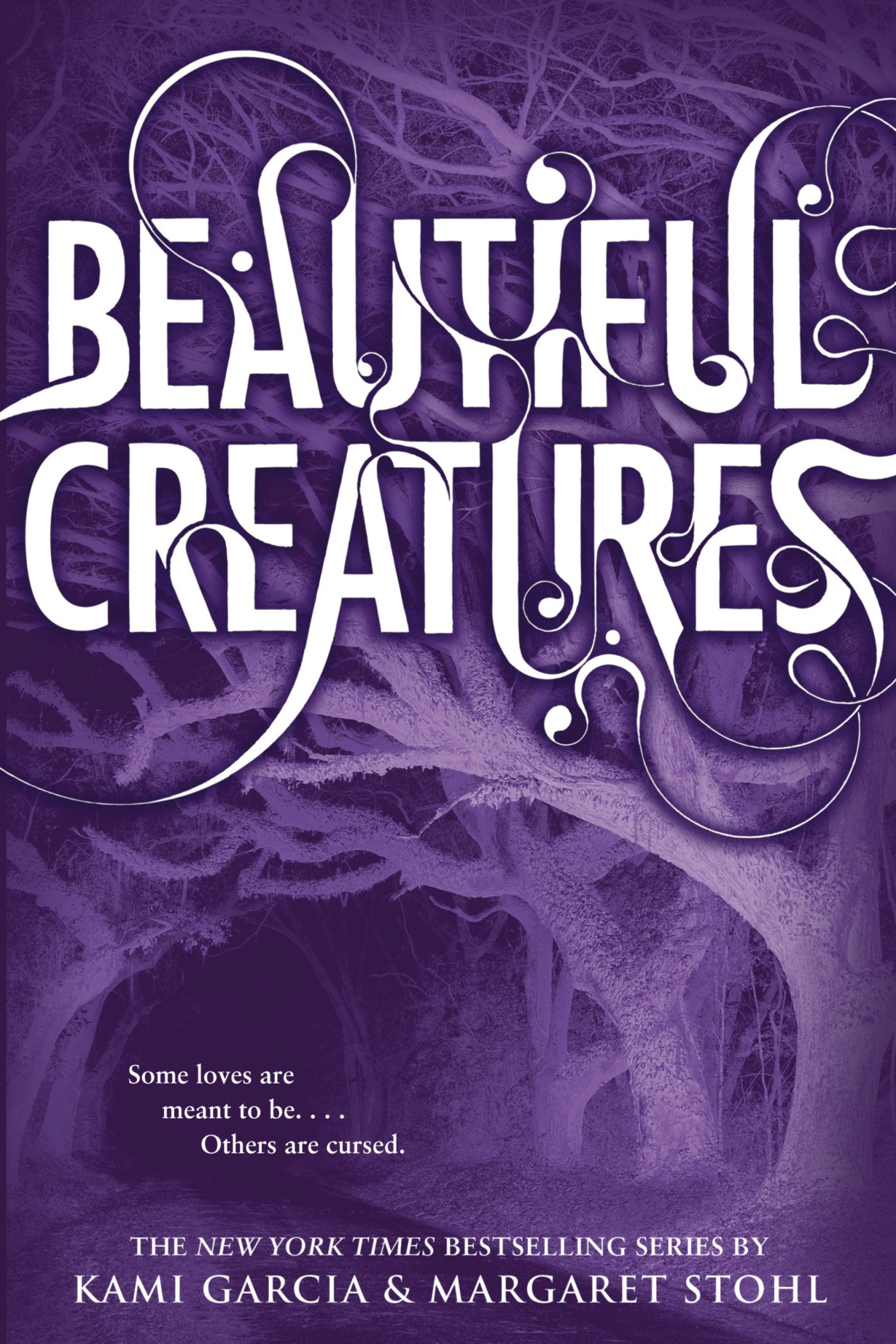
Fittingly enough, I started writing this post on May 1st – Beltane in the Northern Hemisphere, and Samhain for all my Southern Hemisphere Casters out there! A blessed sabbat to you all, whichever one you celebrate!
Samhain, for all my mortal readers, is the Wiccan version of Halloween – in essence, our New Years Eve. It begins at sunset on October 31st and continues until sunset on November 1st, in accordance with Celtic tradition. As with Beltane, it is a time when the boundary between the material world and the spirit world is at its thinnest, a night to do some really powerful magical workings.
Like the one in this chapter, to pick a random example. (Or the Morrigan ritual I did on Samhain Eve last year, but I digress.) But we’ll pick that up later. For now, we begin with a montage sequence focused on Ethan and Lena pouring over the papers and letters surrounding the locket, in the hopes that they, unlike their ancestors, might find some way to be together, both Biblically and otherwise. (Stohl and Garcia never state that first part out loud, but they’re teenagers – what other kind of hooking up are they gonna do?)
Then we get to the day of the titular holiday itself, and I’ll say this for Jackson High: At least their student body got to wear costumes. (I wasn’t allowed to wear one to school after the second grade.) In the brief scene where Lena picks Ethan up to go to school, she explains to a confused Ethan why she isn’t wearing a costume, and her description looks identical to most descriptions of Samhain I’ve seen:
“Oh, you think Casters dress up on Halloween and fly around on brooms?” She laughed.
“I didn’t mean -”
“Sorry to disappoint you. We just dress for dinner like we do on any other holiday.”
“So it’s a holiday for you guys, too.”
“It’s the most sacred night of the year, and the most dangerous-the most important of the four High Holidays. It’s our version of New Year’s Eve, the end of the old year and the beginning of the new.”
“What do you mean by dangerous?”
“My gramma says it’s the night when the veil between this world and the Otherworld, the world of spirits, is the thinnest. It’s a night of power and a night of remembrance.”
All this sounds pretty familiar, alright. That Lena only mentions four High Holidays, of which Samhain is the last, makes me think the other three are Caster versions of Imbolc, Beltane, and Lughnasadh… but I admit that’s just me guessing. Caster holidays may not necessarily line up with the ancient Gaelic ones. (Certainly, the events of “Gathering Days” feel closer to Mabon, which at least happens in September.)
Lena’s use of the word ‘sacred’ here makes me wonder if there’s a religious element in relation to being a Caster, though the books never establish one. I wouldn’t be too surprised, though, if it ended up looking not unlike Gardnerian Wicca… but again, I’m not sure. No Wiccan would treat Amma’s ancestors as poorly as Macon does in “The Greats.”
But I digress. Lena explains that for Casters, just like it is for Wiccans, the last night of October and the first day of November is a time of remembrance for those who have come before us. She says, “We remember the Casters who were persecuted for their differences. Men and women who were burned for using their gifts.” And in response to Ethan’s question regarding the Salem witch trials, she adds:
“I guess that’s what you call them. There were Witch Trials all along the eastern seaboard, not just in Salem. All over the world, even. The Salem Witch Trials are just the ones your textbooks mention.” She said “your” like it was a dirty word, and today of all days, maybe it was.
So, a couple things I want to unpack here. First of all, no witches, Caster or otherwise, were ever burned in Salem – witch-burning was primarily a European thing. The victims of the trials in Salem were only ever innocent people caught up on the wrong side of a theocratic government, like the one in Salem at that time.
Now, to be clear, this is a common misconception that crops up all the time in pop culture. Charmed runs into it with the story of Melinda Warren being burned at the stake during the Salem trials, and portraying Wicca as the exact kind of “ancient European witch cult” that it never was in the freaking first place. But as I say, it’s a very easy trap to stumble into, and I’m not really surprised that Garcia and Stohl fell into it.
The other thing I wanted to mention: I like Lena’s use of the word “your” there. It’s one of those little grace notes that illustrate how, though she blends in with mortals better than, say, Ron Weasley would, she’s still technically Not Like Us. It makes her seem a little more alien, in the extraterrestrial sense. (Also, I now find myself wondering what Caster textbooks are like, since her statement implies such things exist.)
Anyway! They get to school and discover the basketball team have all dressed up as cheerleaders, while the actual cheer squad… have gone as witches. Stereotypical witches at that, black pointed hats and broomsticks and all… but with wigs designed like Lena’s hair, and fake crescent moon birthmarks like hers.
Lena is, justifiably, pissed about this, and gets her revenge delightfully: she turns the eyeliner the cheerleaders used into Sharpie, complete with spontaneously appearing markers. It’s brilliant, and one of my favorite Lena magic moments in the whole book. She’s the kind of witch I’d want to be, if I could have supernatural powers.
The chapter goes on, and it gets darker from there. Ethan is home watching horror movies when, of all people, Mrs. Lincoln (Link’s Baptist Christian mother, and the Casterverse equivalent of Bev Keane minus the vampirism) shows up with some brownies… at 10 PM. On Halloween night. Something is clearly not right about this woman, but he doesn’t get much time to brood on what because the next thing he knows, Lena is screaming for help.
When Ethan gets to Ravenwood, he finds Lena herself lying on what I imagine is a stone altar, with her family grouped around her in a circle, chanting in Latin: just like a Wiccan coven during a group ritual. (Except maybe the Latin, but you never know – there might be some Gardnerians out there who do that for thrills.) They’re doing some kind of binding spell, to keep out an evil force, but it isn’t working… only Ethan’s love for Lena is what keeps her safe.
That last part might be a little cliché, especially after how a certain other book series involving spellcasters did it, but I like how these books handle the concept: the power of love, weaponized.
And that love is what brings us into the next chapter, which takes place on November 1st – the other side of Samhain. Ethan and Lena talk through what they’d experienced the night before, and we learn the term for their two-way telepathy: Kelting, from the Celtic side of the Duchannes family.
And then they each admit the obvious: they’re falling in love. They kiss, and as always happens when a Caster and a Mortal kiss, there’s electricity… and the sheer force of their love ends up breaking the bedroom window. Oops. Then again… doesn’t love conquer all?
Next week: Having seen a Caster holiday, join us next time for the decidedly Mortal Thanksgiving… but this time, Amma and Lena have their first conversation face to face, and we get to see a bit more of Ethan’s family.


Leave a Reply