Hi everyone! Apologies for the unexpected silence over the past month – I took a brief break to write some new Back to the Eleventh Hour material. But now I’m done with that, and ready to pick up where we left off in the saga of Paul McCartney and Wings. So, let’s get right to it!
As we saw last time, 1971 was a bit of a wash for Paul and his nascent new band – the hope was that 1973 would be a much better showcase for them than Wild Life turned out to be. By 1972, the group had expanded to a five-piece band, along with touring at various British universities and small halls – for Paul, it must’ve felt like those early Beatles gigs of a decade previous.
1972 mainly saw the band release a few singles, all of which we’ll come back to later on. One of the two of the most notable ones was “Give Ireland Back to the Irish,” which was Paul’s attempt at doing a protest song, and… well, let’s just say I’d rather listen to Some Time in New York City again than that misbegotten wreck of a track. John’s contemporaneous protest songs may not have been all that great, but at least he knows how to write them. Leave the politics to him, Paul – it does not end well for you.
Ill-advised political digressions aside, Paul was eager to prove to the world that he could make good music without John, George, and Ringo backing him up. The McCartney name still carried some weight in the music world, after all, so, the band slightly changed its name to “Paul McCartney and Wings,” in the hope that more record buyers might be interested if they knew he was involved.
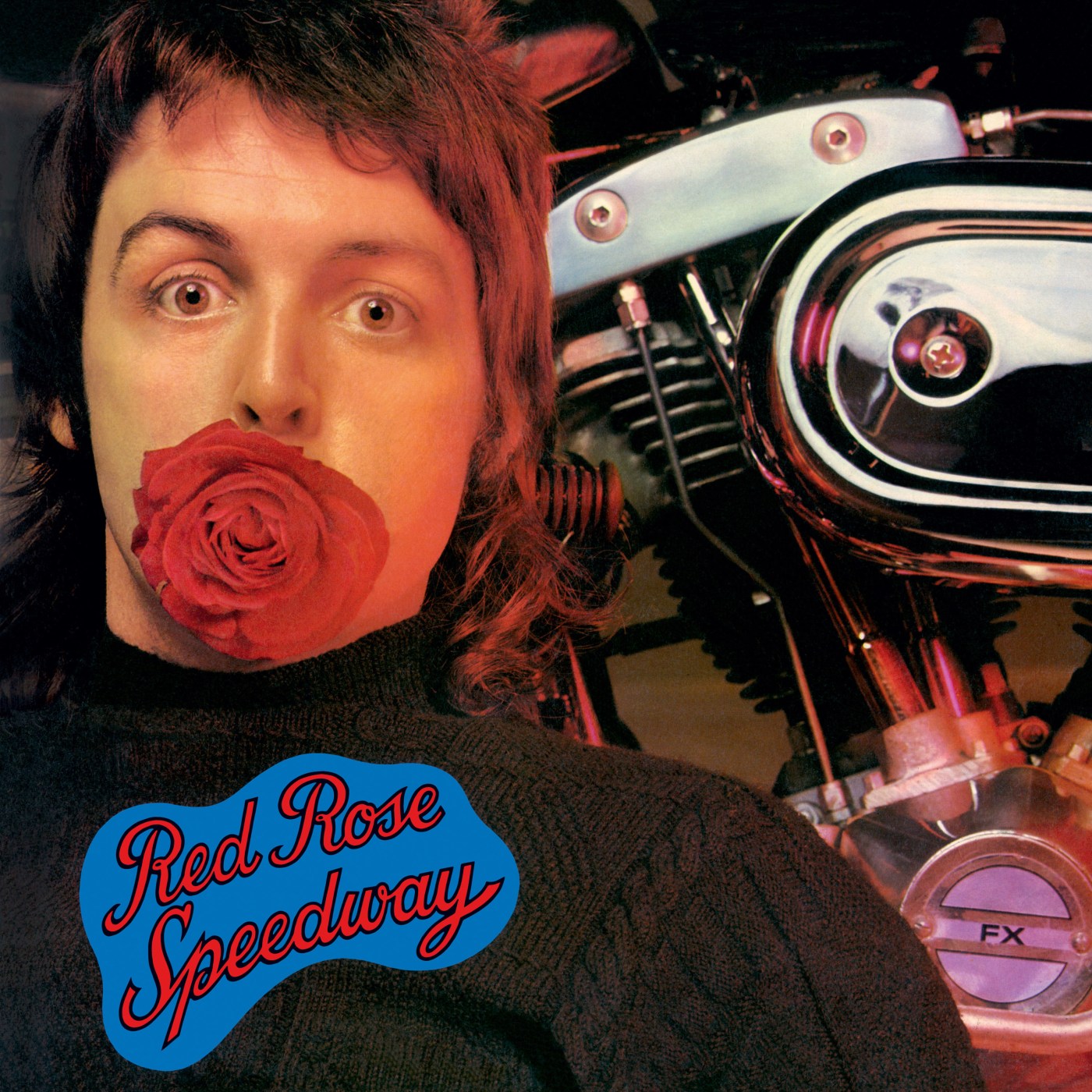
After spending much of 1972 in the studio, the band’s next album was ready for release. It was called Red Rose Speedway, and was intended to show Wings off at their best. It was supposed to be a double album, but the record company requested that Paul compress the tracklist down to a single disc, and that was the version that went out.
The single disc version did well enough, reaching the top of Billboard’s album charts and #5 on the UK’s official charts. Despite the chart performance success though, music critics hated it, with virtually everyone describing it as a disaster – even Paul admitted he couldn’t stand to listen to it.
But then. In 2018, a miracle occurred: Paul’s archivists, when preparing the expanded remaster of the album for release, managed to locate a tracklist for the original two-disc version of the album, and after confirming with Paul that the running order was what he’d originally wanted, the reconstructed double album version of Red Rose Speedway was put out for all to enjoy later that same year.
So, in the name of giving Red Rose Speedway a fair shake, let’s run through it as Paul and company originally intended us to back in 1972, before EMI got involved:
Night Out: Not much to say here – just a hard-rocking jam number with Paul and Linda shouting the title over and over. Not a bad showcase for new guitarist Henry McCullough, it must be said, but not terribly interesting as a piece of music.
Get On The Right Thing: I guess it’s a love song? It’s got a good melody, and it features David Spinozza on guitar, making him one of the few non-Beatles to have worked with both John and Paul at different times. When John was making Mind Games, Spinoza was afraid that he’d be fired if John knew he’d worked with Paul. John simply said that Paul “knows how to pick good people.” But as a song? It just kind of lays there.
Country Dreamer: A song that actually works! It’s another love song toward the Scottish farm Paul calls home, and to Linda. It’s very sweet, enlivened by the pedal steel guitar played by Henry McCullough. It’s a bit like “Heart of the Country,” actually, accentuated with the defining instrument of early ‘70s rock: the electric piano.
Big Barn Bed: Another song that doesn’t seem to be much of anything, but as Rolling Stone noted at the time, “the song draws you slowly in with the same steady roll of traction demonstrated by that odd union of records which score heavily in the discotheque markets.” Which I think is a fancy way of saying that it’s extremely hypnotic in a way that I haven’t heard from any Beatle since “Tomorrow Never Knows.”
Paul’s vocal is absolutely saturated with tape echo here, rendering most of the lyrics almost entirely unintelligible, at least to my ears. The evolving, layered instrumentation (especially when the piano comes in near the end) keeps things from getting too dull.
My Love: The album’s only single, and frankly it shows because it has clearly had the most effort put into it of any song we’ve heard so far, excepting “Country Dreamer.” (Which was also released as a single. Go figure.) This is a piano ballad in the tradition of “The Long and Winding Road,” but it’s also a love song to Linda – very tuneful, as it goes…
But the lyrics are awful. Paul, sir, you are a deity among men when it comes to melody, but I must ask you: WHAT IN THE NAME OF THE GODDESS AND GOD WERE YOU THINKING WHEN YOU WROTE “MY LOVE DOES IT GOOD?!” HOLY FUCK THIS THING IS AWFUL!
Rob Sheffield absolutely savages this song in his wonderful book Dreaming The Beatles, as well he fucking should, because what an utter embarrassment. He writes, “My Love” is a fascinating disaster, if you happen to love Paul, because it’s a string of very un-Paul-like mistakes. He forgets all the Paul tricks he knows better than anyone else ever has. In fact, he goes so wrong here breaking his own rules, it’s an index of everything he usually gets right.”
In his telling, it was Paul’s attempt to write his own version of George’s “Something” from Abbey Road, and that may be reflected in the line that defines the song’s chorus. And the orchestra. And the guitar solo. Except it’s all awful, especially the ending. It may officially be a song for Linda, but if you ask me, this is Paul paying tribute to his massive ego.
Single Pigeon: Paul usually has a good track record with songs about birds – witness “Blackbird” from The White Album, or “Bluebird” on this album’s followup. Paul notes in The Lyrics chapter for this song that he is a hobbyist ornithologist, and frankly his commentary on the song is more interesting than the song itself is.
For my part, the most notable thing in this track is the namedrop of the Regent’s Park canal, which I used to live by when I studied abroad in the UK a decade ago this month. It’s really pretty, the ducks who live there basically served as my alarm clock every morning.
When The Night: Another Linda love song, but unlike the last one, this song actually bothers to include the woman. It features the call-and-response backing vocal that Paul and Linda favor, and it has a great performance from Paul on lead vocals. I’d even call it the most magickal song on the album – and my use of Crowley’s spelling is intentional.
Seaside Woman: A Linda-penned song this time, recorded in 1972 but not released until 1977. It came about from a trip to Jamaica that she took with her husband, and also because of a lawsuit they were dealing with at the time. There’s lots of reggae influences here, along with Fifties R&B. I kinda like it!
I Lie Around: Denny Laine takes lead vocals this time, in case you thought that this was just a solo Paul album. The lyrics aren’t much, but it rolls along quite nicely, I think. Listen closely for Paul’s original lead vocal track, especially near the end of the song. It was originally released in 1973 as the b-side to “Live and Let Die.”
The Mess [Live]: Recorded live at the Hague, I like this song a lot too, even if the lyrics aren’t all that great. The echo on Paul’s vocal is wonderful, the guitar is nice and crunchy, and if you listen close you can even hear the audience clapping along! For this is indeed the rare Paul McCartney concert recording to not include any crowd noise – bit surreal when we’re used to constant screaming.
Best Friend [Live]: Another live performance recording, “Best Friend” is widely considered to be directed at John Lennon – this was, after all, still during the period where they argued with each other. It has a very 1950s rock and roll feel to it, neatly anticipating the sound of Paul’s one and only record for the Soviet Union, Сно́ва в СССР.
Loup (1st Indian On The Moon): Despite the title, this song has nothing to do with wolves or my former neopronoun – it’s just a moody instrumental the band jammed to during recording of the album. It’s especially good if you like really prominent bass guitar.
Medley: ‘Hold Me Tight’/‘Lazy Dynamite’/‘Hands Of Love’/‘Power Cut’: Despite the title, the first song in this eleven-minute medley is not a remake of the song from With The Beatles. Which is a shame, because the Beatles song has better lyrics.
The rest of the medley, unlike its equivalent on Abbey Road, isn’t that successful: the first two songs large sound the same, only enlivened by Henry McCullough’s lead guitar and the harmonizing between Paul, Linda, and Denny, “Hands of Love” at least has a different texture. “Power Cut” was inspired by the miners’ strike of 1972, which led to rolling blackouts all across England.
Mama’s Little Girl: A quiet acoustic number from Paul this time, recorded in 1972 but not released (with many overdubs) until 18 years later. It’s cute, I suppose?
I Would Only Smile: Another lead vocal spot for Denny Laine, recorded in 1972 with the rest of Red Rose Speedway but not officially released until 1980 on Denny’s album Japanese Tears – the title is an allusion to the marijuana bust that got Paul thrown in a Japanese prison at the start of that year. It’s pretty nice!
One More Kiss: A country and western number that sounds like something Paul would’ve given to Ringo, though it doesn’t seem like he did. It was inspired by something his daughter Mary (around four by then) would say, and was recorded by Wings in EIGHTY SIX takes. (This one is take 85.)
Tragedy: A rare cover, this time of a song written by Gerald H. Nelson and Fred B. Burch, and later recorded by Thomas Wayne and the DeLons in 1959. Paul’s version is heavy on the harmonies – if the Beatles had stuck around into the 1970s, I can imagine Paul singing this with John and George, possibly in the tradition of “Here, There, and Everywhere.”
Little Lamb Dragonfly: We end with a song that is a tribute to a lamb who died on Paul’s farm early in 1970. The rest of the song concerns itself with a dragonfly, though where that part came from, I can’t imagine. One commenter on Beatles Bible posited that it’s another message to John, and I can see how they get there, but I think it’s definitely about the lamb.
Having now listened to the entire album, I’m not entirely sure that it makes much difference whether you go with the official single-disc version, or the reconstructed double album – either way, it’s a very, very light album. Pure early ‘70s soft rock of the kind they used to play on KEZK in St. Louis, back when they were still the local soft rock station.
It’s not Paul’s worst album – he has some real stinkers in the 1980s. But so far, his solo career is not looking good: four albums in, and the only one I can honestly I say like is Ram, but even Wild Life and McCartney have good moments. All Red Rose Speedway has is fucking “My Love,” an insult to the genre of love songs, written by the man who is usually better than anyone at crafting them.
Anyway. Hilariously, Speedway came out around the same time as Capitol’s releases of 1962-1966 and 1967-1970, aka the Red and Blue albums from the Beatles. Those albums, as noted before, were huge hits when they came out, and both are far better than Speedway by a mile. Paul still had a lot of work to do to get out from under the shadow of his old group, it would seem…
But he’ll get there. Next week, in fact.


Leave a Reply