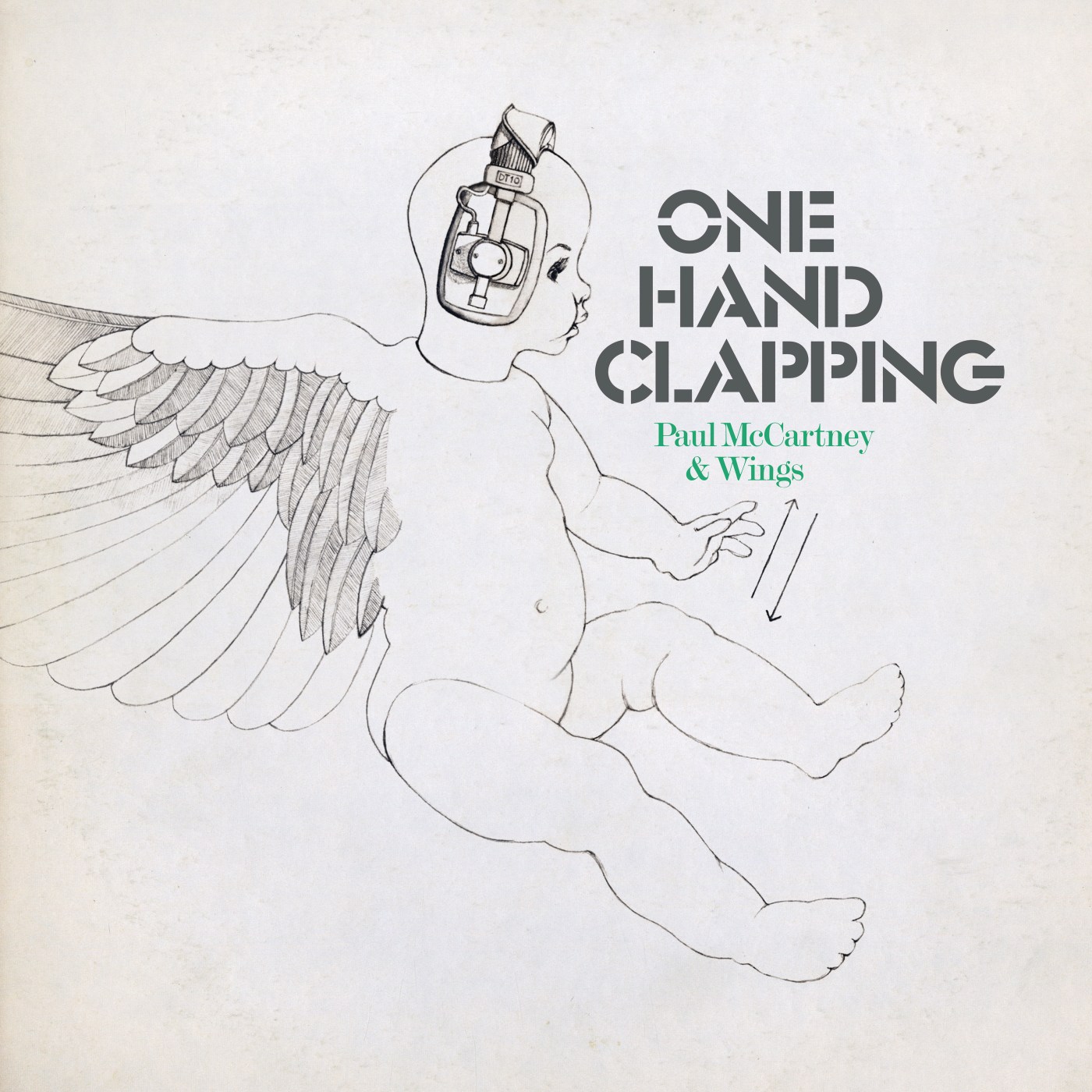
When I first began planning this series in early 2024, my original goal was to jump straight from Band on the Run to Venus and Mars. And then that June, just two days before Sir Paul’s 82nd birthday, we unexpectedly got a “new” Wings album. And the reason why I put “new” in quotes there is for the very simple reason that this is not an album of new music, but essentially Get Back 2: Electric Boogaloo.
For those who didn’t get that joke, let me explain: Get Back is the name for what was intended to be the Beatles’ album for 1969, recorded in January of that year for a television documentary about the Beatles writing, rehearsing, and recording, a new album, which was to be promoted with a live performance.
But as we know from when I covered the album in Off the Beatle Track, but it didn’t pan out that way. The TV special became the Let It Be movie, released in 1970 as the band had just broken up, and for some 50 years it became a footnote in Beatle lore until it was restored and re-released on Disney+ last year, where we discovered it actually didn’t suck and was actually a pretty great film.
The Get Back album also became Let It Be, and the original mixes by Glyn Johns laid around in bootlegs for around 50 years until, in 2021, the original 1969 mix of that album was finally released at last, as part of the super deluxe Let It Be set.
And now, here Paul is with One Hand Clapping, YET ANOTHER TV special about a rock band working in the studio ahead of a potential live album, because I guess Paul has not learned anything since the Get Back experience five years earlier. Or maybe he just thought that unlike Get Back, One Hand Clapping would actually get released.
Well, it didn’t. The film never came out until 2010 when Band on the Run was remastered for Paul’s Archive Collection reissue series, and the album didn’t show up, as said, until last year. Why they were abandoned is knowledge left to the gods – all we have is a live album, so, even though this is actually the latest Wings release, I’m writing about it now, in recording order. (Once again, the Get Back parallels are eerie.)
Let’s dig into the music:
‘One Hand Clapping’: A nice, rollicking instrumental to start things off, beginning with handclaps. The track is a great showcase for the new Wings lineup – Paul, Linda, Denny, Jimmy McCulloch, and Geoff Britton. Listen for McCulloch’s scorching guitar, and of course, Linda’s amazing work with the Moog synth.
Jet: Here comes Paul with a good-old fashioned early 1970s rock song, named for his and Linda’s Labrador Retriever. (Or a pony, I’m not sure which.) Exactly what the song is about has never been made entirely clear. But who cares?! It’s Paul rocking out again in the way that only he can do! This is one you want to play as loudly as possible! This version sounds pretty close to the album cut, minus the horn section of course.
Soily: One of Paul’s more nonsensical/surrealist songs, this version is the only studio recording ever made – it never appeared on a proper Wings album. Instead, it was mainly played at the end of their live shows as an encore track. What I find interesting about this song is that in certain places, when Paul hits his lower register, he actually sounds a bit like he does starting in the 1990s by default.
C Moon/Little Woman Love: C Moon is a reggae-styled song that was released in 1972 as Wings’ third single – I first heard it as a kid when I checked out Back in the US from the library. The full single version includes backing vocals from Heather and Mary McCartney, and appears on the 2000 compilation album Wingspan.
As for the second song, per Beatles Bible: “‘Little Woman Love’ was recorded during the Ram sessions, and released as the b-side of Wings’ second single ‘Mary Had A Little Lamb’.”
Maybe I’m Amazed: Released on the first McCartney album, “Maybe I’m Amazed” is one of Paul’s most powerful love songs, which is no small feat considering how many of them he’s written over the years. In one of the darkest periods of his life, he had a shining light in the form of Linda, and his love for her shines through every note. He even brings back his “Oh! Darling” vocal stylings back!
This version is played on electric piano, completely changing the feel of the track, with “A Day in the Life”-style echo on Paul’s vocal.
My Love: A love song from Paul to Linda, in the style of “The Long and Winding Road,” down to Paul trying to do a Ray Charles voice. (But with electric piano, because this is the 1970s.) For me it sounds like an attempt to write “Something,” and not entirely succeeding. But it’s a Linda tribute song now, so I can’t really complain.
Bluebird: Paul’s third-ever bird related song, this is absolutely a spiritual successor to “Blackbird” from 1968, since it deals with similar themes – true freedom, and flight as a way to accomplish it. The main difference is context: “Blackbird” was about the civil rights movement and the plight of Black America, whereas in “Bluebird,” freedom comes from love and sharing in it with others.
‘Let’s Love’/‘All Of You’/‘I’ll Give You A Ring’: Just Paul on vocals and piano this time, performing a song he wrote for Peggy Lee, the American jazz singer whose 1958 recording of ‘Till There Was You’ inspired Paul to do his own, and that appeared on With The Beatles in 1963. Lee recorded ‘Let’s Love’ in 1974, with Paul producing.
“All of You” is a Broadway style song that floated around on bootlegs for years before seeing official release on this album.
“I’ll Give You A Ring” is a demo version of a song that will go on to become the B-side of a single of Paul’s in 1982. This song and “All of You” are the only two tracks here to have been mixed by Geoff Emerick – Giles Martin and Steve Orchard mixed the rest.
Band on the Run: The title song from his 1973 smash hit with Wings, his second band. Recorded with just himself, Linda, and Denny Laine, the song is a triptych, with three sections that sound completely different from each other… not unlike the medley that goes through half of Abbey Road, actually.
‘Live And Let Die’: Paul’s first and only Bond theme, though I read somewhere they wanted to get him for Diamonds Are Forever but it went to Shirley Bassey again. Inaugurating the Roger Moore years of the Bond movie series, the lyrics have very little to do with 007, but who cares?! It’s a great fucking song. Allegedly, the producers originally wanted to have someone other than Paul sing, but George Martin convinced them to stick with Paul’s recording.
(Amusingly, the Moore movies would be bookended a decade or so later with “A View To A Kill,” written and performed by my second-favorite rock band from the north of England, Duran Duran.)
‘Nineteen Hundred And Eighty Five’: The grand closer from Band on the Run, and though the lyrics are slight, it doesn’t matter because the song just sounds incredibly awesome even before the epic finale – it’s like the Wings version of “A Day in the Life” from Sgt. Pepper, complete with an orchestra being huge and impressive, plus harmonies that sound like Paul was listening to Brian Wilson again. This version is just Paul alone on piano, which detracts from the epicness somewhat, but it’s still a good performance.
‘Baby Face’: Another Broadway style number from Paul, now with a horn section which makes it sound like the cheesiest song in a musical that doesn’t exist. But it’s nice to hear his rock and roll voice again – he sounds almost exactly like he did on “I’m Down.”
Let Me Roll It: There are love songs, and then there are love songs by Sir James Paul freaking McCartney. No one, and I mean no one, can write them like he can. This is one of his best by far, and it’s been a staple of mine and Sophie’s joint playlist since we got together. And best of all? If you squint you can take it as Paul expressing his love for John, years after their musical argument in 1971.
‘Blue Moon Of Kentucky: A cover of a Bill Monroe number from 1945, Paul puts on his best Southern drawl for this performance – a mix of the slower ballad number and Elvis Presley’s uptempo version from the 1950s. And of course, he’ll go on to play a version of it with George and Ringo for the Anthology docuseries in 1995.
‘Power Cut’: One third of the medley that closes the released version of Red Rose Speedway, and probably the only part that I find half interesting, since it was indirectly inspired by the miners strikes of early 1972 that caused rolling blackouts all across England. This version opens with a mock radio DJ announcement from Paul.
‘Love My Baby’: Another solo Paul song, this time with him on the electric piano. It’s cute, but really no more than a ditty.
‘Let It Be’/‘The Long And Winding Road’/‘Lady Madonna’’: No, your ears are not deceiving you, this really is Paul performing Beatles songs on a solo album for the very first time. While natural enough given that this album was recorded in Studio 2 at Abbey Road, it’s still a little surreal to hear him do it – kind of like when John sang “Come Together” during the One-to-One shows in 1972. It’s just Paul on piano, and these aren’t the full songs – only brief excerpts.
Junior’s Farm: A single from later in 1974, that version was recorded in Nashville in July of 1974, Tennessee, and Paul’s visit there inspired the song’s lyrics. Personally, I’m just enjoying Paul doing another of his rock songs – easily my favorite mode of his. Kind of reminds me of “Helen Wheels,” another single from the Band on the Run period.
Sally G: Another Nashville song. Per Beatles Bible, “It was written after McCartney went drinking at Skull’s Rainbow Rool in Nashville’s Printer’s Alley district, where he saw Diane Gaffney performing. Inspired, he wrote it in a back room of the club; it was initially titled ‘Diane’.” Believe it or not, it actually made it to #51 on Billboard’s country singles chart – and it’s about the only country song I can stand. (Unless we count Paul’s earlier song “Rocky Raccoon,” which we could.)
‘Tomorrow’: The optimistic sequel to the famous “Yesterday” from his Beatles period, describing hope that the future will be brighter than the darkness of the past. As noted by Beatles Bible, “Aside from the similar titles, the two songs share the same opening chords – D, C#m7, F#7, Bm7,” though the differing keys make the similarities a little hard to spot.
Go Now: Another cover, this one of a Bessie Banks song that was later covered by (and became a hit for) the Moody Blues, Denny Laine’s old band. Fittingly, Laine is on lead for this song, and it soon became a staple of Wings’ live set in the mid-1970s.
‘Wild Life’: The title song from the album, inspired by a trip Paul took to Kenya in 1966, presumably during the long gap between the end of the Beatles’ summer tour and the beginning of the Pepper sessions. It’s a very political song, regarding animal conservation.
I can get behind that cause, especially these days as the anthropocene ramps up, and extinction gets worse. I’m Wiccan for crying out loud! Not only are we destroying the Goddess’s gift to her children (our environment) we’re murdering the creatures the Horned God is meant to look after! It’s a travesty.
Hi, Hi, Hi: Wings’ fifth single, in which Paul entirely abandons the concept of metaphor and just does a rock song that is blatantly about sex and drugs. It was a huge hit when played live during a Wings European tour in 1972, but it led to the band getting arrested for possessing marijuana in Sweden. And if that wasn’t all, the single was yet another of Paul’s to get banned by the BBC. Still a great rock song though.
And for the sake of completion, the six songs recorded in EMI’s backyard on acoustic guitar:
‘Blackpool’: Dedicated to the seaside resort in Lancashire, but Paul does it like an American country number.
‘Blackbird’: Paul’s famous acoustic number from the White Album, written about the American Civil Rights Movement of the mid-late Sixties. Though short, this version is just as pretty as the original from 1968 in my opinion.
Country Dreamer: Another love song toward the Scottish farm Paul calls home, and to Linda. It’s very sweet, enlivened by the pedal steel guitar played by Henry McCullough. It’s a bit like “Heart of the Country,” actually.
‘Twenty Flight Rock’: The song by Eddie Cochrane that got George the lead guitarist gig for the Beatles, performed here as a slow jam by Paul.
‘Peggy Sue’/‘I’m Gonna Love You Too’: We finish with just the latest of a long series of Buddy Holly tributes, (going all the way back to the Quarrymen days, incidentally) and why not? Buddy Holly is great! And yes, he does that hiccup vocal thing that Holly always did – even John did it when he covered “Peggy Sue” in 1975!
I have to say, I really wish I could’ve seen the film that this album is meant to accompany, because oh dear Goddess the album is a bit of a drag to listen to. The full band songs are probably the best parts, the ones where Paul is just fooling around on a piano or acoustic guitar, if they’d tried to release this as an album in 1974, would probably be best left on the cutting room floor.
It’s not a bad album by any stretch of the imagination – Wings is in full flower here, proving beyond a doubt that they can match the Beatles in terms of musicianship. But it’s also very much Paul McCartney’s backing band, if you get my drift – for all that he tried to keep up the pretense of wanting to start out at the bottom again, Paul is still a Beatle, and that means egotism. (Check out the story behind why Glyn Johns quit working on Red Rose Speedway and you’ll get what I mean.)
See you next week for Venus and Mars.


Leave a Reply