Linda McCartney died of cancer on April 17th, 1998. Per Wikipedia, “McCartney was diagnosed with breast cancer in 1995, and her condition worsened when the cancer metastasized to her liver. Paul was aware of the prognosis and later said, “The doctors had told me privately that we’d caught it too late, that she’ll have about 18 months. And that was what she had.”
Naturally, her husband spent the rest of 1998 in a deep period of mourning – his only music project was Rushes, an experimental electronica album created with the producer Youth. (Linda appears posthumously via spoken word, on the track “Palo Verde.”)
Paul got back to regular music in early 1999, with a simple goal according to Beatles Bible: “His aim was to work quickly, booking time at Abbey Road Studios with producer Chris Thomas. The mix of old and new songs proved the perfect way for McCartney to renew his creative energies. The intention was for the sessions to be relaxed and low-pressured, with a live feel and no post-production allowed.”
His musicians included David Gilmour, Ian Paice, Dave Mattacks, and Mick Green, who used to be in Billy J Kramer and the Dakotas, another of Brian Epstein’s beat groups. (John and Paul wrote a few of their early hit singles.)
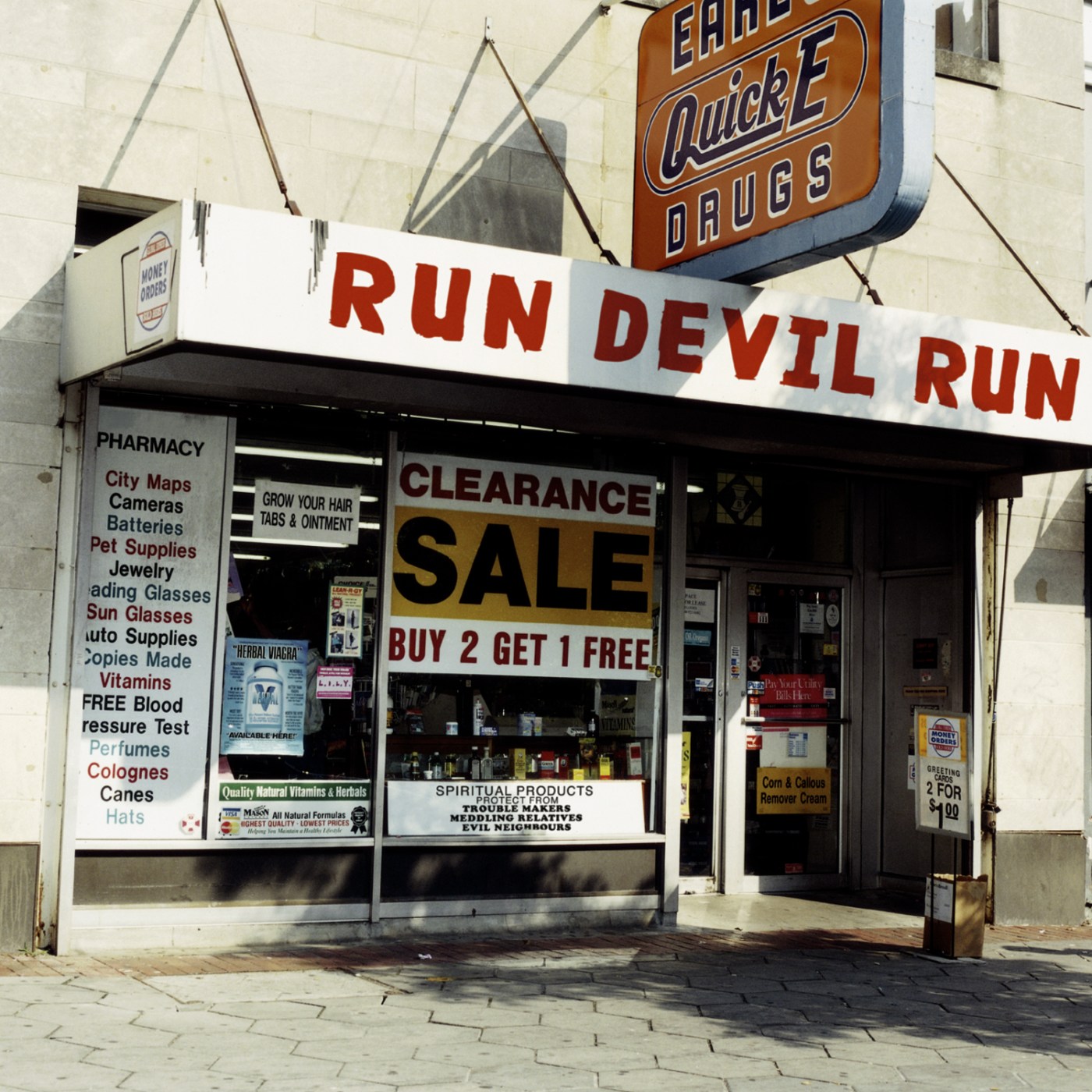
The final result was Run Devil Run, and like Снова в СССР before it, it’s another rock ’n’ roll covers album, but this time with three original compositions: the title song “Run Devil Run,” “What It Is,” and “Try Not to Cry,” all written in the style of 1950s rock. The album title was inspired by Miller’s Rexall Drugs, a drugstore in Atlanta, Georgia which sold products under that name.
Seems a bit unfair to artistically analyze what is plainly meant as a tribute album to Linda, but let’s give it a try anyway:
‘Blue Jean Bop’: Originally performed by Gene Vincent, Paul’s version starts off slow with just his voice and a bass guitar. The rest of the band comes in at around 0:22, putting the song into a somewhat jazzy mode that lasts until the guitar solo hits at 0:43. It’s good stuff!
‘She Said Yeah’: We all know Larry Williams – the Beatles recorded a few of his songs back in the 1960s, and here Paul returns to that well with the B-side to “Bad Boy,” which John memorably performed back then. Paul’s version of this song, though, rocks harder than anything has since “Paperback Writer,” turning what was then a 40 year old rocker into very nearly punk rock. Damn!
‘All Shook Up’: Paul does Elvis again, but unlike on Снова в СССР where he tried to recreate the original performance, Paul sings with his own voice, and as before turns in a performance that is best described as “The Ramones only a little slower.”
‘Run Devil Run’: In which Paul writes his own Chuck Berry number, inspired by the drugstore which gave the album its title. The performance is absolutely electrifying, and this is where he really does hit punk rock territory! The lyrics are sung so fast I had to look them up just to understand the words!
‘No Other Baby’: We slow things down now for a song that has personal significance for me. When my dog Luna died in 2021, I listened this song to help me through the mourning period. I even wrote a short fanfic, in which the song is performed by my unicorn musician character, Emerald Wave.
Paul, in his vocal performance here, is audibly trying to keep it together during the verses, but he lets it all out when he gets to the choruses, screaming through them with as much pain and heartbreak as John did on “Mother.” When Luna died, I understood it.
I miss you, my sweet girl.
‘Lonesome Town’: “Lonesome Town” is a song written by Baker Knight. A version sung by Ricky Nelson became a hit single in the United States, reaching #7 on the Billboard Hot 100 and #15 on the R&B chart in 1958. Paul sings in his higher register on this one, harmonizing with David Gilmour at one point, and it’s another case where he’s channeling his grief into his singing.
‘Try Not To Cry’: “I just wrote a bluesy song that never gets in the way of the snare. It was actually that simple,” says Paul in the liner notes. It’s a cool effect, and it works really well.
While this wasn’t meant to be a confessional piece, even he admitted that his feelings crept into his work: “I didn’t intend to make it sad. When you’re writing a song there are various ways to do it and one of the ways is just to spill out what is coming into your head and the chorus was just that.”
‘Movie Magg’: Not just any Carl Perkins song, but the very first one he wrote, when he was all of 13. Paul says, “This one is about his girlfriend Maggie, who he’d sometimes take to the movies on his mule, old Becky. They had no car so they rode to the movie show. And it’s true.” Paul’s vocal doesn’t have slapback echo on it this time – nice and dry, exactly what a song like this deserves.
‘Brown Eyed Handsome Man’: An actual Chuck Berry number now, featuring an accordion! Per Wikipedia: “Brown Eyed Handsome Man” was written after Berry visited several African-American and Hispanic areas in California. During his time there, he saw a Hispanic man being arrested by a policeman when “some woman came up shouting for the policeman to let him go.” Paul’s performance gallops along at a good pace, you can tell he’s having fun with this.
‘What It Is’: According to the Paul McCartney Project, this is a song Paul wrote and played for Linda in her final years. He said in the liner notes, “I was playing bluesy riffs on the piano and this song started to come out. Linda was there and I enjoyed it just for that, for the little feedback she gave. So I thought I’ll do that as sort of my little tribute to Linda.”
And what a tribute it is, communicating in just two minutes and 23 seconds all the joy, love, and euphoria she brought into his life. It’s the happiest blues number in the world, and I adore it.
‘Coquette’: An obscure Fats Domino b-side now, as Paul dips into his lower register for the performance. If there’s one thing I love about his middle aged voice, it’s that he can do stuff like this even better than before! He says in the liner notes, “It’s just me singing Fats. We tried fixing little bits of it because I thought ‘God, this is too much like a pub singer’ … but we ended up going back to the earliest mix, it just has a feeling“.
‘I Got Stung’: More Elvis! Per Paul in the notes: “It was not my favourite Elvis song, but I kept hearing ‘Holy smoke landsakes alive, I never though this would happen to me.’ That intro kept grabbing me. I though I’ll do it a bit more raucous than Elvis.” That’s an understatement! It zips along so fast, you blink and it’s over! Whoosh!
‘Honey Hush’: A hit for Big Joe Turner in 1953, Paul’s knowledge of this song goes back to the very early days of the Beatles, when John and Stuart Sutcliffe used to have an apartment together. He says, “John and Stuart used to have a flat in Gambier Terrace. I remember waking up, burning eyes job, and one of the guys put on ‘Come into this house, stop all that yakety yak.’ It’s still my favourite on the whole album to sing.” I can see why! Talk about a rip-roaring performance!
‘Shake A Hand’: It wouldn’t be a 50s cover album without some Little Richard, and Paul brings home the goods with what is, for him, probably the slowest cover he’s ever done. In the liner notes, he tells the story of a Hamburg jukebox, the only place he’d ever heard that song. It’s a great performance, reaching gospel levels of grandeur. (Of course, that was on the original!)
‘Party’: It’s another punk rock Elvis song, with Paul turning in a performance that rivals John’s singing on “Twist and Shout” all the way back in 1963. It’s incredible, and I love its place as an album closer. He says in the liner notes, “First heard in Elvis’s second film, Loving You, in 1957. “Whenever we used to try and get the words, we’d get stuck on the verse… ‘Never kissed a bear, never kissed a goo!’ We could never get it. At the end, that’s me going ‘I’m not giving up man.’ It seemed like a good idea to end the album on that.”
Considering his wife had died the year before, you’d almost never know it from how much fun Paul is audibly having on the lion’s share on this record, fusing the rock and roll of his youth with what sounds to me like late-1990s punk rock. I have never heard him sing like this before, except maybe on “Helter Skelter” back in 1968 – the song that invented heavy metal.
Maybe that’s one of the ways he channels his grief, by making one of the loudest, nosiest, hardest albums he’s ever made in his life. Снова в СССР did not rock nearly as hard as this, and it’s really fucking great.
That said, while I know that Paul will never be a confessional artist to the degree that John was. You have to read between the lines a little to even guess that he’s mourning his wife, though there are places where that’s abundantly clear. I know I can’t listen to “No Other Baby” without wanting to cry.
One other thing? I’ve never written one of these posts as fast as I did this one. This is what I call a performance.
Next week: Paul enters the new millennium and finds new love, which will surely not bite him in the ass at some point in the future. (It’s the Heather Mills years. Oh boy.)


Leave a Reply