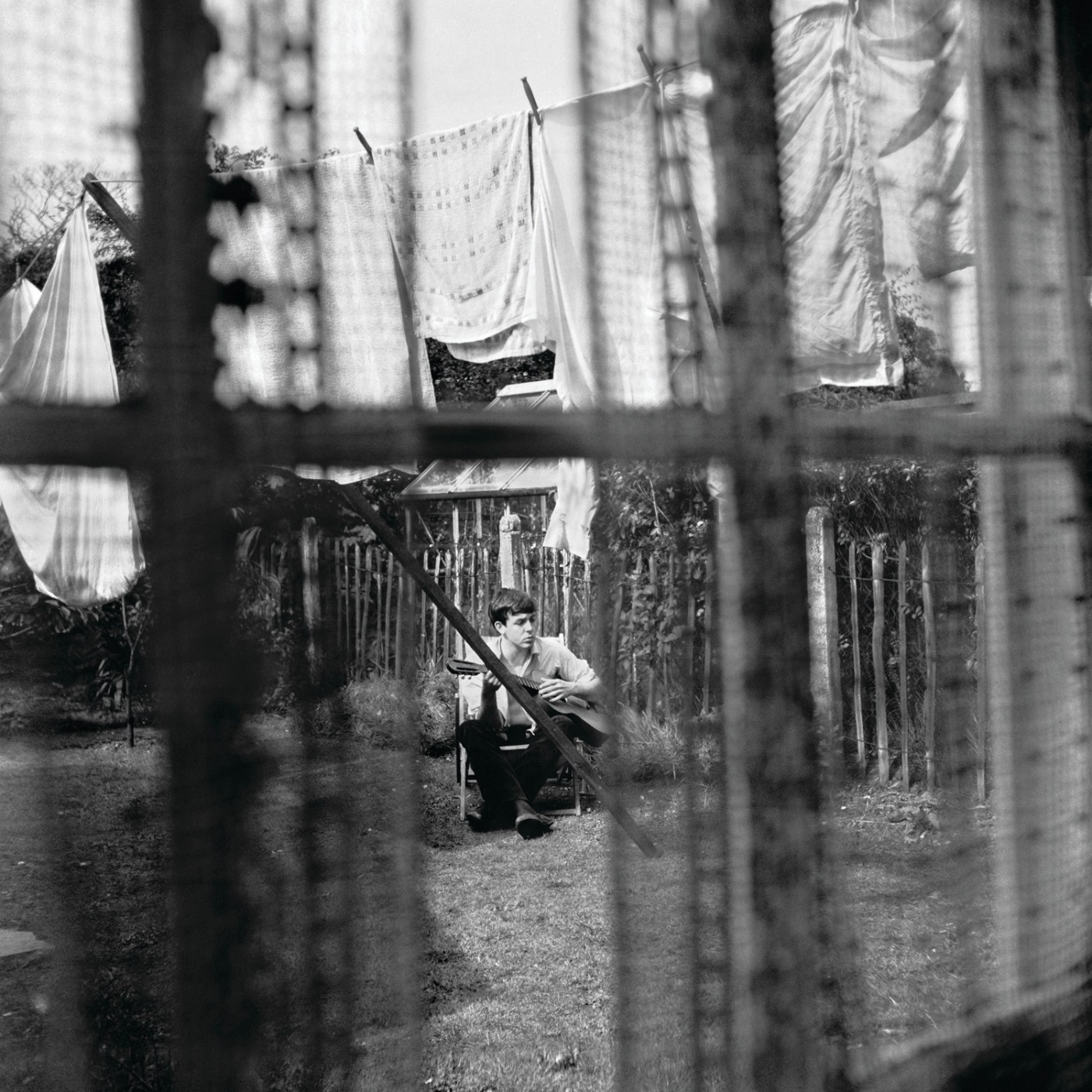
It was a rough time to be Paul McCartney in 2005. His marriage to Heather Mills was actively disintegrating and George Harrison had died just a couple weeks after Driving Rain was released, putting the sunniest ex-Beatle in something of a dark mood… or so it seems from the songs that came out of this album.
In March of 2024, Rob Sheffield of Rolling Stone fame made an observation about this album that I’d always kind of suspected but never felt able to put into words. He writes, “It’s Paul’s thorniest, bitchiest, least eager-to-please, and most cerebrally caustic solo album, with Radiohead/Pavement producer Nigel Godrich. Chaos and Creation was for the 63-year-old Paul what Time Out Of Mind was for 56-year-old Bob Dylan—a late-game masterpiece kicking off a new golden era.”
I would say the aforementioned golden era started in 1997 with Flaming Pie, but the rest is pretty accurate. It’s a very autumnal album, and easily one of my favorites. Twenty years on from its original release, I’d even be comfortable with describing it as Paul’s version of Plastic Ono Band, down to similar cover art. He doesn’t scream himself hoarse like John did (he’s never been that kind of songwriter) but there’s a definite edge to him on this record that didn’t previously present itself.
What might be the reason? Philip Norman theorizes in Paul McCartney: A Life that his marriage to Heather was, if not exactly hitting the skids yet, was definitely rocky – he notes that arguments between the two of them happened often and tended to be noisy affairs. Backstage when Paul headlined the Live 8 concert with U2 in 2005, “Stella was seen to turn pointedly away from Heather as if unwilling to speak to her father in her presence or run the risk of being photographed with her.”
Given that, Sheffield’s characterization of the album makes sense to me. Norman notes that “Much of its impact came from a very noticeable lack of usual McCartney lightness and optimism. The tone was bleak and self-deprecating; the lyrics teemed with images of insecurity and confusion–getting hooked, hanging his head, running and hiding, biting his tongue, not knowing what to say.”
Not exactly the kind of album you make when you’re in a secure place, relationship-wise. It’s his darkest, moodiest album ever, which might explain why I like it so much – it’s Paul at his most relatable. Even the sunniest of days sometimes end with storm clouds, after all.
Let’s dig into it:
‘Fine Line’: For all that Norman professes this album lacks Paul’s usual optimism, I’d say it’s more of an overcast record than the storm clouds that were on Plastic Ono Band. This song is a chugging piano song that recalls “Lady Madonna” of all things, it invokes the theme of dualities that’s been an obsession of his since “Hello, Goodbye,” and it’s all about making amends after a period of discord. That sounds pretty optimistic to me.
‘How Kind Of You’: On the other side of the emotional scale entirely, we have a song where Paul plays with language a bit. He says, “I just liked this slight sort of elegant language; so I was just imagining it from the point of view of somebody like that, writing a thank you letter.” If this is a thank you letter, it’s always struck me as a kind of ironic one, given the minor chords used throughout the song.
‘Jenny Wren’: This is a fingerpicking acoustic song in the tradition of “Blackbird,” down to the bird theme. The solo here is played on an instrument called a duduk, and it was one of the first pop records to use one. It sounds beautiful, and fits the mood of this track very well – sort of a hybrid of “Blackbird” and “Eleanor Rigby,” but with a brighter ending.
‘At The Mercy’: Written by Paul when he had a day off, this song is one of my favorites on the whole album – it’s the darker, minor chords that really make it click for me. According to Paul, that was on purpose: “It was basically that it was finding a couple of chords that were kind of dark enough to get this sort of message that life can throw you curve balls and what do we do about it?” It became producer Nigel Goodrich’s favorite track, and I really get why.
‘Friends To Go’: Paul has described this song as not just being influenced by the work of his late friend George Harrison, but in fact he felt George’s spirit essentially writing it for him. “I just got this feeling, this is George. So it was like I was writing – I was like George – writing one of his songs.”
Knowing what I do about the spirit world and the ways in which they can interact with those of us who are still living, I’d say that Paul becoming temporarily taken over by George’s ghost is entirely within the realm of plausibility. If we take this as a George song that just happened to be sung by Paul, then I would say it feels very like “Don’t Bother Me,” which also shares a theme of loneliness and isolation.
‘English Tea’: In which Paul returns to his occasional theme of posh British people being… well, posh. I like this song, it’s just about the most quintessential English thing Paul has ever written in his life – it’s like a musical version of that picture where he’s seated in front a Union Jack drinking from a tea cup. You know, in case you forgot which country he’s from.
‘Too Much Rain’: According to an interview CD, “The actual inspiration for Too Much Rain is Charlie Chaplin’s song Smile. Which he wrote: not many people know he wrote it, you normally think of him as a comedian, but I was always amazed to hear he’d written that you know, beautiful song.”
For Paul, it’s another of his optimistic songs, but it comes from a different place. We all know he was going through some dark times around the time this album was made, and this song feels like a reminder to himself as much as the rest of us.
‘A Certain Softness’: Paul on this song: “A Certain Softness is just a straightforward love song, to me. I like things like Brazilian music, I like that sort of rhythmic, Latin y kind of thing.” This track is one of two from this album in the great big Sophie/Lena playlist that we have. And I appreciate that even with the tumult he was going through, Paul could still churn out great ballads.
‘Riding To Vanity Fair’: This song, Paul has sworn up and down, is not about Heather. But I don’t really believe that. After reading about all the awful ways she treated him and all the ways he tried to support her anyway, it’s difficult to read this song in any way that isn’t about the collapse of their relationship, albeit obliquely enough that it can work as a song about anyone who stabs you in the back.
‘Follow Me’: A song that wrote itself, according to Paul. It’s meant to be an uplifting number in the style of “Let It Be,” this time about someone who lifts up our spirits. It’s very open-ended, so it could be about anyone – friends, romantic partners, or if you’re me, gods.
‘Promise To You Girl’: The closest thing this album has to a rock song, with the long middle section being inspired by Motown – something Paul would know a lot about, given how often he and the other Beatles covered Motown songs back in the day. It’s a fantastic piano-driven number, and thanks to the fallen leaves imagery, quite appropriate for autumn. After all, Samhain is as much about fresh starts as remembrance.
‘This Never Happened Before’: This is a song that has particular significance for me and my wife, as it was the song she and I would’ve danced to at our wedding reception. Ultimately the venue where it happened was a pizza joint in Salem, so we didn’t get to do any dancing, but I still think of this as our song anyway. It expresses so perfectly the way we both knew, almost instinctively, that we were meant to be together.
I love you, Sophie. ❤ To the moon and back.
‘Anyway’/‘I’ve Only Got Two Hands’: Another twofer, just like on Off the Ground. “Anyway” is Paul’s take on a Randy Newman song, and it works very well as a finale. “I’ve Only Got Two Hands” is an instrumental piece that was originally meant to start the album off, but got moved to the end instead. It’s actually three parts, all of different styles – listen for “How Kind of You”’s piano hook making an unexpected return.
Chaos and Creation in the Backyard sounds nothing like any other album in Paul’s catalog, and I say this as someone who has now listened, at least once, to every solo album he’s released. (By which I mean his rock albums.) Like, there’s usually a particular sonic vibe to his music that shines through on everything he does. The musicians change and decades pass, but there’s still a vibe that brings everything together.
Chaos is different. It’s a very intimate album, like McCartney I and II, but polished in a way that those two albums weren’t, since Nigel Goodrich was producing and he, like George Martin on Tug of War, wanted to break Paul out of a musical rut. What he got was one of Paul’s best-sung albums – it even got three Grammy nominations.
Instrumentation-wise, I don’t think Paul has ever released an album with quite so much piano on it before. It’s on almost every track except two: “Jenny Wren” and “Follow Me.” This lends the album an interesting sonic character – more classical than straight rock and roll. There are no actual rock songs here, it’s just Paul almost entirely on his own, doing as close as he gets to a Lennon-style confessional.
Next time: The album that made me a Paul girl, by dint of the fact that it was also the first solo album of his I ever heard. It’s Memory Almost Full.


Leave a Reply