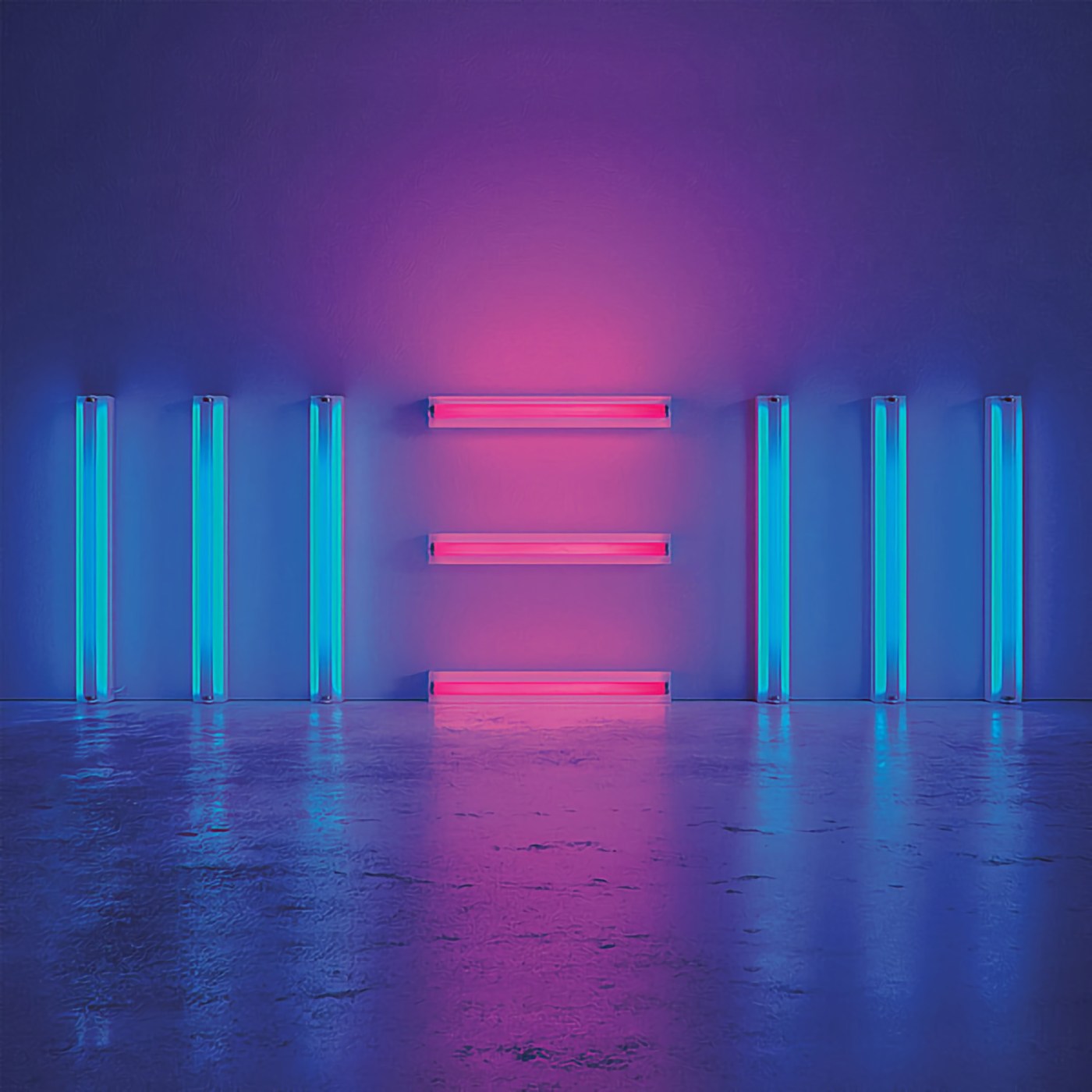
New, released in 2013, is another one of Paul’s albums that holds great personal significance for me. It came out two days before my 19th birthday – I was a freshman in college then, and working a job as Access Services Clerk at my school’s library. I must’ve gotten an iTunes card for my birthday that year since I bought the album on the 16th, specifically the deluxe version with the blue and purple cover. (The regular version has a pink and orange cover, that’s the one I have on CD.)
However I bought it though, I definitely remember being very impressed with the album when I listened to it within a day or two of the release. Like Press To Play, it’s Paul’s latest effort at trying to sound like a man of the times, which for him means working with producers who literally grew up with his music.
In fact, he works with four of them on this album – Paul Epworth, best known for his work with Adele, (whose theme for the Bond movie Skyfall had come out a year previously) Mark Ronson, who’d recently worked with Duran Duran on their neo-retro album All You Need is Now, and the sons of two Beatles producers: Ethan Johns is the son of Glyn, who worked on the Get Back album, and Giles Martin, who needs no introduction.
While Paul’s albums have always been sonically varied, this effect is only enhanced by his decision to work with four different producers. Even accounting for Giles Martin’s executive producer credit, each of Paul’s partners in crime ask different things of him, leading to an album that has, well, even more new stuff in it than usual. No complaints there!
With all that said, let’s get started:
‘Save Us’: This is one of two songs on the album produced by Paul Epworth, who noted in an interview at the time that his preferred way of working is heavy on improv. For this song, he gave Paul a basic idea of what he wanted (a hard driving rocker) and Paul, being the guy who invented “Get Back” while screwing around at Twickenham in 1969, quickly came up with a basic riff that forms the song’s introduction. The rest, including the words, went from there. And it is, of course, magnificent.
‘Alligator’: This song was produced by Mark Ronson, which makes good sense as the lead guitar lines by Brian Ray feel like something that could’ve been pulled off the White Album – Ronson, at least as far as his work with big-name legacy artists goes, is all about that neo-retro sonic vibe. It sounds warm in a way that feels very vintage too, and that’s because they recorded this on Paul’s 4-track Studer from Abbey Road, the same one he used for McCartney back in 1970.
‘On My Way To Work’: Fittingly for the first of several Giles Martin-produced songs on this album, “On My Way To Work” finds Paul going on a literal nostalgia trip to his life in Liverpool, riding on the top of a big green double-decker bus, like the ones in the “Penny Lane” video.
Before he became the legendary musician we know and love, he worked as the second man for Speedy Prompt Delivery. He said in 2018: “The specific work I was thinking of was my first job, as a second man on a lorry. The second man helps the driver unload when you get to the destination; the driver is the first man.”
‘Queenie Eye’: Staying with the nostalgia theme, this song is inspired by a game Paul and his friends would play as kids. He said at the time, “Now this song, Queenie Eye, is based on a game we used to play when I was kids. […] Someone stood with their back to the group and you had to approach gingerly, and if they looked around and saw you moving, you were out.”
Which leads into Paul reusing perhaps the deepest of all deep cuts in his large collection of song lyrics: “O-U-T spells out,” the refrain from “Christmastime Is Here Again,” the title song from the Beatles’ 1967 Christmas record. He played this one live at Busch in 2016, one of three songs from this album I heard that night.
‘Early Days’: In which Paul grabs his acoustic guitar and sings about those early days with John. He said in 2013, “It’s just this idea of people robbing your history from you, But it in my case, it started off with the idea of ‘They can’t take it with me because I lived through those early days. I was there.’”
It took me a while to warm to this one, since Paul’s upper register really isn’t what it used to be – a fact that the man himself was keenly aware of, but Ethan Johns convinced him not to change the wobbly bits because “It’s vulnerable, and it sounds really true to life.” It’s the sound of one of the most famous 70 year olds on Earth remembering his past, and one friend in particular he misses most.
‘New’: Mark Ronson again with the neo-retro song on the whole album. The title track is, per Rolling Stone, “A Beatlesque pop confection” written for Nancy Shevell. For me it sounds like this could’ve been recorded in the ‘60s during the Revolver sessions, it grooves along in exactly the same way as something like “Got To Get You Into My Life: does.
‘Appreciate’: In case you thought that there was a bit too much nostalgia on an album called New, here comes Paul with a song that sounds like nothing he’s ever done before or since. The only word I can find to describe it is “industrial,” particularly that spectacular drum part and that wonderful guitar solo at the end.
‘Everybody Out There’: This is transparently Paul writing to the many, many crowds who come to see him at his live shows. It’s always been one of my favorite tracks from this album, particularly the third verse – ironic at the time I first heard it, since I was atheist then, but it makes more sense to me now that I’m Wiccan. (After all, “God” can refer to Cernunnos! It doesn’t have to be the One if you don’t want it to be.) Also note the very end of the song, where he breaks out his Little Richard voice for the first time in a long while.
‘Hosanna’: Yup, the fourth consecutive song on this album I’d describe as my favorite! Like “Early Days” this is another Ethan Johns-produced track, where Paul’s acoustic guitar predominates. This time though, there’s a little more production to it, featuring not only that glorious Höfner bass, but also tape loops and reversed instrumentation – a little bit of Revolver-era psychedelia but with a darker tinge to it, all to sweeten what is otherwise a truly gorgeous ballad.
‘I Can Bet’: I can’t find too much information from my usual sources about how this song was made, but I can tell you that this song is a grab-bag of mid-late period Beatles tricks, including putting a guitar through a Leslie speaker. But it’s not all a throwback! As on “Appreciate,” the drums are very heavily processed and industrial sounding, which add a bit of modernist grit to proceedings.
‘Looking At Her’: As with the last song, there’s very little info available about the making of this track. All the PM Project has is this quote from the NEW making-of book: “There’s ‘Looking At Her’, which starts out as a classic McCartney melody, then responds to the line “Me, I’m just losing my mind” with huge, explosive blasts of Moog noise.”
‘Road’: It’s Paul’s second-ever song relating to a road, but this one is neither long nor particularly winding. Instead, it’s an atmospheric number. He noted at the time, “I guess with that one we were aiming for something that was a little more esoteric and musically complex than the others I’d worked on.” To me it sounds pretty much exactly what you’d get from Paul and the producer behind “Skyfall” – dark and spooky, just perfect for late October and the last few days before Samhain. (Which is when I am writing this.)
‘Turned Out’: This song, to me, feels like a Flaming Pie-era track – maybe it’s Paul’s vocal performance, or the way the song rolls along like “The World Tonight” or something. Then he slows everything down and brings in the piano, and suddenly we briefly return to Chaos and Creation in the Backyard. Lotsa stuff going on here!
‘Get Me Out Of Here’/‘Scared’: Another twofer, as Paul likes to do. “Get Me Out of Here” is predominantly an acoustic song dominated by an African instrument, the Ngoni. (And also the sound of a water bottle played by Rusty Anderson.) Paul’s vocal sounds like it’s been recorded through an old radio, like on “Honey Pie” or “You Gave Me the Answer.”
“Scared” has nothing to do with the Walls and Bridges song of the same name by John Lennon – it is instead a piano-driven track in which Paul instead channels John by writing his own version of a confessional, where his fear is revealed in the very first line: “I’m scared to say I love you.”
The production here is intentionally sparse, just Paul, his piano, bass guitar, and a vibraphone, with a touch of reversed reverb on his vocal part. It’s a surprisingly mournful end to the album, but a very effective one.
NEW is a fascinating album for me, partly because it doesn’t sound anything like Paul has ever done before (or since) but also because there are certain dichotomies at play. We’ve talked before about how dichotomies are a recurring fascination of his – see “Hello, Goodbye,” or the loose concepts behind Tug of War and Pipes of Peace.
For me, the dichotomies on this album are most clear when you consider what songs are on which side of the vinyl disc. Aside from “Save Us,” almost all of the first side centers around the simple pleasures of nostalgia, whether by directly discussing the past or evoking it in order to come up with something distinctly modern.
The second side (starting from “Appreciate”) is darker and stranger than the first – I’d struggle to classify any of that side’s songs in any recognizable form of rock and roll, except maybe “Turned Out” and “I Can Bet.” The rest of the tracks are more subdued and heavy, with a grit to them that I really like – it almost sounds like the album is anticipating the darker turn that the 2010s would enter not long after the release.
Next time: Paul revives the concept album and goes on a new kind of magical mystery tour – it’s Egypt Station.


Leave a Reply