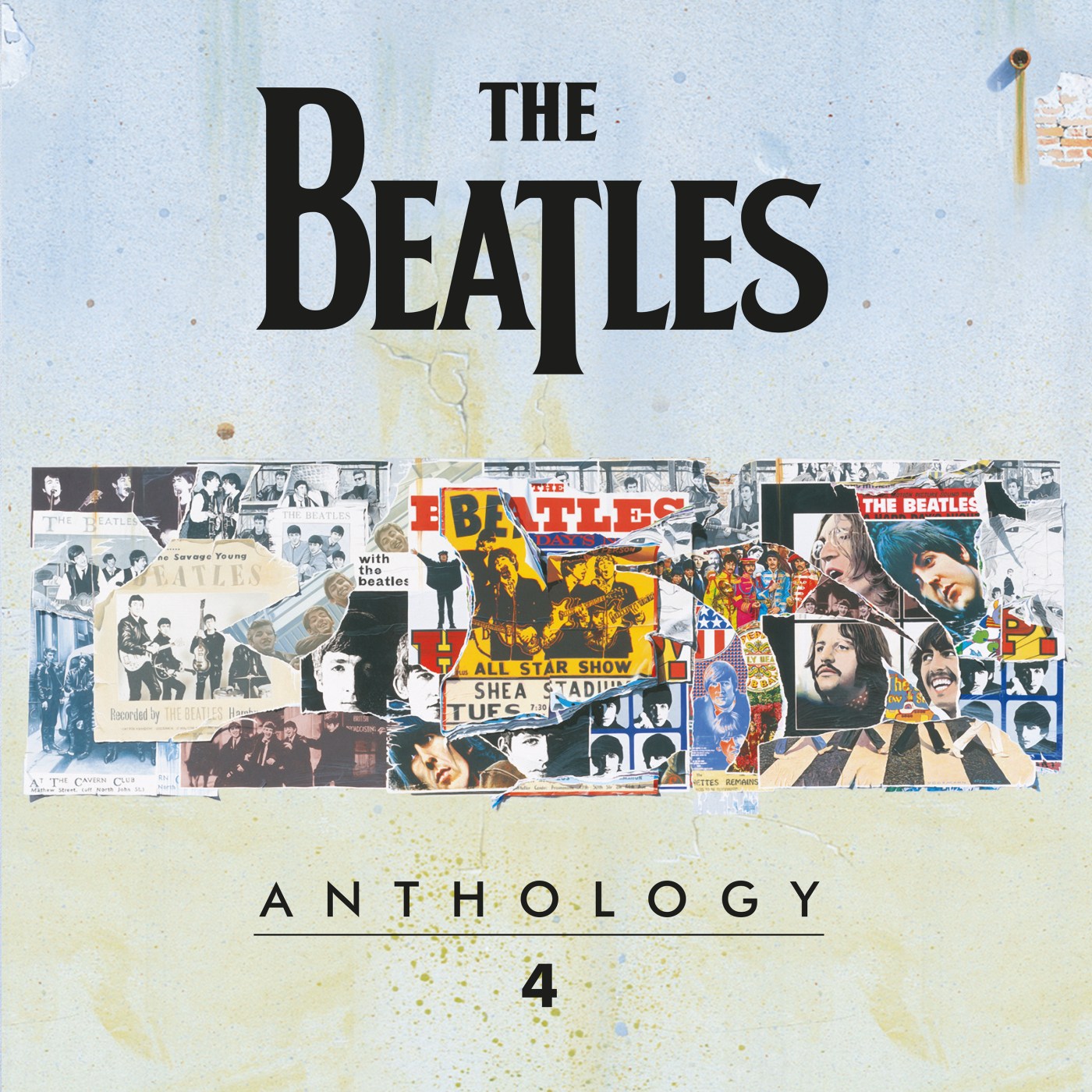
Like so many of us, I grew up knowing that there were only three Anthology albums, each covering the three phases of the band’s career. The first one stretched from the earliest Quarrymen demo recordings to 1964, the second was split between live and studio recordings from 1965 and 1966 with some of their last live tour recordings on disc 1, and studio-only performances from 1967 and 1968 on disc 2. The third one, naturally, covered everything from the White Album (1968) through to the band’s dissolution in 1970.
Given this, I wondered: what could a fourth Anthology album possibly contain? The answer turned out to be more demo tracks covering their entire career, 13 of which have never been previously released. Of the ones that have, 17 have been pulled from various recent Giles Martin remix albums, and one comes from the original CD maxi single of “Free As A Bird,” copies of which are very hard to find these days. (Ironically, Apple Corps doesn’t seem to be too keen on re-releasing that.)
The heavy recycling of material from the Super Deluxe collections proved to be a big point of contention among the denizens of the r/Beatles subreddit – the vast majority of posters reacted negatively to the new Anthology releases, whether because “Carnival of Light” still wasn’t on the tracklist or because Too Many of Anthology 4 tracks were pulled from previous releases. As one poster put it, “The super fans already have these songs and the Normal People won’t care.”
I swear to Danu, modern Beatles fans have to be the most entitled bunch of assholes on Earth. I really absolutely cannot stand this mentality, because it’s another example of the same “fan entitlement” that leads to bitching about the non-existence of a Rubber Soul remix. To hear “fans” tell it, Giles Martin somehow OWED us a 60th anniversary remix of that album in 2025 even though A) just over half of that album’s songs have been remixed already and B) the album sets haven’t been tied to anniversaries since Let It Be got delayed a year due to COVID-19 hitting in 2020.
Bluntly, Giles Martin doesn’t owe us anything, and frankly neither does Apple Corps as an entity. We Beatles fans are profoundly lucky to have the son of their original producer entrusted with these recordings, and to have their releases approved by both remaining Beatles, Sean Lennon, and Olivia Harrison. Nothing, as Giles has made abundantly clear in the last decade or so, gets out without their approval – they don’t want a return to the random-ass compilations that Capitol put out in the mid-late Seventies.
And the Beatles, both in the Sixties and now, have always been about good value for money. Consider the performance of “Good Night” that appears here – it’s an acoustic version with John doing the fingerpicking play style he picked up from Donovan during the India trip, with all four Beatles singing together in four-part harmony. Rob Sheffield raved about it extensively in Rolling Stone back in 2018, and the box set it was originally released on currently (as of February 2025) retails for $207.80 on Amazon. (It is, however, also available on streaming services.)
Now, there are plenty of freaks out there who went and splashed out a ridiculous amount of money for that collection – I am not one of them because I wanted just the new mix of the album and the restored Esher demo tapes, I didn’t need the rest of it. (I may be a committed Beatles freak, but I am also capable of making intelligent financial decisions.) Anthology 4 also has the acoustic “Good Night” on it, and that album is available either as part of the Anthology Collection box set, which I bought last Yule for $117 including sales tax, or on its own for $26.99 – $180 cheaper!
All of this is to say is that despite what the poster I quoted above thinks, the average person isn’t going to be aware that the acoustic “Good Night” came out on a massively expensive box set eight freaking years ago. This is New To Them, and that is the market Apple Corps is pandering to here.
This is why the special editions of the albums always come out in different packages – you can have just the remix or the remix plus a bonus disc if, like me, you’re budget conscious, or if you’re willing to spend a bit more you can go for the great big box set that has everything. That way, both the Normal People and the Super Freaks aren’t left out in the cold.
But you know, Reddit commenters have infinitely more business sense than actual music industry professionals, we should listen to them instead! (That was sarcasm, incidentally.)
Anyway, enough pointless fandom politics, let’s get to The Good Stuff:
Disc 1
‘I Saw Her Standing There’: Take two of the opening track on Please Please Me, though it was take 1 that ended up being released on the album. It does not contain the famous count-in (because that was spliced in from take 9) but the performance itself is pretty good, aside from a few screwed up pronouns!
‘Money (That’s What I Want)’: I know what you’re thinking: Isn’t this basically the regular album version from the end of With The Beatles? Well, you’re right, it is! The difference here is the lack of George Martin’s piano, as that was an overdub recorded later on. This is just John, Paul, George, and Ringo, playing the song together.
‘This Boy’: This one will sound familiar to some of you – takes 12 and 13 of “This Boy,” the b-side of “I Want to Hold Your Hand.” It first came out in 1995 on the Free As A Bird maxi-single. It’s a solid attempt at this song, though John and Paul seem a little quiet to me. I am highly amused by take 12 breaking down because George manages to screw up the second verse. Take 13 is stronger, right up until they screw up after John’s solo verse.
‘Tell Me Why’: While all three of the previous songs have been released before, this track is one of 13 on the album to be genuinely new. It includes John and George figuring out how they’re going to harmonize with Paul, before launching into at 0:44 seconds… at which point the take almost immediately breaks down. Take 4 at 1:00 is far more successful.
‘If I Fell’: Take 11 of this gorgeous acoustic number from A Hard Day’s Night, notable mainly for John and Paul figuring out their harmonies. I fucking love listening to these two, even when they screw up as they do here, heading into the last chorus.
‘Matchbox’: Despite suffering from a throat infection that threw the band’s Australia tour into chaos, Ringo sounds pretty good on this track, a cover of a Carl Perkins number – performed, apparently in the presence of the man himself! This is take 1, take 5 would be released on the Long Tall Sally EP, the Capitol album Something New, and Past Masters in the late ‘80s.
‘Every Little Thing’: Takes 6 and 7 of this under-appreciated ballad from the second half of Beatles For Sale, featuring a guest appearance by Norman Smith – the “balance engineer,” as he was called at EMI in those days. He was the engineer on literally every Beatles recording until Rubber Soul, when he got promoted to producer.
‘I Need You’: A very different version of George’s ballad from Help!, without the volume pedal and other overdubs. It’s also performed at a faster tempo than the released version, lending the song a completely different vibe. Listen also for some laughter over in the left channel – probably John, I think.
‘I’ve Just Seen A Face’: The third take of this song, recorded on June 14th, 1965 – two days before Paul’s 23rd birthday. It is one of three songs he will go on to do that day, including “I’m Down” and “Yesterday.” Listen for the sound of his Epiphone Texan guitar, which he plays throughout the latter song as well as this one.
‘In My Life’: Take 1 of John’s gorgeous ballad from the back half of Rubber Soul, which sounds fairly similar to the album version minus some overdubs and what sounds like Paul singing in harmony with John, rather than John double-tracking himself on the released version. There is also no faux harpsichord solo, as that was added later.
‘Nowhere Man’: Take 2 of this classic Rubber Soul track is entirely instrumental aside from the a cappella intro, allowing us to better appreciate George’s lead guitar work, inspired by the work of the Byrds. You may also enjoy Paul’s happy-sounding bassline on the left channel.
‘Got To Get You Into My Life’: If you got the Revolver special edition set in 2022, then chances are you’ve already heard this track – Paul’s ode to pot, given more of a straight rock and roll treatment with distorted electric guitar in place of the brass section from the released version. It also includes the harmonies from John and George, last heard on Anthology 2’s version of the track.
‘Love You To’: The opening announcement that this is a reduction mix of Take 7 sends us into a version of George’s Indian-flavored number from Revolver, featuring a harmony from Paul that later got mixed out of the released version. It is otherwise largely identical to the final master, aside from the lack of opening sitar work.
‘Strawberry Fields Forever’: While most of us are familiar with the seventh take of “Strawberry Fields,” as different versions of it have been released on Anthology 2 and the 2017 Pepper box, that same box set also includes the original take 26, featuring the orchestra and a reversed drum part from Ringo. As we know, Take 26 comprises the entire back half of the released version, slowed down to match take 7. This is Take 26 at its original speed.
‘She’s Leaving Home’: A wholly instrumental version of this song, also taken from the Sgt. Pepper remix in 2017. The score is the only one not to have been written by George Martin, but he did conduct it! Listen for a cello phrase during the choruses that later gets mixed out of the final version from the album.
‘Baby, You’re A Rich Man’: Takes 11 and 12 of this song from Magical Mystery Tour, recorded at Olympic Sound Studios in May 1967 – take 12 would form the basis for the released version, which begins at 1:59. Listen for jokes made by John and Paul at the expense of the Rolling Stones and at the loudness of the new studio compared to Abbey Road. Listen for John and Paul screwing around with the song’s title in a segment that was faded out when it was released.
‘All You Need Is Love’: One of many rehearsals for the song John wrote for the ‘Our World’ telecast, this was recorded the day before the telecast. The extraordinarily posh-sounding narration that takes up most of the first minute and 20 seconds is by Steve Race, in full received pronunciation mode. After that we return to the boys in the studio, with John making jokes prior to the start of the song. The orchestra performance is live, as is John’s vocal – everything else is pre-recorded.
‘The Fool On The Hill’: An instrumental version of Paul’s ballad from Magical Mystery Tour, I think this is the final take. It includes many instrumental pieces that weren’t in the album version, or at least buried somewhat by Paul’s singing. I’ve always loved this song, and hearing an instrumental is a wonderful treat.
‘I Am The Walrus’: Think of this song as a compliment to the version heard on Anthology 2 back in 1996 – this is the other half, featuring the orchestra playing along to the very take from Anthology 2 that the final master was made with.
Disc 2:
‘Hey Bulldog’: Take four of this late-period rocker, used first in the Yellow Submarine movie. It’s entirely instrumental as well, and seems to have been recorded at a slightly lower key than the version from the film and its soundtrack. They recorded it over ten hours on February 11th, 1968 – five years on from Please Please Me.
‘Good Night’: Featuring John playing fingerpicked acoustic guitar and a double-tracked Ringo, this gorgeous version of the closing song from the White Album also has John, Paul, and George singing in harmony with Ringo during the choruses. Honestly, this should’ve gone out instead of the orchestral version!
‘While My Guitar Gently Weeps’: Take 27 of no less than 45 takes of this song, now arranged in the familiar hard rock style we know from the White Album. It includes George trying to sing like Smokey Robinson, admitting near the end of the song that he can’t quite do it – ironic, given that Harrison and Robinson would go on to form part of the Traveling Wilburys in the late 1980s.
‘(You’re So Square) Baby I Don’t Care’: A quick jam of this song, a hit for Elvis Presley. It was recorded during the sessions for “Helter Skelter,” hence the tape echo on Paul’s voice.
‘Helter Skelter’: A particularly raucous version of Paul’s classic screamer, a song that will always be the beginning of doom metal, and no one will ever be able convince me otherwise. I’m not sure Paul has remembered all the words, but it’s a little hard to tell due to the aforementioned tape echo.
‘I Will’: Take 29 of this little ditty, which is really more of a joke than a proper attempt at recording the song. Why? Because of the way the opening verse ends, with Paul inverting the title and singing “I won’t” instead, leading to John’s reply “Yes you will!” Goofs, the pair of them.
‘Can You Take Me Back?’: If you’ve ever wanted to hear the entirety of the song fragment that closes “Cry Baby Cry,” the White Album box has it for you, and now so does Anthology 4. It’s not much of a song, but it does include John and Paul making references to the collage “Voices of Old People” by Simon and Garfunkel, from their album Bookends. The part of the song used on the White Album hits at 1:50.
‘Julia’: Two rehearsals of John’s heartbreaking tribute to his mother, discovered by accident during preparations for the 50th anniversary White Album set. The first one has John strumming his guitar and singing the song in the same key as, of all things, “It’s Only Love” from Help!. The second rehearsal has John returning to the fingerpicking style he uses from now until “Look at Me” on Plastic Ono Band. It’s a lovely performance, and I’m glad we get to hear it at last.
‘Get Back’: Take 8 of their single from April 1969, which otherwise sounds a lot like the final take aside from the lack of Billy Preston. Also listen for Paul screwing around and talking in an exaggerated Lancashire accent.
‘Octopus’s Garden’: A rehearsal of Ringo’s song from Abbey Road, with George helping him by strumming an acoustic guitar to help him find the chords he needs. With all the oxygen John and Paul take up in the story of the Beatles, it’s nice to hear Ringo and George write something together.
‘Don’t Let Me Down’: The first rooftop performance of John’s passionate love song to Yoko, some of you out there will recognize the first half of this one, as it formed the basis for the Let It Be Naked version of the song – in this recording, John forgets the words about halfway through, so in 2003 they fixed it by quickly switching to the second take from later in the show. It’s also been released on the Let It Be set and the rooftop concert digital album.
‘You Never Give Me Your Money’: Take 36 of the song that will go on to eventually form the basis of the medley that closes Abbey Road, recorded at two thirty in the morning according to Paul’s helpful announcement at the start. It’s a fun performance, particularly when you realize just how much of the song is already here, from Paul’s vocal to George’s lead guitar.
‘Here Comes The Sun’: Take 9 of the happiest song George ever wrote during his Beatle days, and I say that with love. There’s no John here, just Paul, George, and Ringo having a grand old time – pay close attention to Ringo’s drum work in the places where the choir goes on the album version.
‘Something’: Here is a version of “Something” most people probably haven’t heard – the isolated score by George Martin, recorded in August 1969. It is absolutely gorgeous, and a testament to just how skilled he was at scoring music. This version of the song was released in August 2019 as a single to promote the 50th anniversary remix.
‘Free As A Bird’ (2025 mix): Believe it or not, when I first heard this new mix of the song back in August 2025, I thought it had been Giles Martin’s work, since he’s remixed what must be around three-quarters of the Beatles catalog by now. But believe it or not, it isn’t him at all! It’s Jeff Lynne working with the de-mixed stems!
I really like this new mix of the song, it doesn’t change too much from the original – intead, it’s enhanced. There’s more Ringo here, and John’s vocal has been cleaned up to be on par with “Now and Then,” since they can do that now. Personally I prefer the somewhat ethereal quality of the original mix, but I’m glad to have a version of the song with clearer vocals, particularly when Paul and George harmonize with John. Now it sounds like the three of them!
I would also like to highlight the acoustic guitar, which comes through really prominently here, and George’s electric guitar just before his solo verse, which includes the line “the love that we once knew,” rather than “the life that we once knew” from the original 1995 mix of the song.
And as for that bit of John’s ghost that appears at the very end of the song? It’s been played in reverse here so we can hear him say “It’s turned out nice again, didn’t it,” rather than his own name.
‘Real Love’ (2025 mix): The second of three Beatles reunion songs, and the last one to be completed during the original ‘90s recording sessions. (“Now and Then” started here, but the technology to finish it wasn’t there yet.) While PG&R were not huge fans of this song, I’ve always really liked it – I feel like it’s an excellent summation of everything the band was about, even though it was written for Yoko. John almost recorded a version in 1980 for Double Fantasy, but changed his mind.
The new mix, also done by Jeff Lynne, runs twenty seconds shorter than the original mix from 1996, and features slightly less George – his guitar phrases during the choruses have been removed, for some reason or other.
What surprised me though is John’s lead vocal, as it sounds so clear now, I thought they flew in a version from another take and put it over the top of the original! To find out if I was right or not, I isolated both the vocals from the original and the new mix in Logic Pro, then compared them – it’s the same vocal, it just sounds much much better than it could’ve done even when Giles Martin’s mix of the song came out in 2015.
While Lynne’s new mix has been greeted with a negative reception by both critics and fans, I don’t really agree – to me, the new mix is perfectly fine. Slightly less George is better than no George, and I’m very glad to have a version of my favorite of the reunion songs with clear John vocals at last.
SO THERE, HATERS!
‘Now And Then’: And now, the first, and last, Beatles recording of the 21st century. While it’s appeared both as a single and on the expanded Blue album from 2023, if you ask me the Anthology series is a far more natural home for it. This is where it belongs, right next to the two ‘90s reunion tracks. It just feels right, as if the decision to leave it off Anthology 3 has finally been corrected. (Sorta.)
In the hands of the ever-fab four, this plaintive piano ballad by John becomes him and Paul harmonizing one last time, just like on “Baby’s In Black,” calling out to each other across the chasm of life and death. In a way, especially in light of Paul’s tweaks to the song’s structure, it’s almost like John’s long delayed answer to “Winding Road.”
A miraculous recording made with love and determination, it’s a beautiful, fitting finale to a sixty year old story, and exactly the goodbye that these four men from Liverpool deserve. And placed here, as the very final song we are ever going to hear from these four men, it hits just as hard now as it did in 2023.
As an album, Anthology 4 is strange. It should be considered a cash grab, and I’m sure there are people out there who believe it to be. But I don’t care, because I’m very easy to please where the boys are concerned.
I would’ve been perfectly happy with a remastered trilogy, but I’m happy to have a fourth album of alternate takes, since I find them all interesting – even the stuff that we’re supposed to be bored with because it came out already. I like the new mixes of “Free As A Bird” and “Real Love,” I like the fact that “Now and Then” is right there at the end, bringing the Anthology out of the ‘90s and into the ‘20s.
In the end, we are so unfathomably lucky to have lived with these four supremely talented individuals. That “Now and Then,” a song assembled in three different decades, could take the #1 spot on the British charts and win a Grammy in early 2025 feels impossible, but that’s the whole damn Beatle story in a nutshell. Everything fell into place so perfectly, it was as if the gods themselves had ordained it.
They have given us all so much joy and love, and I have no doubt that long after Paul and Ringo are gone, the music they made will live on, long into the future. They have reached musical immortality.
Take them for all in all, we shall not look upon their like again.


Leave a Reply