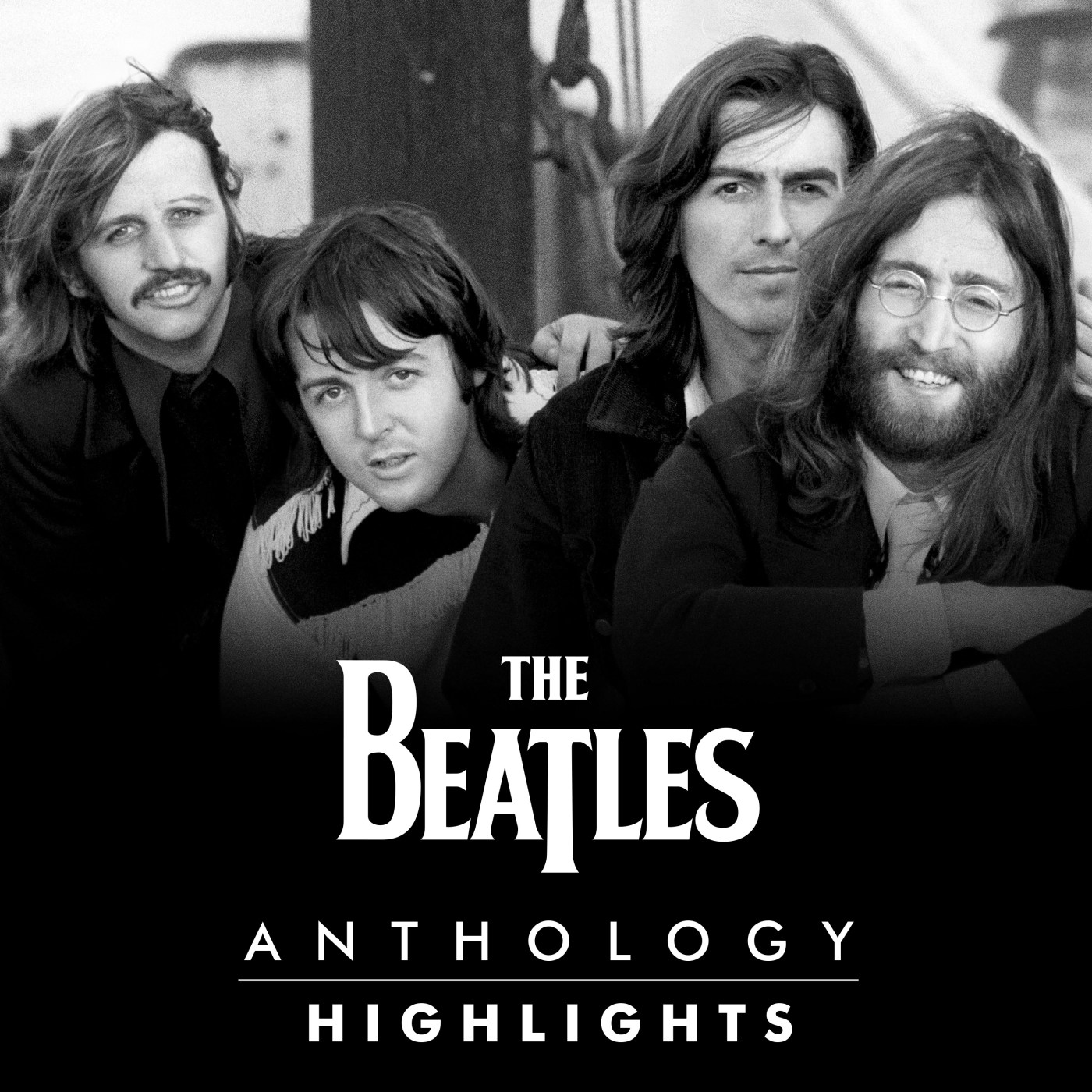
The 2025 version of Anthology Highlights, as I noted last week, has 9 more songs on it than the 2011 version had. What I did not tell you is that between the two versions, only seven songs appear on both. The rest of Highlights 2025 is made up of 25 songs that are otherwise new releases, relative to the 2011 version anyway.
There are live songs now, more representation for the band’s mid-Sixties psychedelic phase, and even radically different versions of songs that did appear on the previous incarnation of Highlights. “While My Guitar Gently Weeps” appears on both, but where 2011 Highlights used the acoustic take from Anthology 3, the 2025 version uses take 27 of the performance released on the White Album.
One oddity: while both versions are bookended by the first two reunion songs, only “Free As A Bird” appears in its new 2025 incarnation, mixed by Jeff Lynne. “Real Love” appears in its remastered incarnation, mixed by Giles Martin. Why that is, the gods only know.
In any event, let’s see what else we have:
‘Free As A Bird’ (2025 mix): Believe it or not, when I first heard this new mix of the song back in August 2025, I thought it had been Giles Martin’s work, since he’s remixed what must be around three-quarters of the Beatles catalog by now. But believe it or not, it isn’t him at all! It’s Jeff Lynne working with the de-mixed stems!
I really like this new mix of the song, it doesn’t change too much from the original – intead, it’s enhanced. There’s more Ringo here, and John’s vocal has been cleaned up to be on par with “Now and Then,” since they can do that now. Personally I prefer the somewhat ethereal quality of the original mix, but I’m glad to have a version of the song with clearer vocals, particularly when Paul and George harmonize with John. Now it sounds like the three of them!
I would also like to highlight the acoustic guitar, which comes through really prominently here, and George’s electric guitar just before his solo verse, which includes the line “the love that we once knew,” rather than “the life that we once knew” from the original 1995 mix of the song.
And as for that bit of John’s ghost that appears at the very end of the song? It’s been played in reverse here so we can hear him say “It’s turned out nice again, didn’t it,” rather than his own name.
One After 909 (complete): One of the earliest attempts we have of the Beatles trying to play “One After 909,” a very early Lennon-McCartney song surrounding an ill-fated train journey. They do their best, but the energy isn’t quite there – it’s not until 1969, when they play it on the roof of Apple HQ, that they nail it.
Roll Over Beethoven (live in Stockholm): George gets the spotlight for this energetic performance of a Chuck Berry song, with Paul helping out on backing vocals – he does the last few lines of the song, presumably because George was too busy with the lead guitar to do both at the same time.
Twist and Shout (live From the Royal Variety Performance): John does his throat-tearing screamer from Please Please Me, and while it’s not quite as audibly rough as the studio version, it’s still a pretty great performance. The guitar solo sounds fantastic, and of course, the introduction (with his gently mocking “rattle your jewelry” line) is the stuff of Beatle legend.
All My Loving (live on the Ed Sullivan Show): This is the Big One, at least for us Americans. On February 9th, 1964, 63 years and one week ago as I write this, the Beatles appeared on the Ed Sullivan Show for the first time, launching the British Invasion of the American music industry.
You can hear the exhilaration in Paul’s voice when he sings this one, and it’s absolutely spell-binding. The new version brings down the volume of screams, along with presenting the track in stereo for the first time.
‘I Wanna Be Your Man’: Ringo rocks out as hard as he can, but live this time, with John and Paul helping out on backing vocals.
‘Shout’: The only recording of this song that we have, featuring all four Beatles each getting a line or two sing, for the first (and only) time. Or at least, until “Carry That Weight,” where they sing in unison.
‘Leave My Kitten Alone’: I find it interesting that this song is presented in mono, or at least very narrow stereo, when the recording of it in an Anthology episode is in wider stereo. Still, I like this song – kind of reminiscent of “You’re Going to Lose That Girl,” and we get to hear John go into his higher register briefly. Though recorded during the Beatles For Sale sessions, the boys opted to put “Mr. Moonlight” on instead – a shame, because this is better.
‘No Reply’ (Take 2): A slightly less goofy take on the song compared to the infamous “your face” demo, featuring some piano flourishes and John and Paul making themselves laugh as they forget the words.
‘You’ve Got To Hide Your Love Away’: An early take of this song from Help!, complete with John singing a little ditty about Paul breaking a glass. (And a nice snare roll from Ringo!) I like that it’s just John and his acoustic guitar, gives it a slightly different vibe.
‘Yesterday’: An early take of Paul’s signature Beatles song (well, one of them) where he instructs someone on the chords… despite being the only guitarist on the recording. Also note the line swap at the start of the second verse! Always a bit jarring, after having heard the album version for so long. Still, that it’s just Paul and his guitar singing really brings home the loneliness of the song, and it’s lovely.
‘I’m Looking Through You’: The album version of this song is one of the best Beatles breakup songs ever, especially the bridge sections… which do not exist in this recording, because they haven’t been written yet. It’s a good performance, but the slower tempo takes some of the edge off the song, to its detriment.
‘Tomorrow Never Knows’: Originally called “The Void,” this early version of Revolver’s closing track is kind of great, in a “here is how it started” sort of way. Almost hypnotic, when stripped of tape loops and reversed guitar parts. Note that John’s voice has the Leslie effect on it for the entire song, rather than just the last third.
‘Love You To’: The opening announcement that this is a reduction mix of Take 7 sends us into a version of George’s Indian-flavored number from Revolver, featuring a harmony from Paul that later got mixed out of the released version. It is otherwise largely identical to the final master, aside from the lack of opening sitar work.
‘And Your Bird Can Sing’: One of my all time favorite Beatles outtakes ever – John and Paul attempting to do some double tracking and failing miserably, because they spend the entire song laughing hysterically. At what, we never know. The Revolver box set released two versions of this take, one with them laughing and one without. Personally, I prefer this one.
‘Eleanor Rigby’ (Strings Only): An entirely instrumental version of Paul’s funereal Revolver track, where you can really hear the reverb on the strings better. Honestly, this is probably my favorite mix of the strings – the Love mix is a close second, since it extends the song a bit and adds Paul’s vocal.
‘Strawberry Fields Forever’ (Take 1): Take 1 of this wonderful song, and gradually, you can hear the track take shape. It’s not quite finished yet, but it’s getting there. This version is just John, his guitar, and a Mellotron – the take as released on the Sgt. Pepper box set has the gorgeous backing vocals added back in, making it sound like his version of “Here, There, and Everywhere.”
‘Strawberry Fields Forever’: While most of us are familiar with the seventh take of “Strawberry Fields,” as different versions of it have been released on Anthology 2 and the 2017 Pepper box, that same box set also includes the original take 26, featuring the orchestra and a reversed drum part from Ringo. As we know, Take 26 comprises the entire back half of the released version, slowed down to match take 7. This is Take 26 at its original speed.
‘Penny Lane’: According to the album’s liner notes, “The version presented here is a unique combination of the many different takes and sounds that comprised that original master, broken down – in some cases instrument by instrument – and remixed anew from a 24-track tape.” Which probably explains why it sounds so much like the finished version, but with more woodwinds during the solo section. No complaints here!
‘A Day In The Life’: Speaking of specially-created edits, the liner notes reveal that this is a composite mix, comprised of the opening studio chat from take 1, the bulk of take 2, and Paul talking about the overdubs, instead of the final chord. Also listen for the voice of Mal Evans, their beloved roadie, during the piano part that leads into Paul’s verse. The full, unedited versions of takes 1 and 2 are available on the Pepper box, along with the recording of the last chord itself – it took them nine tries to get it right, John’s lucky number.
‘The Fool On The Hill’ (Demo): Just Paul at the piano, singing to himself. It’s a very different vibe to the final mix, and his vocal here reminds me a lot of some of his White Album tracks where he’s close-mic’d. I like it!
‘Glass Onion’: My personal favorite song on the White Album, the demo version here was first released in 1996 on Anthology 3. This version is slightly longer and in stereo, and illustrates that John has most of the first verse written, along with the chorus, but that’s about as far as he’s gotten. It’s still pretty great though.
‘Good Night’: Featuring John playing fingerpicked acoustic guitar and a double-tracked Ringo, this gorgeous version of the closing song from the White Album also has John, Paul, and George singing in harmony with Ringo during the choruses. Honestly, this should’ve gone out instead of the orchestral version!
‘Ob-La-Di, Ob-La-Da’: Take 5 of the song that only Paul liked, and it’s completely different from the album version. I really like this take, honestly, but the Beatles didn’t – the remake they worked on became the final master.
‘While My Guitar Gently Weeps’: Take 27 of no less than 45 takes of this song, now arranged in the familiar hard rock style we know from the White Album. It includes George trying to sing like Smokey Robinson, admitting near the end of the song that he can’t quite do it – ironic, given that Harrison and Robinson would go on to form part of the Traveling Wilburys in the late 1980s.
‘Get Back’: Take 8 of their single from April 1969, which otherwise sounds a lot like the final take aside from the lack of Billy Preston. Also listen for Paul screwing around and talking in an exaggerated Lancashire accent.
‘Octopus’s Garden’: A rehearsal of Ringo’s song from Abbey Road, with George helping him by strumming an acoustic guitar to help him find the chords he needs. With all the oxygen John and Paul take up in the story of the Beatles, it’s nice to hear Ringo and George write something together.
‘Something’: The final demo from George’s solo session – a heartfelt version of not just his best song, but one of the prettiest love songs the Beatles ever released, all the more meaningful given how rarely they wrote about love in the late 60s. This version is just George and his guitar, though the version on the Abbey Road set reveals a piano track too. Personally, I prefer this version.
‘Come Together’: Take 1 of John’s leadoff track from Abbey Road, featuring a more raucous lead vocal from him than would be heard on the final master – I unironically enjoy this version of the track, entirely because of that vocal.
‘Because’: Those beautiful three-part harmonies from “This Boy” return for one last go, duplicated twice over for a total of nine voices. Here, they’re presented a cappella, in a mix that will become the lead-off track from Love in 2006.
‘I Me Mine’: John had left the band by this time, per George’s joking announcement. What we have here is take 16 of the song, the final master, bereft of Phil Spector’s mush (and also his extension. For the best version of the song, check out Let It Be Naked.) All the same, this is the last song to be recorded by the band until “Free As a Bird,” “Real Love,” and “Now and Then.”
Real Love (1996 mix): The second of three Beatles reunion songs, and the last one to be completed during the original ‘90s recording sessions. (“Now and Then” started here, but the technology to finish it wasn’t there yet.) While PG&R were not huge fans of this song, I’ve always really liked it – I feel like it’s an excellent summation of everything the band was about.
The 2025 version of Highlights, if you ask me, is a massive step up from the original album in 2011. Nine more songs on top of what was there already would’ve been good enough, but to largely rip the guts out of the previous version and swap in a whole bunch more new music on top of that makes it a very good listen.


Leave a Reply