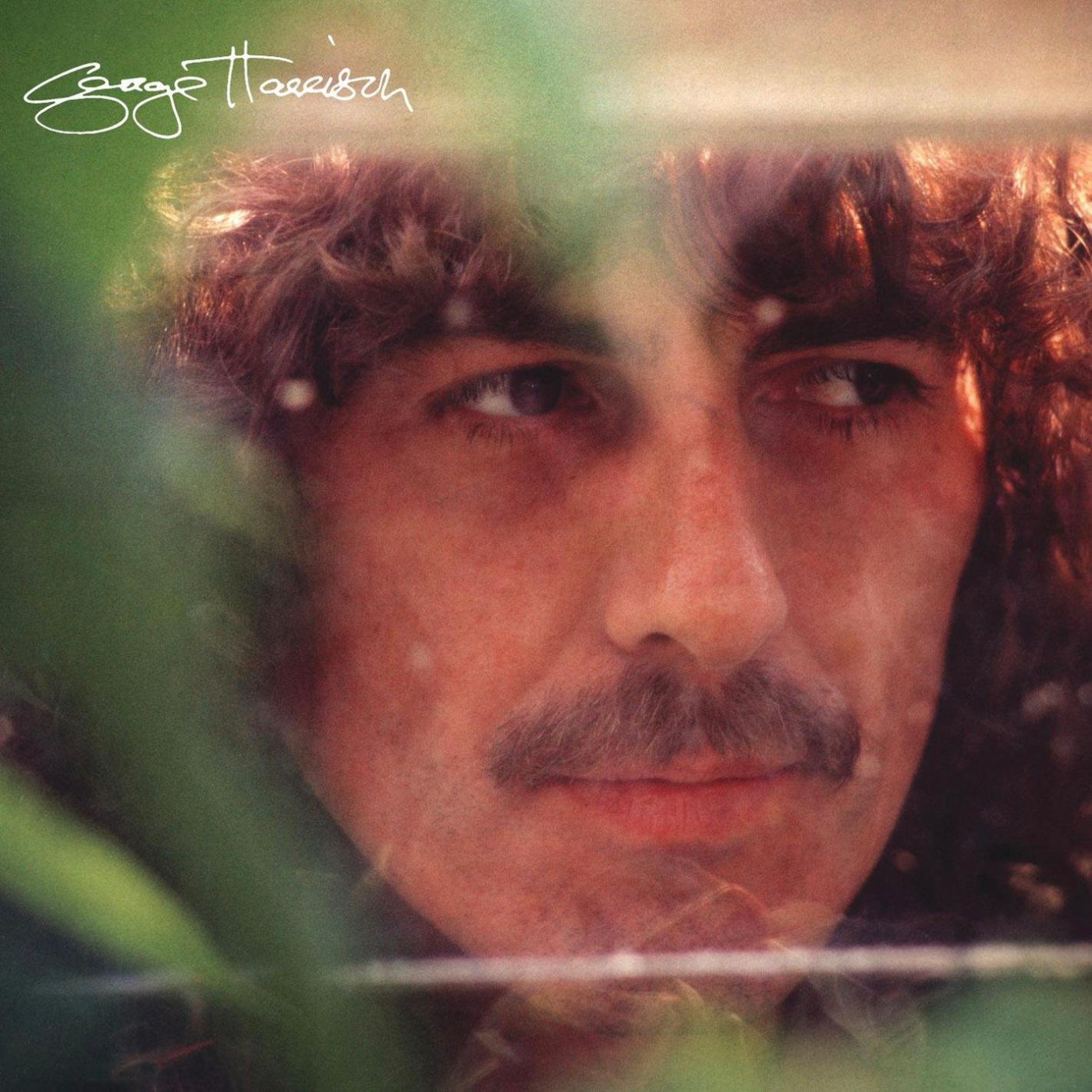
Welcome to 1979! Since we last saw George, he’d just signed on to a new record label and made some of his most confident-sounding music in years. Since then, he took 1977 off from making music, instead attending Formula 1 races. He got married to Olivia and had a son, Dhani Harrison, in 1978. He explained: “I was just really getting a bit fed up with the music business to tell you the truth. I mean it had been a long time being in it and, you know, I just felt like a break. So I took 1977 away from music, and I didn’t actually write a tune during that year.”
Unable to resist the siren’s call, George started writing new songs late in 1977, as he said in a BBC Radio interview: “I heard all these stories about people drying up, you know, so I thought, ‘Well, maybe I’ll write a tune, see if I can just write a tune.’ And I wrote ‘Blow Away’. It was a miserable day, pouring with rain, and we were having a few leaks in the roof of the house and all that sort of stuff.”
But the music world kept on going without him, as punk swept the UK and disco took off in America. So George decided the time had come to work with a co-producer, Russ Titelman. The contributing musicians include Steve Winwood, Neil Larsen, Willie Weeks and Andy Newmark, with Eric Clapton and Gary Wright making guest appearances.
Let’s jump in:
‘Love Comes To Everyone’: A light, breezy little number that should’ve been a hit but never was, with George pulling out a lyrical trick he’s used many times before: human love and divine love as two parts of the same coin, though this time it’s largely implied – he could be writing about the constant love of a deity, but he could also be writing about love from one’s partner. Either way you look at it, it’s a perfect ballad.
‘Not Guilty’: In which George reaches deep into his back catalog for a song that, by the time it was recorded, was a decade old. This song was first written in 1968, around the time of the White Album sessions. In the Anthology 3 post, I described the Beatles version as straight late-sixties rock and roll, with a really crunchy guitar part and George singing in a higher register than usual – the register was kept, but the crunchiness of the guitar was toned down significantly.
Dusting it off in 1978 for the new album, this version of the song exchanges the hard rock of the original late-Sixties version for something more laid back and relaxed, with the backing track serving as a contrast to the harsh, biting lyrics. But to hear George tell it, the song isn’t as angry as it might’ve been in 1968: It’s more like tongue in cheek. If you say a joke and you don’t smile, it doesn’t mean to say it’s not a joke. But this album, for example, ‘Not Guilty’, the whole lyric of that is kind of comedy.”
‘Here Comes The Moon’: Staying with the Beatles theme, this song finds George writing another sequel to an old song by that group – in this case, “Here Comes the Sun” from 1969, released on Abbey Road. He co-wrote it on his birthday in 1978, the day he turned 35 – the other writer was an uncredited Stevie Nicks of Fleetwood Mac.
And as you’d expect with a sequel, there’s a lot to this song that echoes “Here Comes the Sun, including the harmony vocals, arpeggiated guitar, and the triplet rhythm behind the title phrase. George joked: “It’s a very peaceful song. And the problem with mixing it was I kept falling asleep. By the time it gets to the end it’s put me into a dream world.”
‘Soft-Hearted Hana’: In which George writes about a trip he took in 1978 to one of the Hawaiian islands, where he had some magic mushrooms and went on a bit of a drug trip. It was written in the style of “Deep Blue,” a very obscure number that had been the B-side of “Bangla Desh,” and was the favorite song of an executive at Warner Bros. Records.
‘Blow Away’: Recorded during a period of time where everything was going right for him for once, George sounds as optimistic as he ever has, perhaps presaging similar feelings that his bandmate John Lennon was going through at around the same time. It was released as a single on Valentines Day 1979, and it was the first new song George had written in some time.
‘Faster’: This song, more or less, was written to order: “‘Are you going to write a song about motor racing, George?’ was a question I was asked a lot by various people from the Grand Prix teams during visits I made to the races. So I did ‘Faster’ to write about something specific, as a challenge.” It’s a song about racing and cars, though it’s so open-ended that according to the composer, if not for the sound effects it could’ve been about fame instead, and the pressures thereof.
‘Dark Sweet Lady’: A love song for Olivia, written at the request of his producer. As Russ Titelman explained in 2020: “He was going to Hawaii and he was going to come back through Los Angeles. I said, ‘Why don’t you write a song about Olivia?’ He came back with ‘Dark Sweet Lady’ and we booked a session and recorded that song at Amigo in North Hollywood. It was the only thing we recorded in America.”
‘Your Love Is Forever’: The big thing about this song is the sound of the guitars which open the song. As George wrote in 1980: “I think the success of the melody was largely due to the Roland effect on the guitars. It’s slightly different to phasing or to the Leslie speaker which is a revolving speaker in a cabinet. It gives a little added atmosphere to the sound, so when you play even one chord on electric guitar it sounds pretty. That’s the guitar sound that can be heard on the recording.”
To his credit, George acknowledged that he laid it on a bit thick earlier in the decade: “If you push ‘My Sweet Lord’ down people’s throats too much, they jump back and try to bite you. And, in a way, that message has become a bit more subtle. ‘Your Love Is Forever’ on the new album is just really saying the same old story. It’s ‘My Sweet Lord’, really. It’s just done in a way which maybe is less offensive to people.”
‘Soft Touch’: Originating from 33 & ⅓ sessions, the song wasn’t used until now. He wrote in 1980: “‘Soft Touch’ I wrote in the Virgin Islands. The tune came because I was playing ‘Run Of The Mill’ and at the very end there is a horn line – I was playing this melody on the guitar and it became ‘Soft Touch’. It is all very simple, and the lyrics reflect everything that was going on in the Islands… the wind, the cool breeze blowing, the palm trees, the new moon rising…”
‘If You Believe’: Our closer, written on the first day of 1978 with Gary Wright, who plays the synthesizer on the finished track. “He said ‘Here’s a bit I’ve got, I don’t know if you can make anything of it!’ He played it to me and we made it into this song that night. I wrote the words to the verses later in Hawaii, and edited it down after the recording.”
If Thirty Three & ⅓ was a soul album and Extra Texture was funky, George Harrison is pure soft rock, what with being dominated by electric piano and the kind of sonic vibes that you really only get from the late 1970s. It’s breezy and relaxed, almost like George is anticipating Double Fantasy by a year. He sounds refreshed and happy, even on songs that date back to the Beatles era.
When it was released, the album was well-regarded by music critics.Billboard featured George Harrison as its “Spotlight” album and highlighted “Love Comes to Everyone”, “Here Comes the Moon” and “Not Guilty” among the “best cuts,” while Rolling Stone’s album reviewer, Stephen Holden, deemed it “refreshingly light-hearted” compared to his earlier releases.
There’s no pretension or proselytizing on this album, it’s just George having a good time and allowing the stresses in life to… well, blow away in the wind. It’s worth it, I think, to contrast this album with Back to the Egg. As good as that album is, it was also a case where Paul McCartney tried to chase musical trends in an effort to stay relevant. It worked well, and the sheer variety of that album is part of why I like it so much, but there’s something to be said for authenticity.
And after a decade of being a solo artist, George Harrison finds our hero being unapologetically himself – an oasis of relaxation amidst the heaviness of punk and the rising tides of the New Romantic era. As he told Rolling Stone: “But I think even without following trends, paying no real attention to what’s going on and just writing your own songs, you still have as much chance as if you follow things closely.”
Very good advice, if you ask me.


Leave a Reply