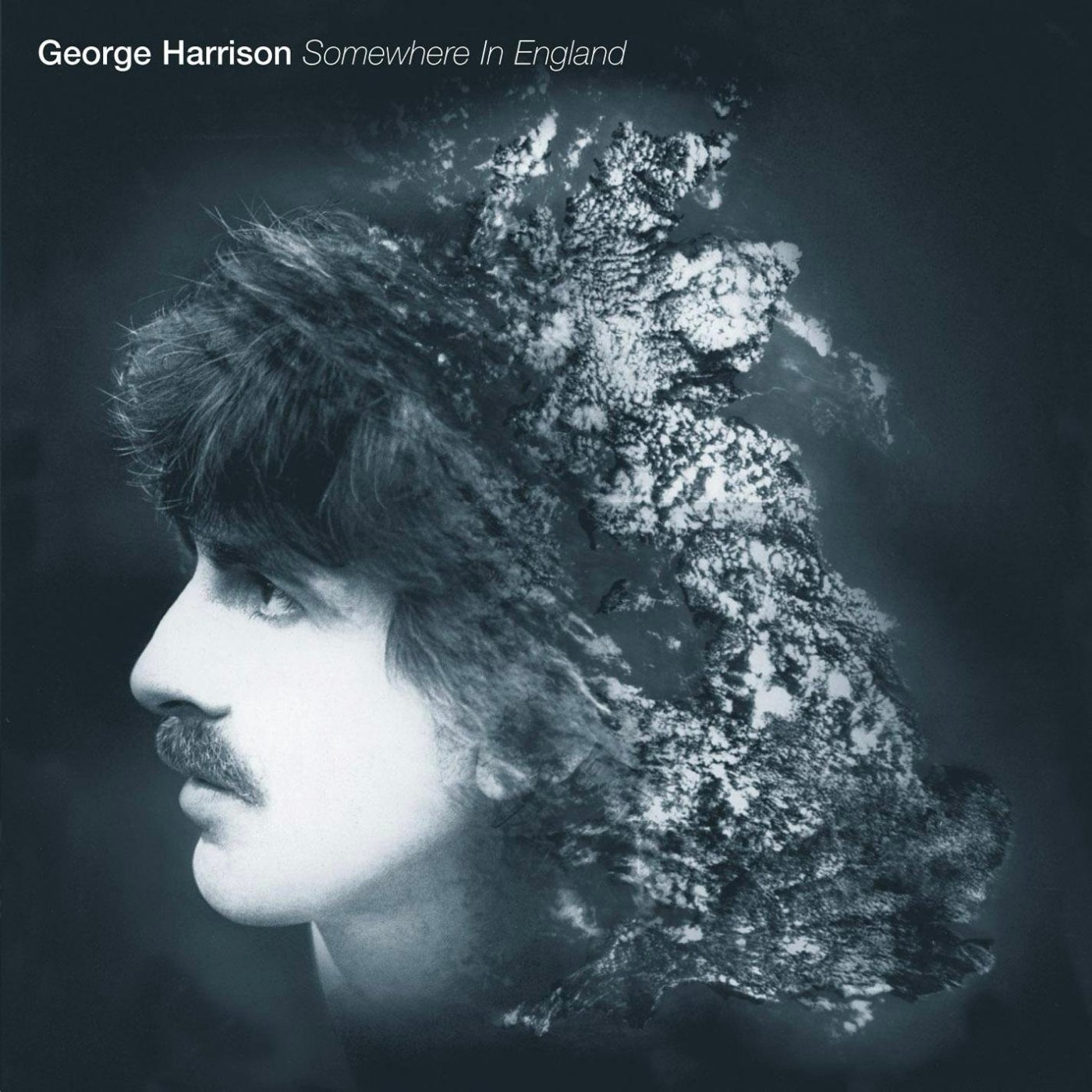
If George Harrison found our hero enjoying a much-needed bit of happiness, Somewhere In England found him struggling – and not just because of the emotional trauma from John’s murder in December 1980. This album finds George trying to find a place for himself in a music industry that had transformed dramatically from where it was in the 1960s. Punk had receded and New Wave, dominated by synthesizers and heavy use of reverb, had risen up to take its place.
Though only two weeks separate the albums, Duran Duran’s eponymous debut release sounds like it comes from an entirely different musical universe compared to the music George was making at this point in time. To listeners of the time, Somewhere In England probably sounded old-fashioned, stuck in the 1970s. As we saw in the Tug of War post, Paul was at least trying to branch out. But George? Music was rapidly becoming the last thing he wanted to do with his life.
As Dave Mattacks explained: “I think he felt sidelined by everything that was going on. It was the rise of the machine, and there was a real sea change in popular music. Soft Cell, Depeche Mode, he felt that was all at the opposite end of the spectrum and he was railing against it. I don’t think he was disillusioned, I just think he was sad about what was going on around him. ‘What am I doing? I don’t feel a part of contemporary music.’ The lyric [of ‘Blood From A Clone’] was basically anti-machine, anti-manufactured pop star song.”
Not helping matters was his increasingly fractious relationship with Warners, Dark Horse’s distributor. As Beatles Bible notes, “Somewhere In England holds the dubious honour of being the first album by a former Beatle to be rejected by a record company.” They didn’t like his original tracklist or even the cover art – a picture of George in profile over a map of Britain. When the album did come out, it had a very generic cover of George standing in front of all.
Still, let’s see what we can make of this:
‘Blood From A Clone’: The opening track, a scathing critique of Warners and the state of the music industry as of 1981, and a reflection on his inability to find a place for himself. He said at the time: “Once, at the time I was at Warner Bros. and I wrote that song ‘Blood From A Clone’, that was when they were having all these surveys out on the street to find out what was a hit record. And apparently, as I was told, a hit record is something that is about ‘love gained or lost between 14- and 19-year-olds,’ or something really dumb like that.” The end result includes the closest George gets to swearing on a record – his use of the word ‘crap’ at the end of the first verse.
‘Unconsciousness Rules’: Because we haven’t heard George in his intensely judgmental mode for a while, here he is warning against the dangers of dancing in nightclubs. Yeah. That was something that was all the rage in the early 1980s, as the existence of “night versions” of early Duran Duran songs can attest. (That was why they were recorded, so people could dance to them.) Gods forbid people go out there and have fun, George. Didn’t you used to be a kid once?
‘Life Itself’: Speaking of half-forgotten George modes, now hear him compose a song that sounds like it could be devoted to a mortal lover… and then you get to the lyric listing off various names for God and everything becomes clear. It’s pure joyful devotion, almost too personal to listen to… but I like it anyway.
All Those Years Ago: No prizes for guessing who this song was written for. Originally set to different lyrics and intended for Ringo, George rewrote it following John’s murder in December 1980. As Ray Cooper put it: “George was devastated. He and John had a very special relationship. He loved him, and he had just written a song about him.”
The track was recorded during the sessions for Paul’s album Tug of War, and features not only Ringo on drums, but also Paul, Linda, and Denny Laine on backing vocals, marking the first time that all three surviving Beatles have appeared on a track together since “I, Me, Mine” in 1970.
‘Baltimore Oriole’: And completely out of left field, we have a cover of a Hoagy Carmichael song. George explains: “Basically, I was more influenced in my growing-up period by things like The Ink Spots, Hoagy Carmichael, those kinds of singer, and Cab Calloway kind of music.”
The music was written in 1942 by Hoagy Carmichael, with lyrics by Paul Francis Webster and Carmichael. The song was one of three of his songs to appear in the 1944 film To Have And Have Not, which also starred Humphrey Bogart and Lauren Bacall.
‘Teardrops’: Warners wanted a single, and so they got one. George wrote the song in October 1980 while on holiday in Hawaii. Along with ‘That Which I Have Lost’ and ‘Blood From A Clone’, it was part of a trio of new songs written and recorded after Warner Bros initially rejected the album. He said: “That’s quite a nice song. That could be done by some black group, because you could make a good dance routine to that one.”
‘That Which I Have Lost’: A spiritual country number so insignificant that it doesn’t even have a Wikipedia entry, and the page for it on Beatles Bible is just generic information about the album in general. It’s a song that exists, I guess.
‘Writing’s On The Wall’: Along with ‘Life Itself’, the song marks a return to spiritual songwriting by George. The production includs gubguba, an Indian string percussion instrument Harrison had previously played on 1974’s ‘It Is ‘He’ (Jai Sri Krishna)’. Alla Rakha appears on tabla.
‘Hong Kong Blues’: This song was written by Hoagy Carmichael in 1939, and appeared in the 1944 film To Have And Have Not, which also starred Humphrey Bogart and Lauren Bacall. On the original rejected version of the album, it was the opening track.
‘Save The World’: George said: “I just wanted to let the whole song go out with something sad, to touch that nerve and maybe make you think, ‘Ohhh s**t.’” Appropriately, it samples the track “Crying” from Wonderwall Music, which included an instrument called a thar-shanhai. Although ostensibly a pro-ecology song, ‘Save The World’ was brought into the realm of comedic songs by the addition of jaunty production and sound effects. The latter included the sounds of a cash register, bombs being dropped, marching soldiers, gunfire, and a street demonstration.
And that’s Somewhere In England, an album so insipid that I can barely think of anything else to say. It says something that the consensus best song on the album is the tribute to John. And while I wish I could say that things will improve for George on the next album, it really doesn’t.


Leave a Reply