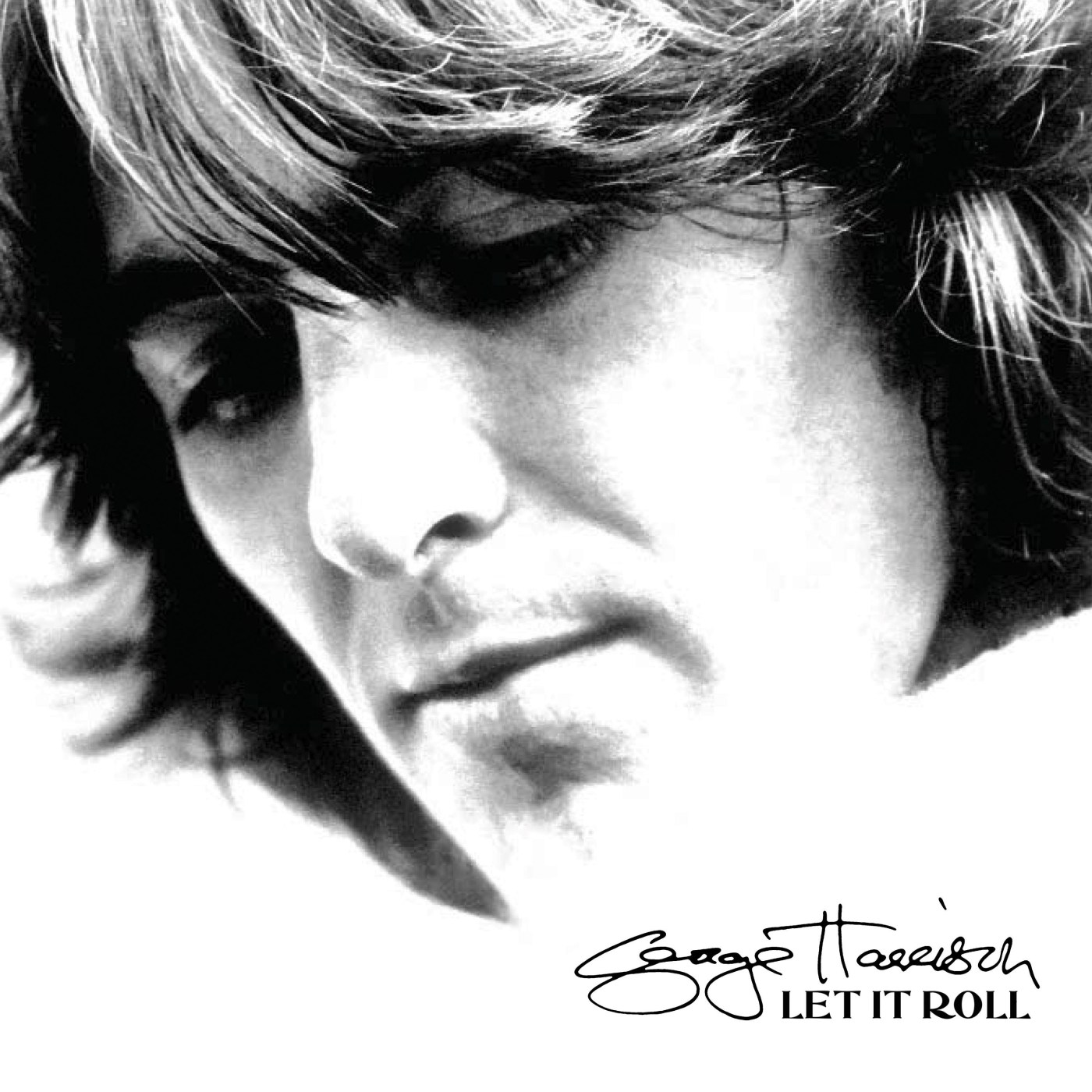
Despite only having twelve solo albums, George’s solo career is surprisingly difficult to summarise. Let It Roll doesn’t even really try: “This hits collection avoids chronology, honouring the old and new alike as part of the same stylistic continuum,” observed Andrew Hultkrans for Spin in 2009, a move that was probably wise.
It’s got a lot of the hits, plus some relative obscurities that would otherwise have languished, like “Cheer Down.” Even the Beatles era gets some representation, albeit in the form of three live tracks, just like the Working Class Hero collection from 2005.
That said, at 19 songs it really needed a second disc to cover everything. As Wikipedia notes, “Despite being marketed as Harrison’s first career-spanning hits compilation, six of his twelve studio albums were not represented at all: Wonderwall Music (1968), Electronic Sound (1969), Dark Horse (1974), Extra Texture (Read All About It) (1975), Thirty Three & 1/3 (1976) and Gone Troppo (1982).”
“In addition, several of his hit singles are absent from the track listing – songs such as “Bangla Desh”, “Deep Blue”, “Dark Horse”, “Ding Dong, Ding Dong”, “You”, “This Song” and “Crackerbox Palace”, all of which had charted in the top 40 of the Billboard Hot 100, as well as several songs that charted on Billboard’s Adult Contemporary charts (“Love Comes to Everyone”, “Stuck Inside a Cloud”) and Mainstream Rock charts (“Devil’s Radio”, “Cloud 9”, “Poor Little Girl”). No songs from Harrison’s output with the Traveling Wilburys appear on the compilation.”
Still, since I always like to wrap these up with compilations, this is as good a note to end on as any. Let’s see what we’ve got:
Got My Mind Set On You: The hit single from his 1987 comeback album Cloud Nine, this song finds George sounding like he’s never had before. His voice is much changed from where it was for much of the 1970s, with a new lower register that makes him sound warmer. His vocal is also pushed further forward in the mix, so he sounds present in a way he doesn’t usually. (“Give Me Love” follows this track, so listen to the two together to hear what I mean.)
The single was a huge hit for George, topping the singles charts in Australia, Belgium, Canada, Ireland, and the USA. It was George’s final US number one single, and the last by any of the former Beatles to top the Billboard Hot 100. It also hit the top the week prior to The Beatles’ induction into the Rock & Roll Hall of Fame.
And in 1988, the song received its highest honour: a parody version by Weird Al Yankovic, released on his album Even Worse. To date, it is one of exactly two Beatle-related parodies by Al, the other being “Pac-Man,” a parody of George’s song “Taxman.”
‘Give Me Love (Give Me Peace On Earth)’: As George wrote in his autobiography, “This song is a prayer and personal statement between me, the Lord, and whoever likes it.” And it’s something I can relate to far more strongly now as I’ve developed as a Wiccan. My deities may be very different from George’s, but in the end, we’re both yearning for the same thing – connection.
Ballad Of Sir Frankie Crisp (Let It Roll): By far and away my favourite song on All Things Must Pass, partly because it’s one of the relatively few secular songs on the record and partly because of its lyrics: assorted signs hung around George’s big estate, Friar Park in Henley-on-Thames. It was built for Sir Frank Crisp, and George bought it at the start of 1970 – he’s sitting in the house’s garden on the album cover. Later in the 1970s, he added a recording studio, which he used extensively on future albums.
As to the song itself, what appeals to me most are the guitar parts that open it and recur throughout, the chord progression, and the low vocals intoning “Oh, Sir Frankie Crisp” between verses. George’s voice is treated with a bit of reverb, so it sounds like he’s singing in a cave. It’s a dark song, but not in terms of subject – it’s a comforting darkness, like your bedroom on a full moon night, or the Morrígan’s cave in Cruachan.
My Sweet Lord: If “Imagine” was John’s signature song, this is George’s equivalent, as spiritual as the former was decidedly agnostic in its outlook. Lyrically, this is his first big engagement with his faith since 1968, and the first time he’s invoked Captal-G God by name ever. The whole track is George expressing his desire to know and be near his god, complete with the backing vocals switching from “Alleluia” to the entire text of Vedic Sanskrit prayer.
And I gotta say, that hits real differently now that I am a practicing Wiccan. It was not until I read Drawing Down the Moon for the first time, back in 2024, that I realised I too felt the same yearning for spiritual connection that George writes about here. Compared to the Christian god, who too felt impersonal for my taste, Cernunnos, Danu, Cerridwen, and the Morrígan all felt (and still do) Present in my life. The night I Claimed myself was a powerful spiritual experience – I felt welcomed, warm, and safe in their embrace, and that’s still true even after all this time. My sweet lord, and ladies, indeed.
While My Guitar Gently Weeps: The first of three live Beatles songs, this one taken from the White Album. This is one of my all time favorite songs of his, serving as it does as a commentary on the band’s rapid disintegration. The only bad part is the inclusion of Eric Clapton, a noted racist piece of shit. I get that he was George’s friend, but I really question George’s taste, to say nothing of his decision to gloss over Clapton’s racism over the ensuing decades.
All Things Must Pass: The title song from his 1970 smash. As everyone knows by now, George started writing this song in 1969 during the making of Get Back/Let It Be, hoping to find space for it on a Beatles album… and John and Paul said no. So, George used it here instead, and completely blew the other two away with it. Freed from the constraints of sharing album space with John and Paul, George finally able to soar, and that shows in how his guitar sounds here – like he’s flying away from the pain and strife of the Beatle years.
If “Awaiting On You All” felt like it was slamming the door on paganism, “All Things Must Pass” does the complete opposite, focusing its lyrics on one of the core tenets of pagan belief: that life happens in cycles, and that death is the end of only one lifetime. He uses aspects of nature to represent these ideas, starting with the opening lines: “Sunrise doesn’t last all morning. A cloudburst doesn’t last all day.” (Taken, incidentally, almost verbatim from a book by Timothy Leary, the same man who inspired John’s “Tomorrow Never Knows.”
George wasn’t pagan, of course, but it’s hard for me not to see it in at least some of his writing, particularly this song. After all, a big part of paganism is revering the natural world and seeing the gods in everything, from the morning sunrise to the glow of the full moon on a crisp autumn night. And after the sour taste the previous song left in my mouth, this feels like a much needed breath of fresh air.
Any Road: If I think back far enough, this was probably the first solo George song I remember hearing: I was eight years old when Brainwashed was released in November 2002, and I don’t think I realised George had died the previous year. I definitely remember liking the music video, especially the clips of George’s appearances on The Simpsons.
Harrison began working on the song during the sessions for Ravi Shankar’s Chants Of India album in 1996. The following year he played it briefly during an appearance on VH1. Like the rest of Brainwashed, the final album version includes overdubs by Jeff Lynne, Dhani Harrison, and old standby Jim Keltner on drums.
This Is Love: Another Cloud Nine song, a collaboration with Jeff Lynne of ELO, a man who basically defines the last couple decades of George’s life. His particular style as recording artist and producer shows up everywhere, from this song to Brainwashed and the two Anthology-era Beatles reunion tracks.
About the song, George explained: “That’s the great thing about Jeff. He wanted to help me make my record. But there’s so much in there Jeff contributed to. ‘Fab’ was a 50-50 contribution, but ‘This Is Love’ was a song where I said, ‘Why don’t you write me a tune?’ So he came down with lots of bits and pieces on cassette, and almost let me choose. I routined that song with him, and we wrote the words together. In fact, he had so many permutations of how that song is, he can still write another three songs out of the bits left.”
All Those Years Ago: No prizes for guessing who this song was written for. Originally set to different lyrics and intended for Ringo, George rewrote it following John’s murder in December 1980. As Ray Cooper put it: “George was devastated. He and John had a very special relationship. He loved him, and he had just written a song about him.” The track was recorded during the sessions for Paul’s album Tug of War, and features not only Ringo on drums, but also Paul, Linda, and Denny Laine on backing vocals.
Marwa Blues: One of only two instrumentals in George’s solo catalogue, this one is based loosely upon ‘Raga Marwa’, a classical Indian raga traditionally played at sunset, which Harrison first heard in the 1960s. It’s a truly gorgeous showcase of his slide guitar work, and the Indian flavouring brings it all back home. If you had to play only one song to describe George as a person, this would be my choice.
What Is Life: Issued as a single in 1971, “What is Life” feels to me like George’s equivalent of “Maybe I’m Amazed” from McCartney. The song wears its Motown influence on its sleeve, as evidenced by the descending guitar riff that begins the track. While it is a love song, there is a matter of debate as to whether the object of his affections is a girl or a deity. (Personally, I think it’s a girl, but given the religious overtones of the album, I can see an argument for the other reading.)
Rising Sun: Written in the early ‘90s during the Japan tour, the song was released in George’s 2002 album Brainwashed. As Dhani and Jeff Lynne explained:
“He wrote everything down, a lot of stuff. A lot of it would be just legal pads and you’d go through and the whole thing would be full, and you’d get another one underneath it and the whole thing would be full. He never wrote instructions, he’d just write notes, like “‘Rising Sun’, cello, chunky cello part with wobble,” you know, something just in his language. And Jeff [Lynne] looks and is like, “Oh great, wobble, yeah, we’ll put a bit of wobble on there and a bit of chunk there.” They obviously knew what they were talking about.”
“On ‘Rising Sun’ I used this room which is the big room at my house, and it was actually wonderful. We had two cellos and a bass, which you’d call contrabass, I think, in classical terms, but I call double bass, because I’m from Birmingham. And that was a really great sound. We had eight violins all set up in here, all at once, and it was just an incredibly good sound.”
When We Was Fab: Released as a single in January 1988, George’s sudden desire to write a song that felt like something from his Beatles days was quite timely indeed, given the band’s back catalogue had recently been released on CD the year before, and Past Masters was due out in March.
The song is a nostalgic look back on Beatlemania with a sonic palette straight out of 1967, with Ringo on drums, backmasking, sitar, and cello parts. The single cover contained new art by Klaus Voorman incorporating his original drawing of George from the Revolver album, along with an updated sketch of George in the same style. The version of the song on Let It Roll ends with crowd noise leading into the next track.
Something: If there was ever any doubt that George Harrison had grown by leaps and bounds during his Beatles days, this should put those doubts to rest. Abbey Road was his happiest album, perhaps because he suspected that this part of his life was over. “Something,” as a love song, is one of the best ballads anyone ever did, and I appreciate it even more now that I’m packmates with Sophie, Ariel, Katie, Alice, and Mixie. I’m an exceptionally lucky woman, and I will not let these loves of mine go for anything.
‘Blow Away’: Recorded during a period of time where everything was going right for him for once, George sounds as optimistic as he ever has, perhaps presaging similar feelings that his bandmate John Lennon was going through at around the same time. It was released as a single on Valentines Day 1979, and it was the first new song George had written in some time.
Cheer Down: One of my, if not the, favourite George songs of all time, and it’s so freaking obscure that the studio version didn’t even get an album release until Best of Dark Horse 1976–1989, which itself has fallen into obscurity. It was released in 1989 as a single and then on the Lethal Weapon 2 soundtrack.
Here Comes The Sun: Continuing the cheerful theme of the last few songs, here comes George with the happiest Beatles song he ever wrote. The song has only gotten more popular in recent years, and in fact, it was the first Beatles track to reach a billion streams on Spotify. Given the anxious times in which we live, a little burst of Harrison’s sunny optimism is exactly what we all need.
I Don’t Want to Do It: Another film song, though it’s actually George covering Bob Dylan again. The song was written by Bob Dylan in 1968. Harrison recorded a demo version during the 1970 sessions for All Things Must Pass, but it was taken no further at the time. It was ultimately recorded for the film Porky’s Revenge.
Isn’t It A Pity: Despite the tone of the lyrics, this isn’t actually about the breakup in any way whatsoever. The song dates to 1966, and George tried to include it on three separate albums: Revolver, Sgt. Pepper, and The Beatles, only to be rebuffed each time. In his 1980 autobiography, George wrote: “’Isn’t It a Pity’ is about whenever a relationship hits a down point … It was a chance to realise that if I felt somebody had let me down, then there’s a good chance I was letting someone else down.”
This is a plaintive song of reflection, mourning, and loss on the end of a relationship, and one can certainly read the opening verses as evoking the dramatic collapse of the Beatles. But again, this is a universal theme, tying into similar sentiments as “While My Guitar Gently Weeps.”
Still, the Beatles comparisons are inevitable. This take is one of two featured on the album, and of the two this one is far more Beatle-ish, what with lyrics that, in places, read like George responding to some of Paul’s late-period Beatles songs. The lines “How we take each other’s love/Without thinking anymore/Forgetting to give back” are George exploring the inverse of Paul’s famous couplet from Abbey Road – what happens when the love you take isn’t equal to the love you make.
But perhaps the strongest comparison (and the one this track most resembles) is with “Hey Jude.” Both songs are responses to failed relationships, but where Paul tries to make things better by pointing out, essentially, that every cloud has a silver lining, George’s approach is much gloomier, as has been his wont since “Don’t Bother Me.” His lyrics centre the pain almost at the exclusion of all else – even the second verse manages to take a downbeat look at the bright side.
And of course, just like “Hey Jude” it ends with an extended coda in which the word “nah” is used a lot, though unlike the former song, these nahs are buried in the mix somewhat, and mixed in with repeated cries of “What a pity.” It even lasts for seven minutes and eleven seconds, just like Paul’s song.
Ironically for a track that started life three years before breaking up was even an idea in anyone’s mind, this song perhaps presents the best reflection on the emotional trauma of it all. Delivering it as an unintentional but fitting musical antithesis to Paul McCartney’s sunny optimism is just icing on the cake.
With this album, we reach the end of our dive into the work of George Harrison after the Beatles. It’s been a fascinating journey, and as it’s unspooled, I’m happy to say I’ve come away with a much greater appreciation for the man and his music – all the more appropriate, considering this post goes up on WordPress near the 25th anniversary of his death.
With that in mind, I find it appropriate to finally share a story about a dream I had a few years ago, not long after “Now and Then” came out, 3 years ago last week. I was at Friar Park, and I saw him pull up to the house in a red sports car. He came in, and he seemed to have been expecting me. He looked to be in his fifties, like when The Beatles Anthology was being made. I introduced myself, and though I can’t remember what we talked about, I feel certain in the knowledge that our conversation was pleasant.
When I woke up, I checked the date on my phone, and realised that it had been 23 years since he died. I told Sophie about this dream, and she said, “Honey, I think you were visited.” The instruction from George was clear enough: he wanted me to write about him next. Why that was, I wasn’t sure, but I can guess: we were both raised Christian, but drifted away into other faiths – him into Hindu spiritualism, me into Wicca.
And our faiths, inevitably, intersected with our art. George’s Beatles songs from 1966 to 1968 all bore Indian influences, and his solo work, while in the form of traditional Western pop music, is still deeply religious in tone, particularly his very early stuff. And anyone who’s been reading this blog since somewhere around May of 2024 will be able to tell that Wicca has wormed its way into my essays.
That shared background, I think, may have been why George reached out to me. I’d like to think so, at any rate. It’s taken me a couple of years since that day for me to come out with this, (I’m sure George knows what it’s like to be unexpectedly swamped with projects) but I hope I’ve done him justice.
Go raibh maith agat, Mr. Harrison. ❤


Leave a Reply